Last updated November 17, 2026
New windows and doors improve comfort, cut energy bills and add long-term value to your home. Sightline Windows & Doors Boulder City pairs proven product lines with a local vetted installing partner for lasting performance - and a price put in writing.
Choose your installer
The unit is half the job - the install is the other half. Background-checked local installers measure, set, seal and insulate every opening, and they know the lines we quote inside and out.
Select the right products
Compare styles, materials and glass packages side by side until the fit is right for your rooms, your budget and your goals. The product-line comparison below is the place to start.
Prepare your home for install
Before install day we walk you through a short checklist - furniture pulled back, treatments down, a clear path to each opening - so install day is watch-it-happen, not scramble.
Compare the Lines We Quote
Every project is priced on the same lines, side by side - the price indicators below are relative, and your consultant shows exact numbers on your actual openings.
PGTThe line homeowners arrive naming - the most impact certifications in the industry$$$
- More impact certifications than any other line we quote
- WinGuard, EnergyVue and ClassicVue Max systems built for every wind zone
- 99% on-time delivery keeps your install date on the calendar
CGIThe heavyweight impact line$$$$$
- Large-missile impact ratings for the strictest wind zones
- Architectural-grade aluminum with commercial-depth frames
- The line we quote when protection is the whole point
CWSThe value pick$$
- Vinyl systems built to strict wind codes
- Strong energy packages at the friendliest price point
- The smart start for whole-home replacements on a budget
ESWSlim lines, big glass$$$$
- Narrow-sightline aluminum for modern elevations
- Oversized openings and floor-to-ceiling glass
- Impact-rated without the bunker look
ECOThe aluminum impact workhorse$$$
- Factory-built aluminum impact systems
- A strong price-to-protection ratio for coastal homes
- Proven lines with short lead times
The Complete Window Replacement Guide for Boulder City Homeowners
Boulder City is the only incorporated city in Nevada that restricts its own growth by charter. That same instinct – control what comes in, keep the place what it is – shows up in how the City reviews a window replacement. Contractors who work out of Henderson or Las Vegas every day often don’t know it, and the gap shows up as re-work: a permit rejected, a crew sent home, a homeowner paying twice. Boulder City has its own permit counter, its own Historic District overlay, and its own design guidelines, and none of them match Clark County’s. This guide walks through what actually applies to a window replacement in Boulder City – permits, historic review, glazing targets for the heat, soil-driven settling, and dollar ranges for the three scenarios we’re asked about most.
Quick Answer
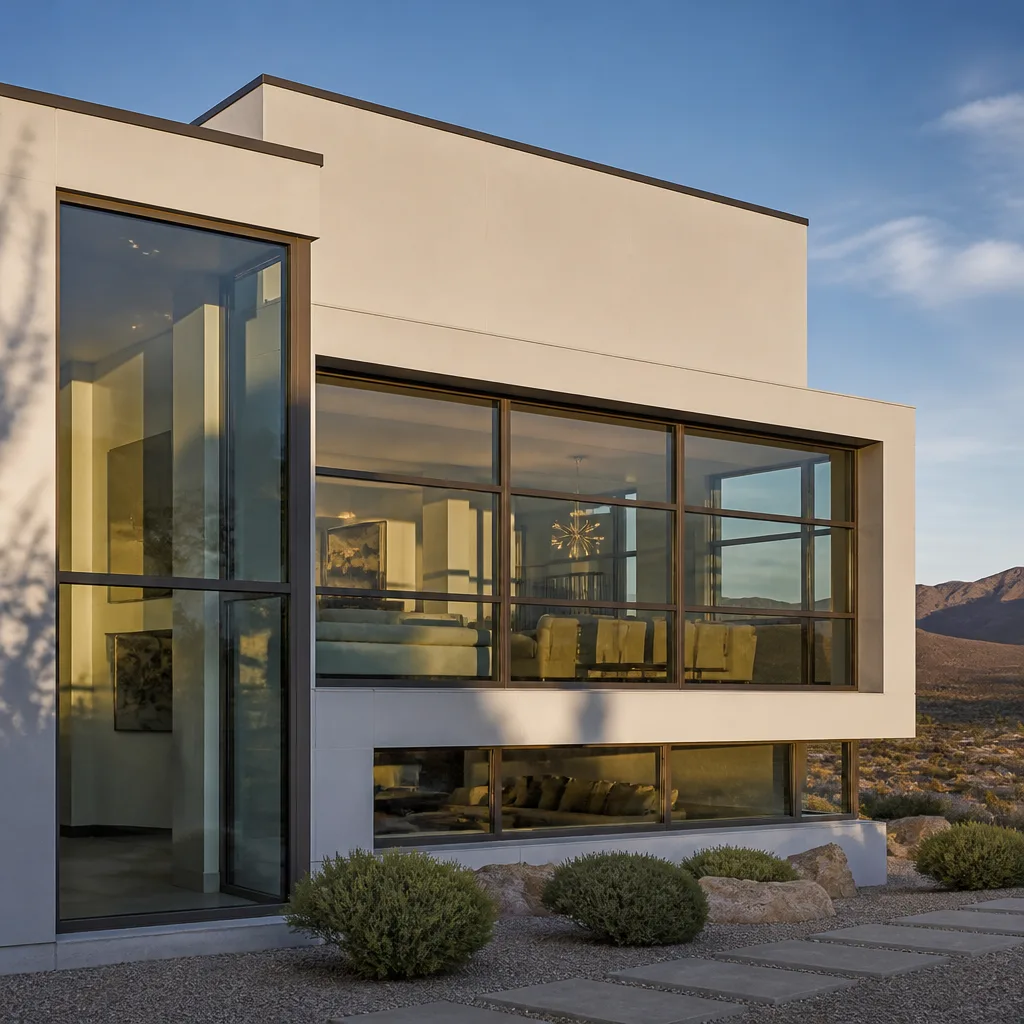
A window replacement in Boulder City typically needs a building permit even when the new unit matches the old one in size and style, and any property inside the Historic District overlay needs design review before you order product. Plan on $8,500-$14,000 for a typical whole-house aluminum single-hung swap, $12,000-$22,000 for a casement upgrade, and $9,000-$16,000 for a dual-pane retrofit on a 1950s ranch, with glazing specified at a lower solar heat gain coefficient than the national Energy Star floor.
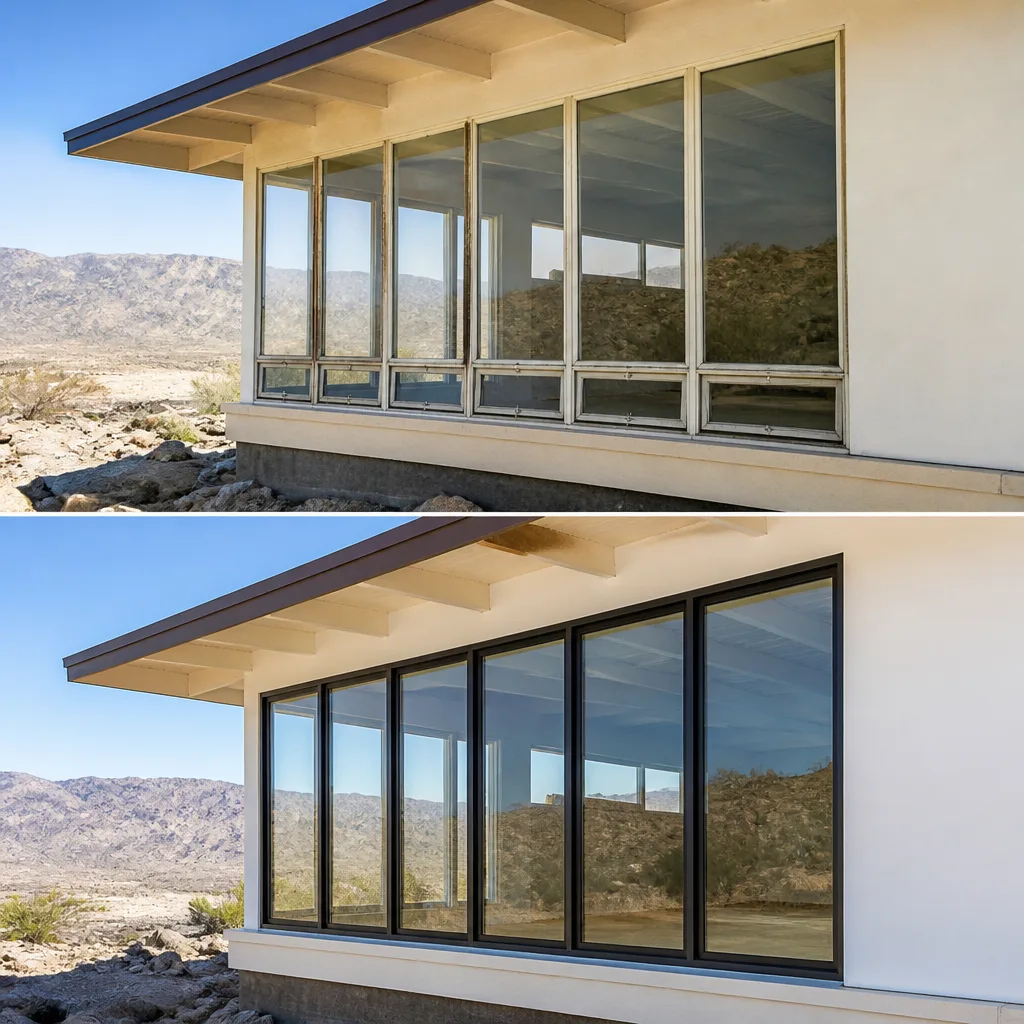
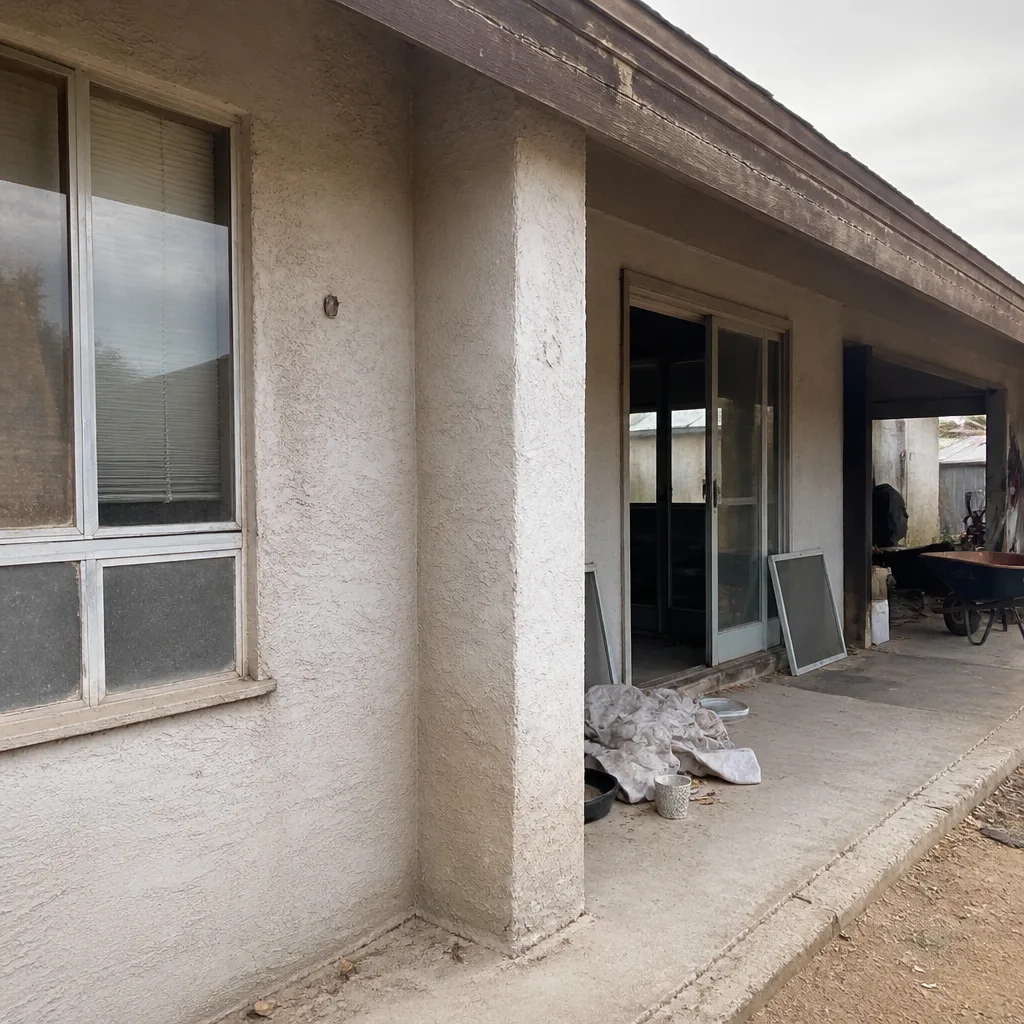 Before
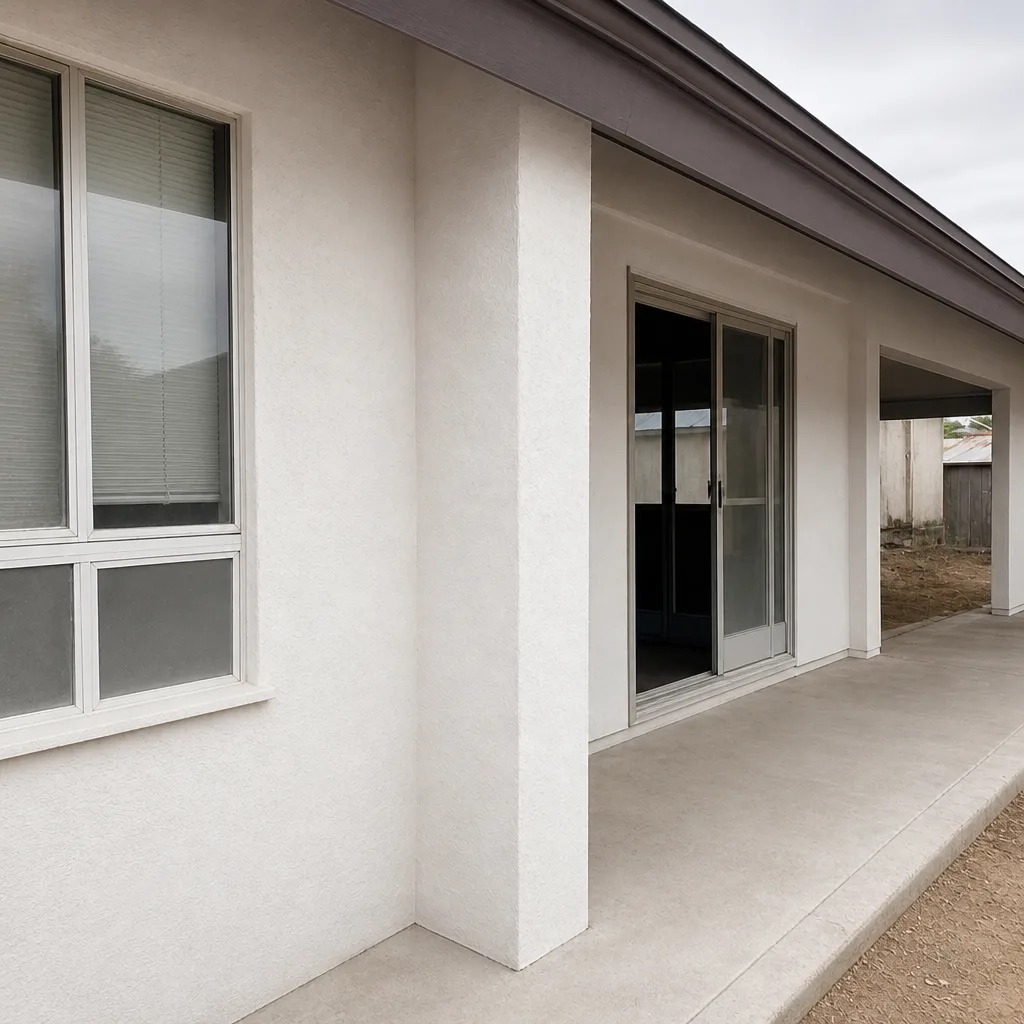 After
Table of Contents
- Do You Need a Permit for Window Replacement in Boulder City?
- The Historic District Overlay and Design Review
- Solar Heat Gain Coefficient Targets for Climate Zone 3B
- Caliche Soil, Settling, and Why the Sill Gets a Level Check
- What Window Replacement Costs in Boulder City
- The Measured Survey: What It Should Contain
- The Replacement Process, Step by Step
- Common Mistakes to Avoid
Do You Need a Permit for Window Replacement in Boulder City?
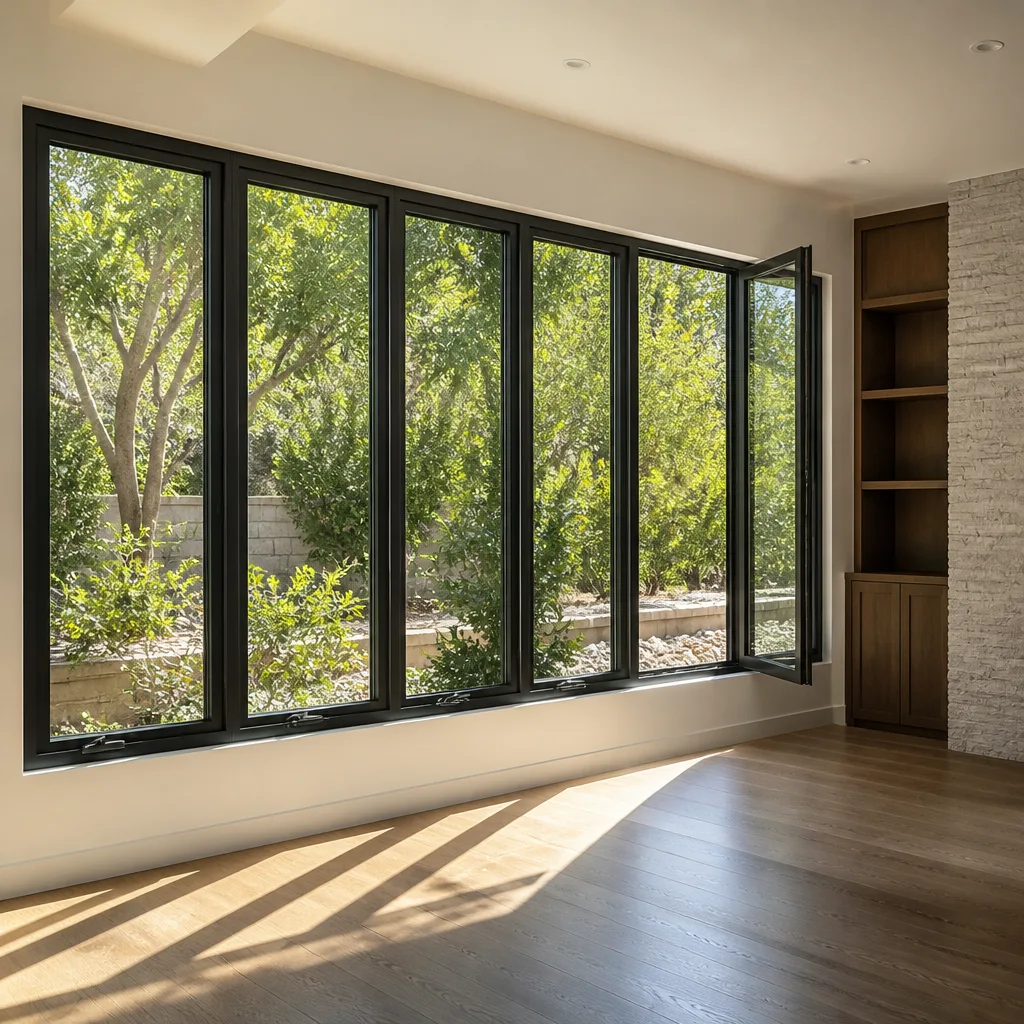
Yes, in most cases – and the “like-for-like” exemption that homeowners hear about elsewhere often does not apply here. Boulder City’s permitting operates separately from Clark County, which means a contractor whose default assumption is “the county doesn’t require one for a same-size swap” is working from the wrong rulebook. The City treats a window replacement as an alteration to the building envelope, and that pulls it into review.
What usually triggers a permit:
- Any change to the rough opening size, even an inch
- Any change in the number of panes, operating style, or configuration
- Any work on a property inside the Historic District overlay
- Any structural work at the header or sill
- Any replacement that changes the exterior profile visible from the street
What generally does not: a single-unit glass-only replacement where the frame stays in place and the opening is untouched. That is a glazing job, not a window replacement, and we’ve seen homeowners get talked into a full permit process for what was really a sash and glass swap.
The practical rule: ask the City’s building department directly, in writing, before anyone orders product. A written answer from the counter is worth more than any contractor’s verbal assurance. If you’re replacing more than one opening, window replacement in Boulder City almost always involves a permit, and the inspection at the end is where cheap work gets exposed – flashing, sealing, and attachment are all looked at.
The Historic District Overlay and Design Review
Boulder City’s Historic District overlay covers a defined set of streets in the original townsite, largely concentrated around the older residential blocks near Nevada Way and the streets laid out in the original 1931 plat. If your property sits inside the overlay, window replacement is not simply a building permit – it also runs through design review, and the review looks at what the window looks like from the public right of way.
“Historic character” is not a mood; in the City’s design guidelines it’s a set of written criteria. What reviewers typically evaluate:
- Pane configuration – the visible grid pattern must read consistent with the era of the house. A 1930s bungalow with a 2-over-2 sash does not become a 1-over-1 picture window in review.
- Frame profile and depth – the setback of glass from the exterior wall plane matters. Flush-mounted modern frames can read thin against the original trim depth.
- Material and finish – color and sheen. Bright white vinyl against original painted wood trim is a common rejection point; a matched finish often is not.
- Trim and surround – the window cannot be approved in isolation if the replacement changes the surrounding trim depth or width.
- Visible mullions and muntins – applied grids versus true divided lite, and whether the grid is interior-only or visible from outside.
Read the City’s design guidelines document before you order. Not after the quote, not after the deposit – before. We’ve seen homeowners order eight units of product, get a design review deferral, and eat the restocking fee. If you’re inside the overlay, the sequence is: read the guidelines, hire a contractor who has worked inside the overlay, submit for design review, get the approval in writing, then order. If the contractor doesn’t know whether your street is in the overlay, that’s the answer to whether they should be doing the work.
Solar Heat Gain Coefficient Targets for Climate Zone 3B
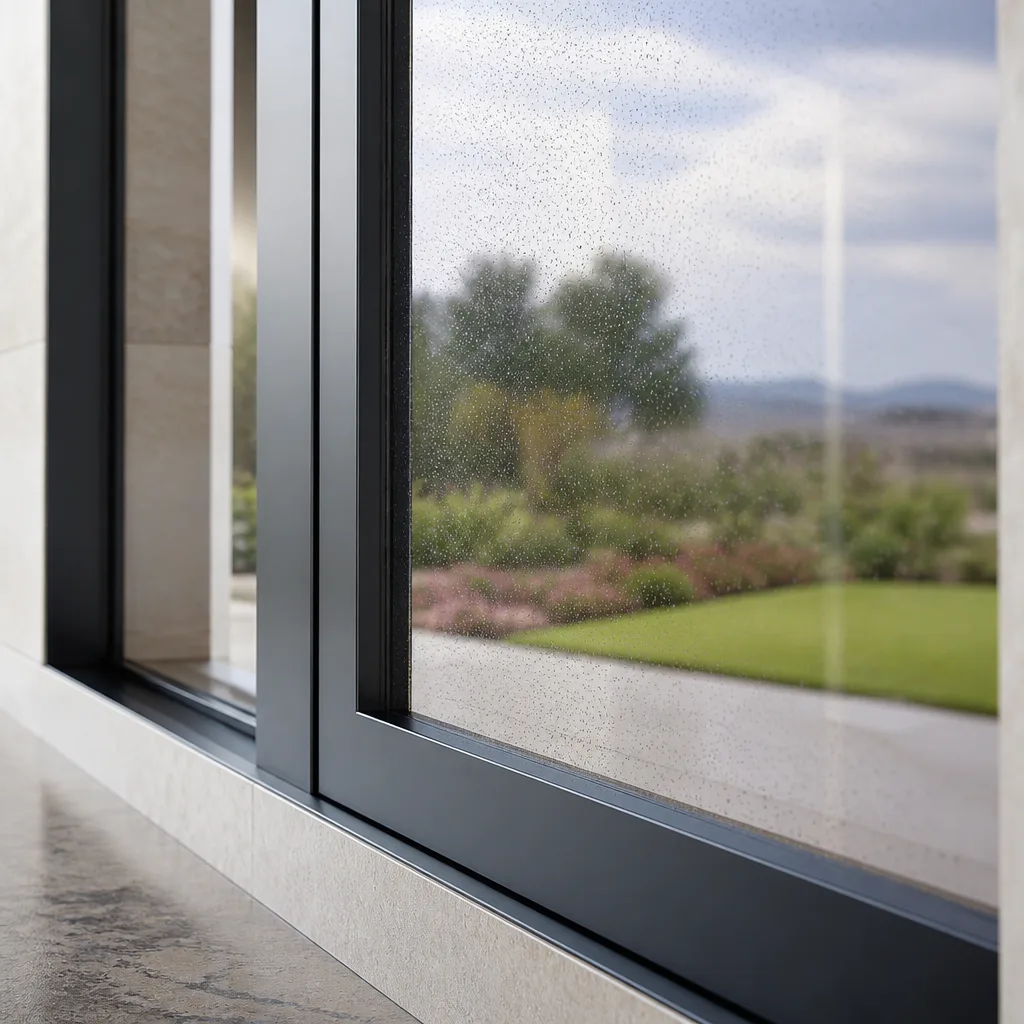
Boulder City sits in IECC climate zone 3B – hot-dry. That’s a different glazing problem than most national window buying guides address, and it’s where the Energy Star label can mislead.
Solar heat gain coefficient, or SHGC, is the fraction of solar heat that passes through the window. Lower is better in a hot climate. The national Energy Star threshold for the South-Central zone is a floor, not a target – it’s set to qualify broadly, and it’s calibrated to a mix of climates that includes places far milder than Boulder City in July. A window that just clears the floor still lets meaningful afternoon heat in. In practice:
- West and south-facing glazing – specify SHGC at 0.25 or lower. These elevations get hit hardest from 2 p.m. to 6 p.m. in June through September.
- East-facing glazing – 0.27 to 0.30 is often a reasonable balance, since morning gain is shorter-lived.
- North-facing glazing – 0.35 or higher is often acceptable and sometimes preferable for daylight.
- U-factor – less critical here than SHGC for cooling load, but still worth attention at 0.35 or lower for dual-pane units.
- Visible transmittance (VT) – balance against SHGC. Chasing the lowest SHGC pushes VT down and makes rooms dark. A low-e coating with a spectrally selective formulation holds both.
Product lines that carry low-SHGC formulations suitable for zone 3B include CGI and ES Windows, both of which we specify when the elevation analysis calls for it. The point is not the brand; it’s that the SHGC was chosen per elevation, not per house.
Caliche Soil, Settling, and Why the Sill Gets a Level Check
Boulder City sits on soil the trade calls caliche-heavy – a calcium-carbonate cemented layer that behaves unpredictably under foundation load. In some blocks the caliche sits as a nearly continuous sheet under the topsoil; in others it’s nodular and patchy. Either way, it affects how the house has settled over time, and that affects whether a window opening is still square.
We’ve measured openings in Boulder City ranch homes where the sill was out of level by more than 3/8 of an inch across a single four-foot width. That’s not visible to the eye. It becomes visible the moment a factory-square window is set into the opening and the reveal is uneven top to bottom. The gap gets filled with shims and sealant by a crew that’s not paying attention, and 18 months later the homeowner is calling about a draft.
This is why the measured survey must include a level check on the sill, not just a tape measure.
- Width at the head, center, and sill – three readings, not one.
- Height at the left jamb, center, and right jamb.
- Level on the sill, front to back and side to side.
- Plumb on each jamb.
- Square by diagonal – both diagonals should match within 1/8 inch on a square opening.
- Frame racking note – if the opening is racked, the framing behind the drywall gets probed, because a racked opening usually reflects a racked wall.
A contractor who measures one width and one height has not surveyed the opening. They have estimated it. You’ll find out which when the crew opens the box. If you want to compare against a full installation scope, our window installation in Boulder City page lays out what gets documented.
What Window Replacement Costs in Boulder City
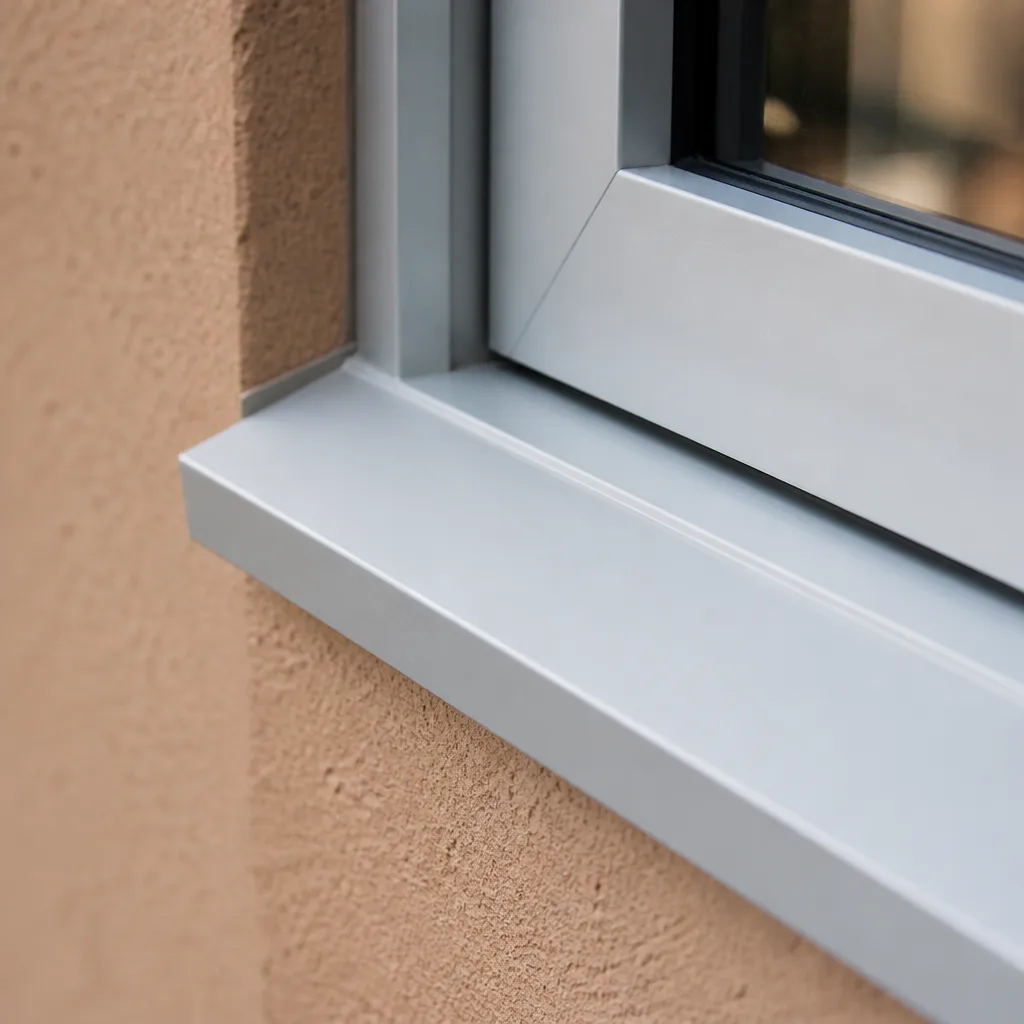
Prices below are for typical Boulder City homes in the 1,400-2,200 square foot range with 10-16 openings, and reflect what we’ve seen quoted in this market for product plus installation plus permit. They are ranges, not quotes; a written price for a specific house depends on the survey.
- Single-hung aluminum swap (like-for-like, 1950s-1970s ranch): $8,500-$14,000. Product is aluminum or vinyl; frame removal and replacement; permit included. The lower end applies to standard sizes off the shelf; the upper end where the openings are odd-sized or the trim has to be rebuilt.
- Casement upgrade (operating style change): $12,000-$22,000. Casement hardware costs more, the rough opening often needs adjustment, and design review may be required depending on location. Expect to pay more per opening here than for single-hung.
- Dual-pane retrofit (1950s ranch, original wood or aluminum frames): $9,000-$16,000. Includes low-e glazing at zone-3B SHGC, sill leveling where needed, and interior trim restoration. This is the most common scope in the Historic District-adjacent blocks.
What moves the price at the margins: elevation-specific glazing, interior trim finish, whether the wall behind the old frame is sound, and whether design review adds a revision cycle. What doesn’t belong in the price: “disposal fee” line items when the disposal was always included, and change-order allowances that aren’t itemized up front.
Before you sign anything, ask for a free second opinion. Bring a competitor’s quote to us and we’ll review it at no charge – and no obligation to hire us. Our Sightline Windows & Doors Boulder City home page explains the Haven Standard that governs every written price we issue.
The Measured Survey: What It Should Contain
The measured survey is the document that the written quote is built from. If the two don’t match line for line, something is wrong. This is what a real survey of a Boulder City home should include:
- Opening-by-opening measurement sheet – width, height, level, plumb, and diagonal, recorded for each unit and left with the homeowner.
- Elevation notes – which way each window faces, which drives the SHGC specification.
- Photographs of every opening from inside and outside, including the surrounding trim.
- Frame condition notes – rot, water damage, racking, prior patching.
- Historic overlay determination – a written yes/no on whether the property sits inside the overlay.
- Permit scope statement – what the permit will and won’t cover.
- Product specification – brand, model, glazing package, SHGC, U-factor, VT, grid pattern, finish.
Whichever product line the opening requires – CWS and ECO Window Systems both appear in our specifications where their performance tier fits the elevation and budget – the specification is written, not verbal. When the installer arrives, the person at the door is on the record by name and license number. That’s Haven Clause 3, and it matters most when something goes wrong six months after the job: you know exactly who measured, who ordered, who installed. When the job closes, you get a documented photo record of every opening. Every engagement carries the 365-Day Done Right Promise – if it isn’t done right, we make it right, and it’s written into the standard, not offered verbally.
The Replacement Process, Step by Step
- Confirm overlay status and permit path. Call Boulder City’s building department, confirm whether your address is inside the Historic District overlay, and get the permit requirement in writing.
- Measure and survey. A full survey per the checklist above. One width and one height is not a survey.
- Design review (if applicable). Submit to the City with product specs and photographs. Get the approval before ordering.
- Written price. Line-item, in dollars, before any work starts. If a competitor’s quote uses “allowance” or “TBD” on a line item, treat it as an open-ended price.
- Permit issued. The permit should be pulled in the property owner’s name with the contractor listed. Don’t accept “we’ll pull it after the install starts.”
- Installation. Frame removal, opening prep, flashing, setting, shimming, insulating, interior trim, exterior seal. A day per three to four openings is reasonable for a standard ranch.
- Inspection. The City inspector looks at attachment, sealing, and flashing. Failed inspections are re-work at the installer’s cost – confirm in writing that they’re on the hook for that.
- Closeout. Photograph record of every opening, warranty documents, and a final invoice matching the quote line for line.
Two to four weeks is the realistic timeline from signed quote to installation for most non-historic-overlay homes in Boulder City. Add two to four weeks for design review inside the overlay. If anyone quotes you “next week” on a Boulder City job, ask which permit cycle they’re assuming.
Common Mistakes to Avoid
- Assuming the county permit rule applies. Boulder City’s permit counter operates on its own rules, and a contractor whose default is “no permit needed for a same-size swap” is probably quoting you from the Clark County playbook. Confirm with the City, in writing, before ordering product.
- Ordering product before design review. Inside the Historic District overlay, this is the most expensive mistake in the whole process. Restocking fees on eight or twelve units are real, and the review can defer on a single criterion like pane configuration or frame depth.
- Choosing glazing by the Energy Star label alone. The national threshold for the South-Central zone is a floor. Boulder City’s summer afternoons on west-facing glass want SHGC at 0.25 or lower, not just the minimum that qualifies.
- Accepting a single-measurement quote. A quote built on one width and one height is a guess dressed as a price. The 3/8-inch-out-of-level sills that come from caliche-driven settling are invisible until the window is set.
- Taking a verbal warranty. A warranty that isn’t a document doesn’t exist. Ask for the written warranty before signing, and read what it covers – especially the labor, which is where failures usually show.
- Paying a change order after work starts. The price should be the price. Change orders that appear after demolition are how a $10,000 job becomes a $14,000 job. Get the line-item in writing before the first screwdriver comes out.
- Skipping the second-opinion step. If a quote feels high or low, the cheapest way to find out is to have someone else read it. We’ll review any competitor’s written estimate at no charge.
When to Call a Professional
Call a professional when any of these are true: the opening is out of level by more than 1/4 inch (that’s framing, not window); the property is inside the Historic District overlay (design review is not a DIY process); you’re replacing more than one opening (permit and inspection apply); the existing frame shows rot, water damage, or prior patching; or the elevation analysis calls for a glazing specification you can’t confidently choose. Window replacement is not a dangerous trade in the way that high-voltage electrical or high-tension garage-door work is, but the permit-and-inspection chain exists for a reason – a badly flashed opening leaks, and the leak shows up in the wall cavity, not at the window. Sightline Windows & Doors Boulder City offers free estimates in Boulder City – call (833) 847-4018 to schedule.
Frequently Asked Questions
Whole-house window replacement in Boulder City typically runs $8,500-$14,000 for a like-for-like single-hung aluminum swap, $12,000-$22,000 for a casement upgrade, and $9,000-$16,000 for a dual-pane retrofit on a 1950s ranch. The range depends on opening count, odd sizing, design review if applicable, and elevation-specific glazing. Call (833) 847-4018 for an exact quote – estimates are free.
Yes, in most cases – even a same-size replacement typically requires a building permit, because Boulder City permits separately from Clark County and treats window replacement as an envelope alteration. Glass-only swaps where the frame stays in place generally don’t. Confirm in writing with the City’s building department before you order product.
Properties inside the Historic District overlay – concentrated around the older residential blocks of the original townsite near Nevada Way – require design review in addition to a building permit. The overlay boundary is a written map, not a guess; ask the City to confirm your address before ordering any product.
Specify SHGC at 0.25 or lower for west and south-facing glazing, 0.27-0.30 east, and 0.35 or higher north. The national Energy Star South-Central threshold is a floor for climate zone 3B, not a target – it qualifies windows that still let meaningful afternoon heat load through on west-facing elevations.
It shouldn’t. A written, line-item price before work starts – with no “allowance” or “TBD” line items – is the standard we hold ourselves to, and it’s the standard you should hold any contractor to. If demolition reveals an issue the survey missed, a written change order before work continues is how it should be handled, not a surprise on the final invoice.
Usually, yes. A retrofit – new dual-pane units set into the existing opening – is common on 1950s ranch homes in Boulder City, provided the frame behind the old window is sound and the opening isn’t racked by caliche settling. That’s exactly what the measured survey and sill level check determine. If the frame is out of level or rotted, the scope shifts. Call (833) 847-4018 for a free survey and we’ll tell you which scenario you’re in.
The Bottom Line
Boulder City’s window replacement checklist is a Boulder City checklist, not a national one. Permits run through the City’s own counter and apply even to like-for-like swaps. The Historic District overlay adds design review, and the review reads from written criteria – pane configuration, frame profile, finish, trim – not from impressions. Glazing wants SHGC at 0.25 or lower on west and south elevations in zone 3B. Caliche-driven settling means a sill level check is part of the survey, not a luxury. Prices land at $8,500-$22,000 depending on scenario, and every dollar of that should be in a written line-item before anyone touches the house. Get the write-up before the work-up.
Free estimates in Boulder City. Bring us a competitor’s written quote and we’ll review it at no charge. Call (833) 847-4018 to schedule, or read more about door installation in Boulder City if your project extends past the glass.
Written by the team at Sightline Windows & Doors Boulder City.
Six Reasons Homeowners Choose Sightline Windows & Doors Boulder City
Laminated glass and reinforced frames hold up to wind-driven rain, hail and flying debris, so your openings stay sealed when the weather turns.
Low-E insulated impact glass from our manufacturer lines commonly cuts monthly cooling bills 20-30%.
Laminated impact glass shuts out up to 40% of outside noise - traffic, neighbors, weather.
Monitoring services run $30-90 a month. Laminated impact glass resists forced entry around the clock, with no subscription.
Tighter seals and insulated glass even out hot and cold rooms and stop the drafts at the frame.
A full impact package upgrades curb appeal, buyer confidence and appraised value in one project.
Other Sightline Windows & Doors Boulder City Services