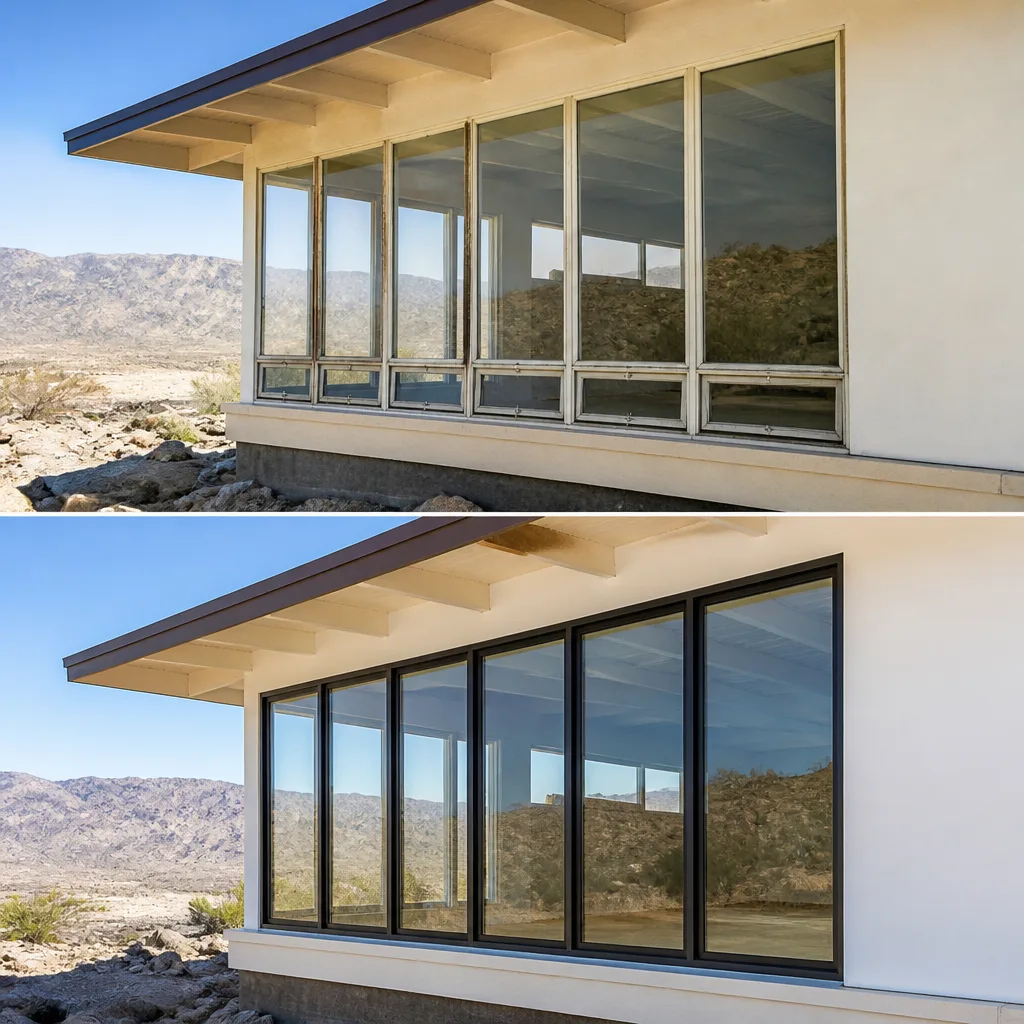
Last updated November 17, 2026
New windows and doors improve comfort, cut energy bills and add long-term value to your home. Sightline Windows & Doors Boulder City pairs proven product lines with a local vetted installing partner for lasting performance - and a price put in writing.
Choose your installer
The unit is half the job - the install is the other half. Background-checked local installers measure, set, seal and insulate every opening, and they know the lines we quote inside and out.
Select the right products
Compare styles, materials and glass packages side by side until the fit is right for your rooms, your budget and your goals. The product-line comparison below is the place to start.
Prepare your home for install
Before install day we walk you through a short checklist - furniture pulled back, treatments down, a clear path to each opening - so install day is watch-it-happen, not scramble.
Compare the Lines We Quote
Every project is priced on the same lines, side by side - the price indicators below are relative, and your consultant shows exact numbers on your actual openings.
PGTThe line homeowners arrive naming - the most impact certifications in the industry$$$
- More impact certifications than any other line we quote
- WinGuard, EnergyVue and ClassicVue Max systems built for every wind zone
- 99% on-time delivery keeps your install date on the calendar
CGIThe heavyweight impact line$$$$$
- Large-missile impact ratings for the strictest wind zones
- Architectural-grade aluminum with commercial-depth frames
- The line we quote when protection is the whole point
CWSThe value pick$$
- Vinyl systems built to strict wind codes
- Strong energy packages at the friendliest price point
- The smart start for whole-home replacements on a budget
ESWSlim lines, big glass$$$$
- Narrow-sightline aluminum for modern elevations
- Oversized openings and floor-to-ceiling glass
- Impact-rated without the bunker look
ECOThe aluminum impact workhorse$$$
- Factory-built aluminum impact systems
- A strong price-to-protection ratio for coastal homes
- Proven lines with short lead times
DIY vs Professional Impact Windows & Doors: What’s Safe to Do Yourself
A Boulder City homeowner who caulks the exterior perimeter of their own impact window doesn’t void the warranty. One who resets their own door threshold gasket often does. That gap is buried in a warranty paragraph most installers never read to you, and it’s the whole reason this guide exists. The DIY line on impact windows and doors isn’t drawn by skill. It’s drawn by who held the tool. Insurance policies and manufacturer labor warranties define “improper installation” by the person, not the craftsmanship. Below we separate the tasks that keep you in control from the ones that quietly void coverage on a Boulder City home, and we show you how to audit a professional install so you never have to guess whether the job was done right.
Quick Answer

Safe DIY tasks on impact windows and doors are limited to non-structural, non-sealing work: hardware lubrication, screen replacement, and interior trim paint. Anything that touches the opening itself – frame setting, glazing, threshold gaskets, anchoring, flashing, permit-pulled replacement – belongs to a licensed installer. The deciding factor is rarely your ability. It is who the manufacturer warranty and your insurance policy name as the responsible party when water or wind gets past the seal.
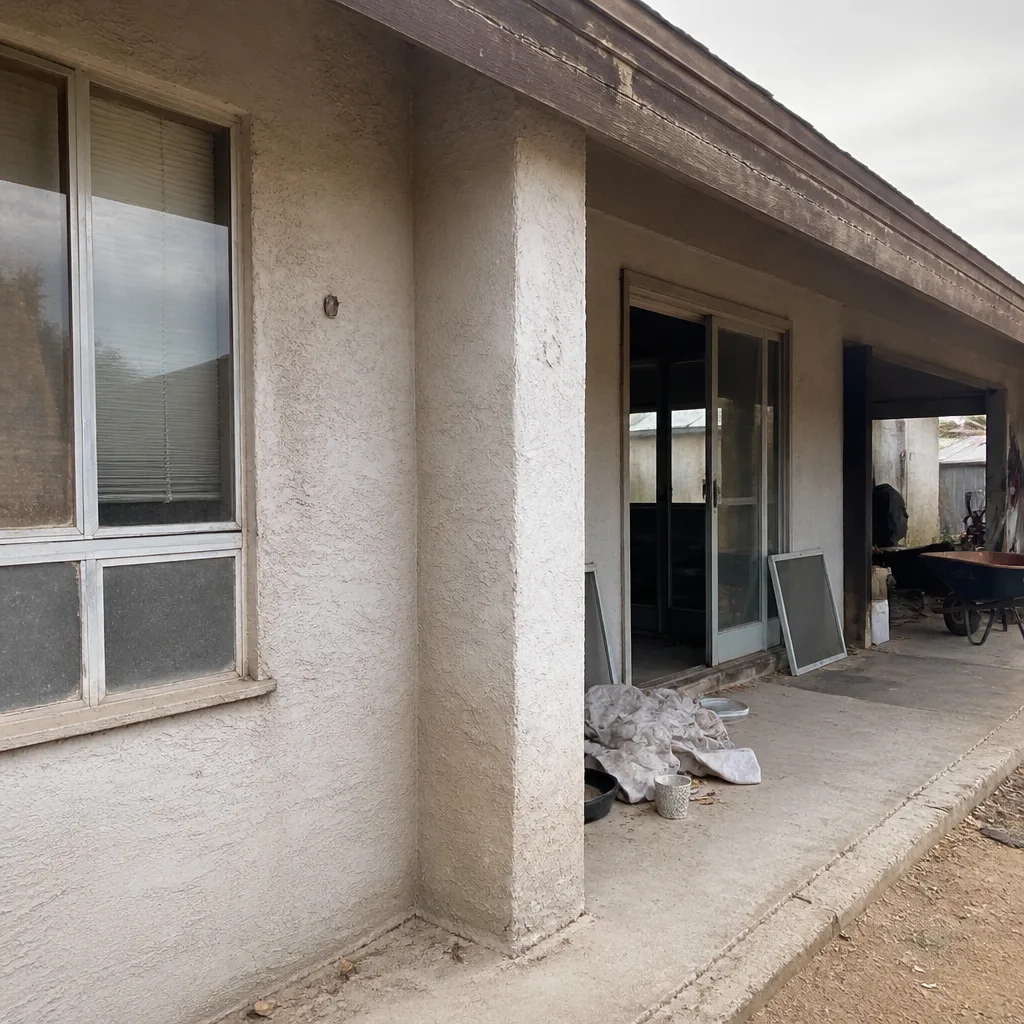 Before
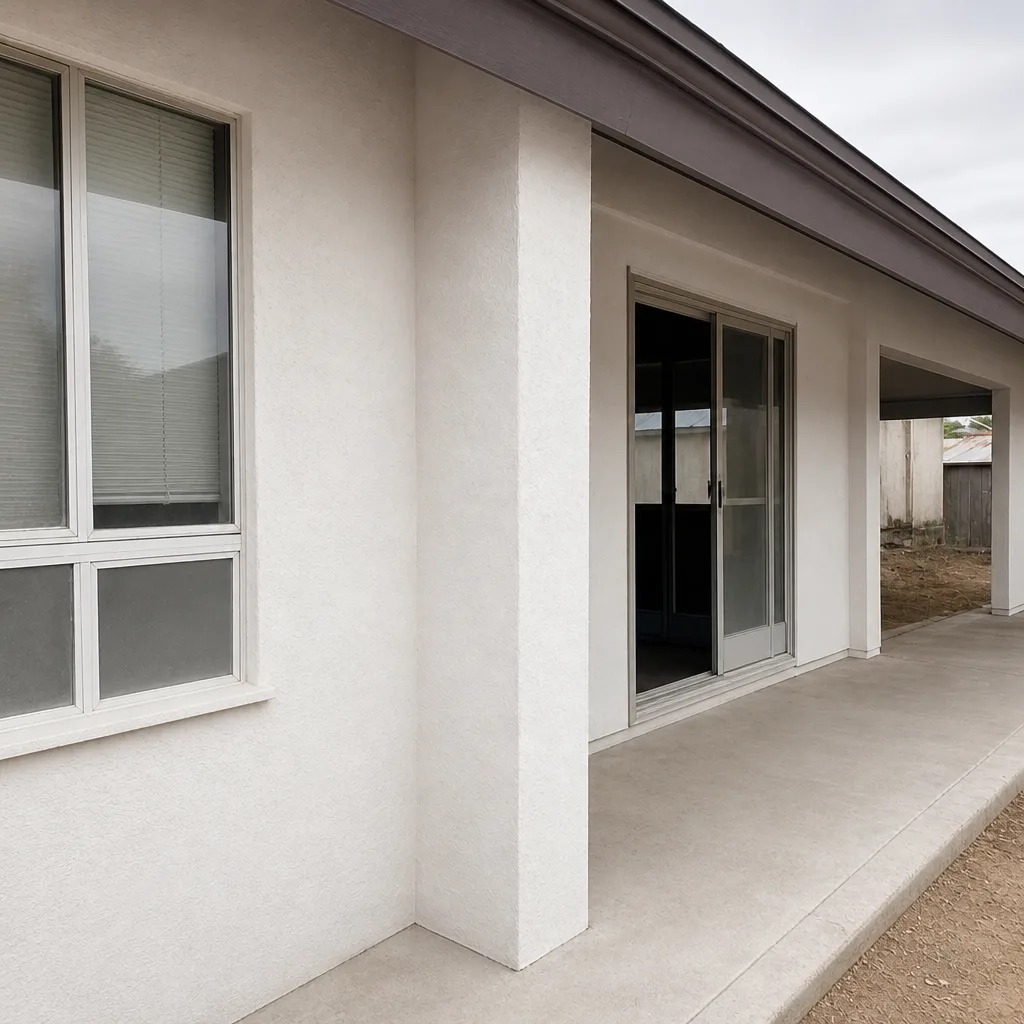 After
Table of Contents
- Why Liability, Not Skill, Draws the DIY Line
- What Manufacturer Labor Warranties Exclude
- Why Impact Door Squaring Needs a Pull Test, Not a Level
- Three Tasks That Are Safe to Do Yourself
- The Permit Consequence in Boulder City
- How to Audit a Completed Install Yourself
- Boulder City Climate and the Seal Lifespan
- Common Mistakes to Avoid
Why Liability, Not Skill, Draws the DIY Line
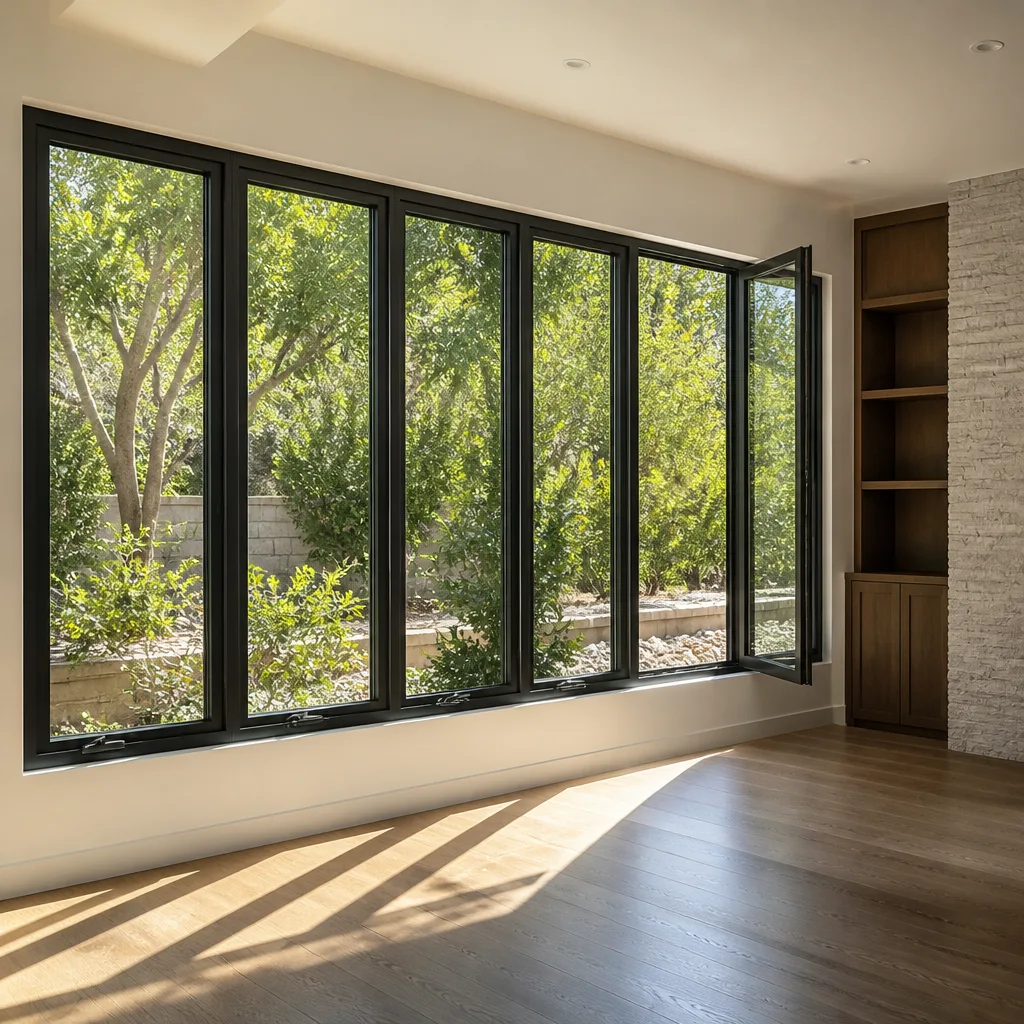
The homeowner with a table saw and patience can do a great deal of work around a house. Impact openings are the place where that competence stops mattering. When a manufacturer writes a labor warranty, it doesn’t say “professional-quality workmanship.” It says “installation by a licensed contractor” or “installation by a factory-certified installer.” The wording names a person, and the person named is not the homeowner.
Insurance sits on the same side of the line. Most homeowner policies treat impact-rated products as a rated assembly, meaning the window or door is tested and certified as a complete system. A Miami-Dade NOA or a Florida Product Approval covers the unit and the installation method together. If the assembly is reinstalled by anyone other than a licensed installer to that method, the insurer can argue the rating is void. That argument surfaces at the worst possible moment, after a storm claim. We’ve watched homeowners in Boulder City discover this only when the adjuster asked for the installer’s license number and there wasn’t one to give.
None of that implies you are not capable. It means capability is beside the point once a warranty or policy is involved. The relevant question becomes: who is on the record? If the answer is not a licensed contractor, the record is empty.
What Manufacturer Labor Warranties Exclude
Labor warranties differ from product warranties, and the split matters here. The product warranty covers the unit – glass, frame, hardware – against manufacturing defects. The labor warranty covers the installation work. The product warranty usually survives a poor install. The labor warranty usually does not.
Here is the clause language you’ll find in most manufacturer labor warranty documents, paraphrased but consistent across the industry:
- “Installation must be performed by a licensed contractor in accordance with the published installation instructions.” Self-installation triggers this exclusion.
- “Damage resulting from improper installation, including water intrusion, is not covered.” This is the clause that catches threshold gasket resets and flashing mistakes.
- “Warranty is void if the product is modified, altered, or reinstalled.” Removing and resetting a frame for any reason falls under this.
- “Warranty applies only to the original installation.” This is why moving a door that was installed professionally to a different opening ends the coverage.
- “Claims require proof of licensed installation.” Keep the invoice. Without it, the claim stalls.
Notice what’s absent from that list: caulking, painting, screen removal and replacement, and lubrication. Those tasks sit outside the labor warranty because they don’t touch the structural or sealing interface of the unit. That’s the exact boundary we’ll map out below. If you’re weighing a full replacement, our guide to Window Replacement in Boulder City walks through the professional scope in detail.
Why Impact Door Squaring Needs a Pull Test, Not a Level
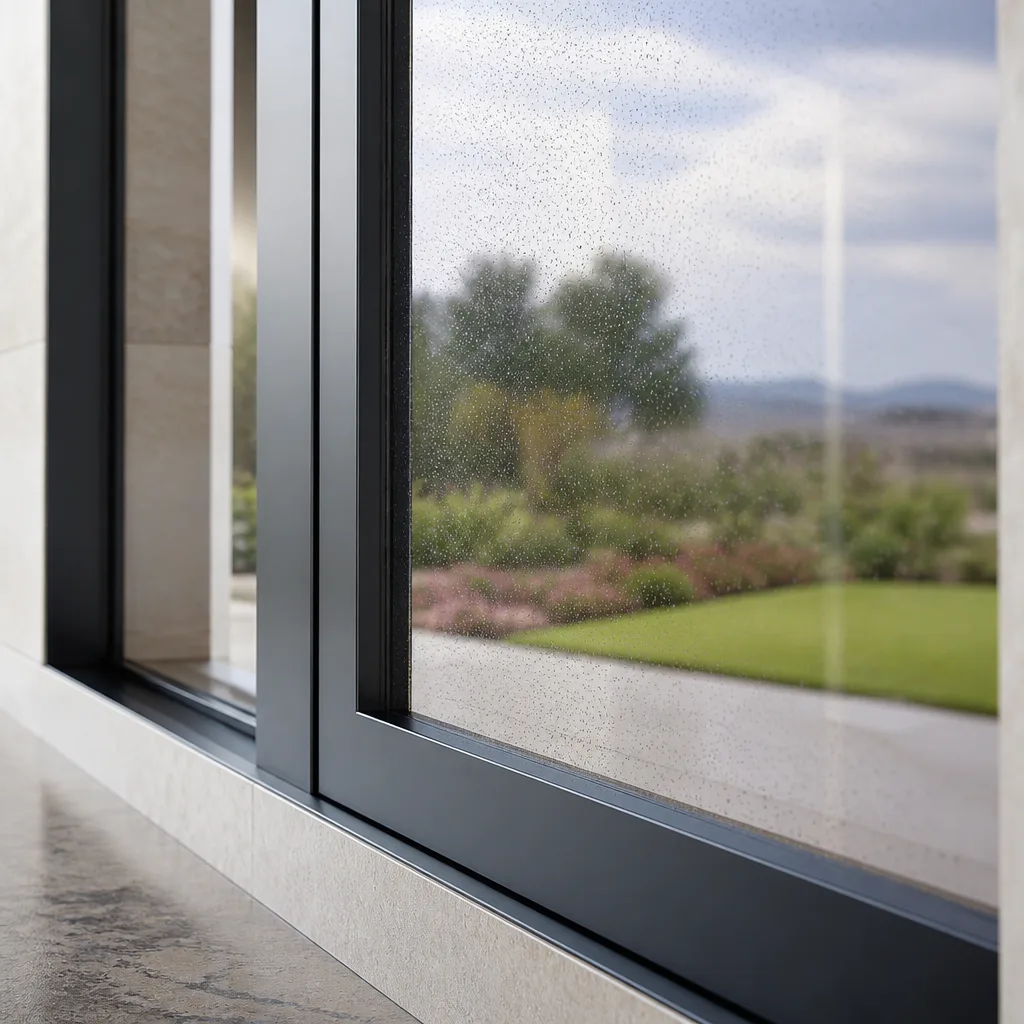
An impact door frame looks square to a spirit level. It can pass a visual check and still fail its certification. The reason is that impact-rated doors are tested as a system – frame, sash, hardware, anchoring, and gasket compression together – under a calibrated pressure differential. Squaring is not a two-dimensional question. It’s a three-dimensional one, and the tool that answers it is a pull test rig, not a level.
Here is what a proper calibration process looks like on an impact door in Boulder City:
- Frame anchor torque verified against the manufacturer’s table. Every anchor gets checked to spec, not “good and tight.”
- Diagonal measurements recorded. Both diagonals are measured and the difference logged. If it exceeds tolerance, the frame comes out.
- Gasket compression verified at multiple points around the perimeter. A dollar-bill test is not sufficient for impact-rated doors. Compression is measured.
- Pull test performed on the assembly. A calibrated load is applied to confirm the anchoring holds the design pressure without movement.
- Documentation recorded. Numbers go on paper, and the paper travels with the job.
We’ve seen homeowners in Boulder City reset a door frame after a floor replacement, get it visually square, and then watch water track under the threshold through the next monsoon season. The frame was fine. The gasket compression had changed by a few thousandths. A pull test would have caught it in ten minutes. A level never will. This is one of the reasons Door Installation in Boulder City is not a task we recommend for homeowner hands.
Three Tasks That Are Safe to Do Yourself
Most of the work around an impact opening is closed to DIY. Three tasks are open, and each has a clear edge where it stops being safe.
1. Hardware Lubrication
Impact-rated doors and windows have moving hardware – handles, multipoint locks, hinges, rollers, tilt latches – that needs lubrication once or twice a year. You can do this yourself with a dry PTFE or silicone-based lubricant. Do not use WD-40 on the lock mechanisms; it attracts dust and gums up over time.
The boundary: lubrication stops being DIY-safe the moment you need to disassemble the multipoint lock or remove a hinge pin. Once hardware comes apart, the alignment spec goes with it, and a misaligned multipoint lock on an impact door will not compress the gasket correctly. That is a warranty concern.
2. Screen Replacement
Impact windows often have a separate insect screen that is not part of the rated assembly. Swapping a torn screen is safe. Pull the spline, cut the new mesh, reseat it. Nothing here touches the glazing, the frame, or the seal.
The boundary: if the screen is integral to the impact assembly (some Sightline Windows & Doors Boulder City home customers have these in custom configurations), or if removing the screen requires unclipping a retention system that also holds the sash, stop. Screens that share mounting with glazing are not a DIY swap.
3. Interior Trim Paint
Painting the interior trim around a window or door is entirely safe as long as you keep paint off the operable hardware and off the gasket. Tape the gasket first. Use a trim-grade paint. Nothing in this task interacts with the sealing interface or the anchoring.
The boundary: exterior paint is a different matter. Exterior paint that gets onto the gasket or fills a weep hole can block drainage and trap water behind the frame. If your exterior paint job runs into the unit’s perimeter, that is a task to set down and call someone.
The Permit Consequence in Boulder City
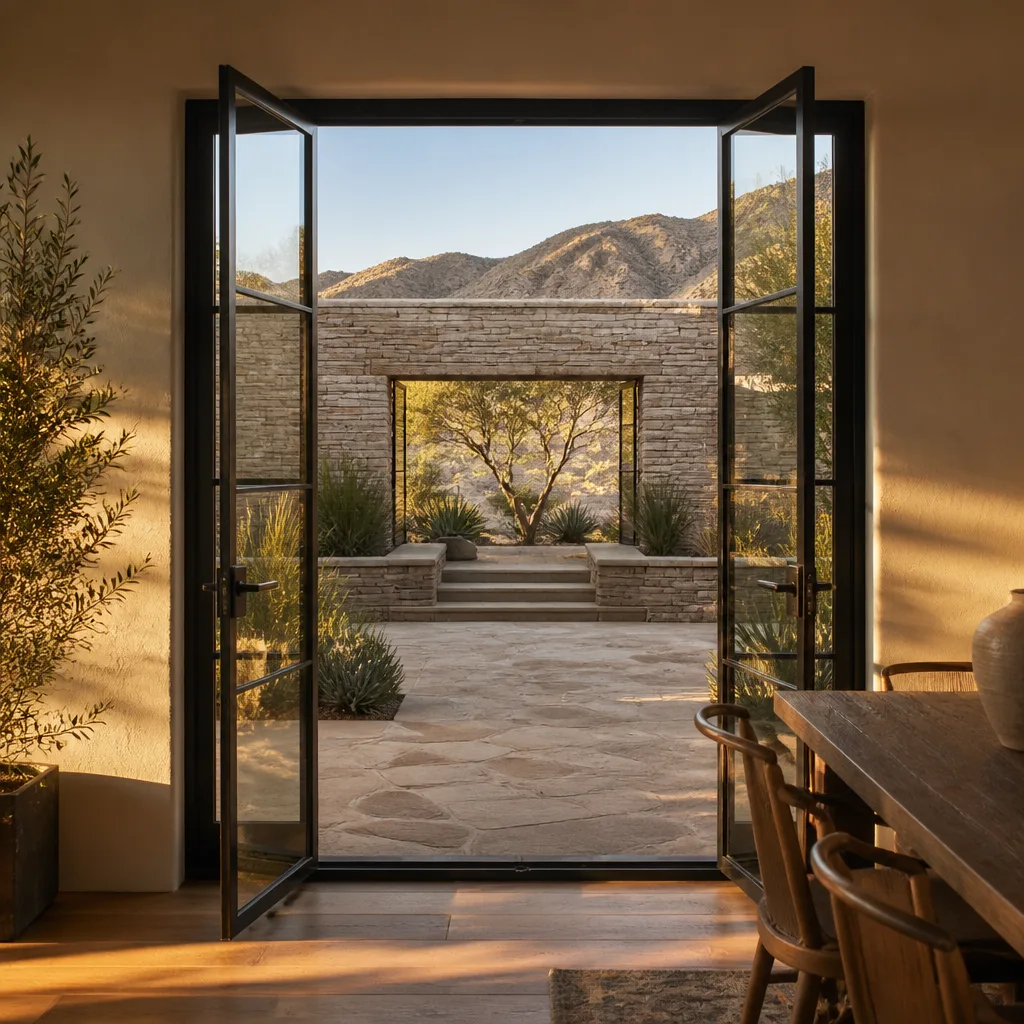
Boulder City sits under Clark County building code, and opening replacements – especially impact-rated ones – generally require a permit pulled by a licensed contractor. The permit is not paperwork for its own sake. It establishes who is legally responsible for the installation, and that responsibility follows the permit holder through any later insurance or warranty claim.
What this means in practice:
- If you pull the permit as a homeowner, the responsibility for code compliance and any future defect claim is yours. Manufacturer labor warranty exclusion applies.
- If a licensed contractor pulls the permit, the contractor is on record. Code compliance, inspection pass, and warranty coverage all point back to their license.
- If nobody pulls a permit, you have an unpermitted modification on the property record. That can surface during a future sale, refinance, or insurance review, and it will not help any claim.
Clark County inspections for impact openings are not a formality. They check anchoring, flashing, and product labeling against the approved assembly. A permit pulled by a homeowner does not exempt the job from those checks. It just shifts the liability for them. In our experience serving Boulder City, this is the single most overlooked part of the DIY conversation, and it is the one that costs the most when it goes wrong.
How to Audit a Completed Install Yourself
The good news is that the homeowner keeps a great deal of control even when the install is done by a professional. You audit. The audit doesn’t require touching the installation. It requires measuring what the installer documented.
- Request the measured survey and the written quote side by side. Rough opening width and height, sightline dimension, and product spec should match between the two documents. If they drift, ask why in writing.
- Photograph every opening before and after. A documented photo record on every job is one of the things we consider non-negotiable, and you should expect the same from any installer. Walk the perimeter and shoot each corner, each anchor point, and the threshold.
- Measure the reveal at each corner. The gap between sash and frame should be even at all four corners. A tape measure and a flashlight will tell you if it isn’t.
- Check the labeling. Impact glass carries a permanent label with the product approval number. The label should still be visible after install. If it’s been removed, ask why.
- Operate every unit ten times. Open, close, lock, unlock. Multipoint locks should engage smoothly at all points. Any catching or grinding is a call-back item.
- Run water at the exterior perimeter. A garden hose, ten minutes, directed at the frame corners and threshold. Watch the interior for tracking. Do this before you sign off, not after.
- Confirm the warranty paperwork matches the job. Product, labor, and the installer’s license number should all appear on the documents you keep.
This audit doesn’t replace a licensed installer’s work. It verifies it. If you’re comparing proposals from two contractors, our Window Installation in Boulder City page explains how to read the scope for both before you sign. And if a completed install fails any of the seven checks above, that’s what a second opinion is for.
Boulder City Climate and the Seal Lifespan
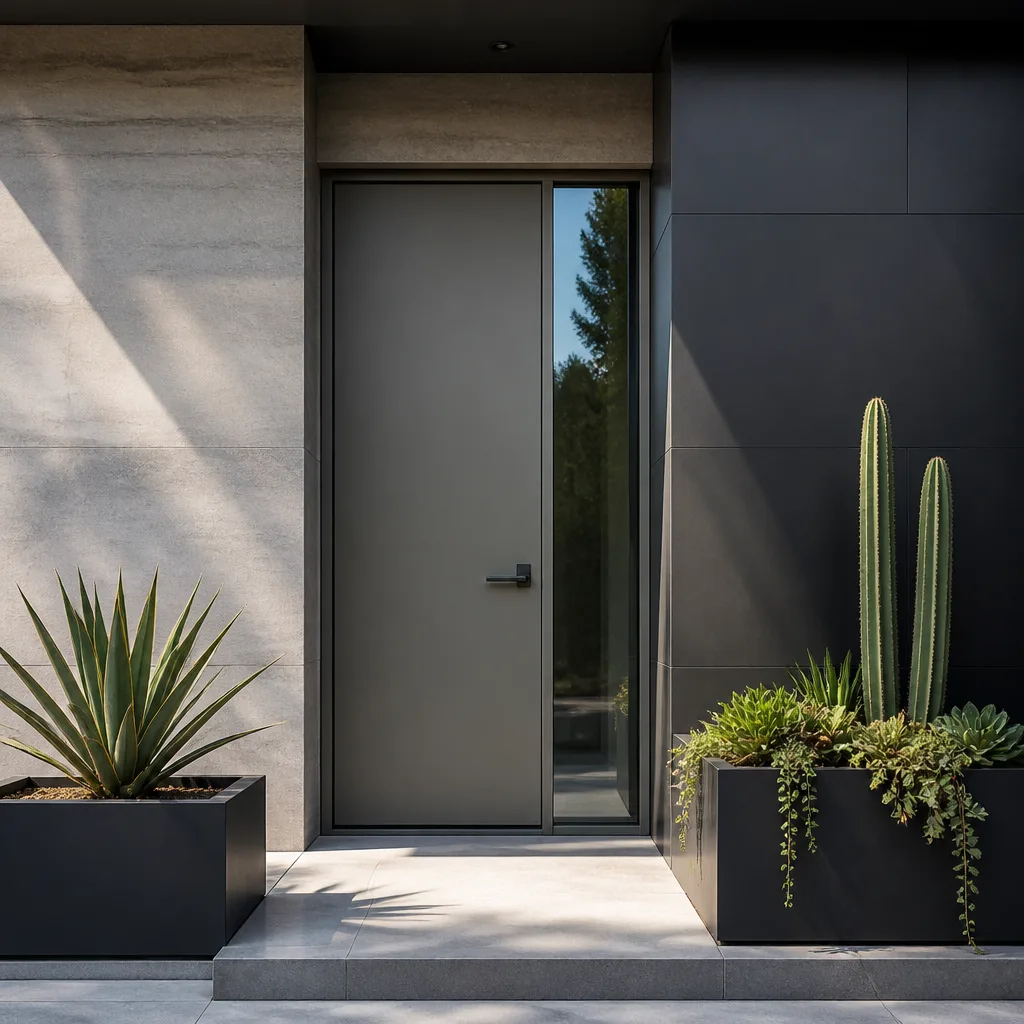
Boulder City sits at the edge of the Mojave with an average summer high near 100°F and a monsoon season that delivers sudden bursts of rain in July and August. That combination is hard on window and door seals in a way that coastal climates are not. The sealant and gasket materials that hold up in Seattle can fail faster here.
What we see most often in Boulder City:
- UV degradation on gasket materials runs faster than manufacturer averages suggest. South- and west-facing openings age first.
- Thermal cycling on frames – daily swings of 30°F or more in spring and fall – stresses the anchoring and the gasket compression over time.
- Monsoon rain driven sideways exposes threshold and sill flashings to loads that a gentle climate never delivers. Improper flashing fails here faster than anywhere.
None of this is a reason to worry. It’s a reason to schedule a hardware inspection twice a year instead of once, and to take the audit above seriously every time the seasons turn. The climate is the reason the seal on your door matters more in Boulder City than it might elsewhere.
Common Mistakes to Avoid
- Resetting a threshold gasket to stop a draft. It’s the single most common DIY move that voids the labor warranty on impact doors. Gaskets compress to spec during the install; a homeowner reset changes the compression, and the labor warranty stops applying.
- Caulking over a failing seal instead of diagnosing it. Caulk hides the symptom and traps water. In Boulder City’s summer heat, trapped water finds the frame anchor bolts within two seasons.
- Painting over the weep holes. Weep holes exist for drainage. Filling them with paint or caulk turns the sill into a bathtub during a monsoon.
- Pulling a homeowner permit for an impact opening replacement. It looks cheaper up front. It removes the manufacturer labor warranty and shifts code liability to you for the life of the installation.
- Using a level to verify an impact door install. A level does not measure pull test results or gasket compression. It measures two dimensions when the assembly is three-dimensional.
- Removing the product approval label. That label is your evidence of impact rating. Once it’s gone, you can’t prove the assembly is what you paid for.
- Skipping the post-install audit. Sign off without a documented photo record and you have no baseline if something fails at month eleven.
When to Call a Professional
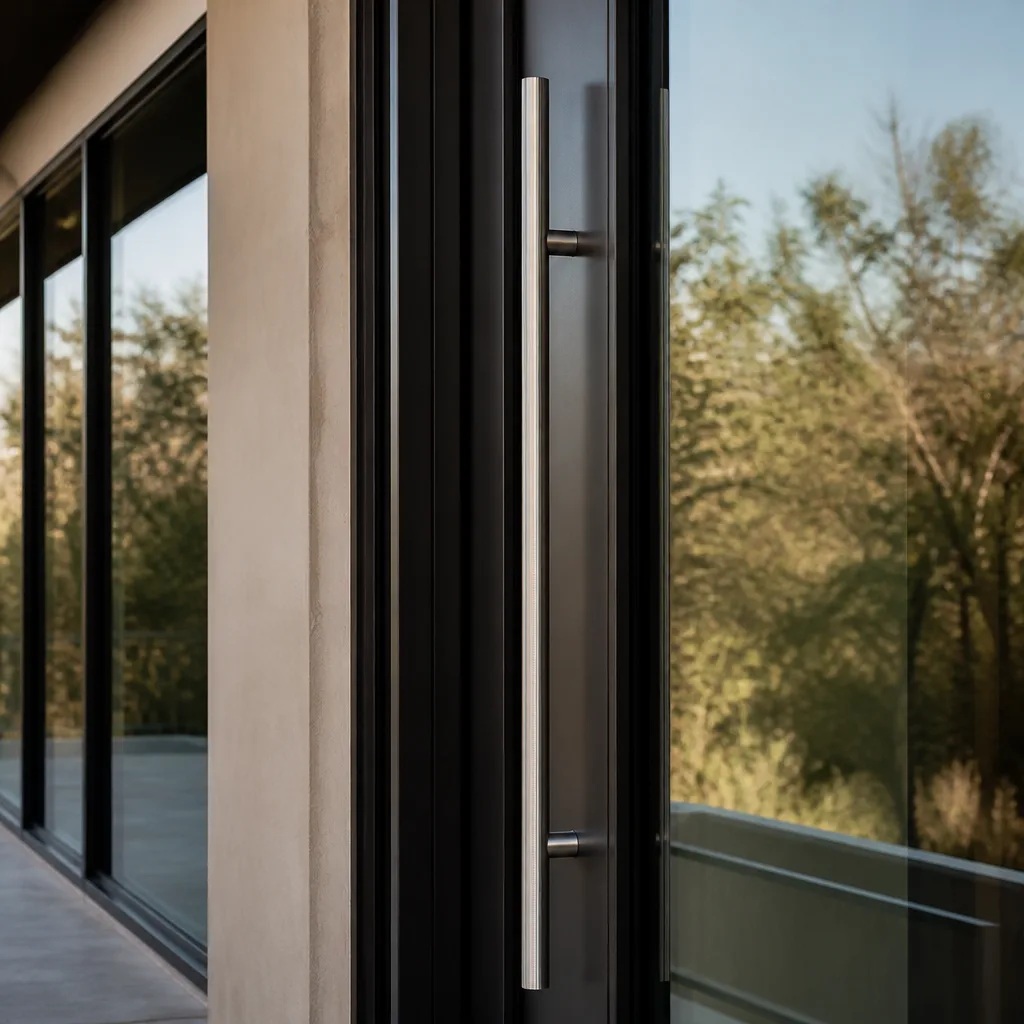
Call a licensed installer for anything that touches the opening: frame setting, glazing replacement, threshold gasket resets, anchoring, flashing, threshold adjustments, and any replacement of an impact-rated unit. If a permit is required for the work, the permit should be pulled by whoever performs the installation. If the task involves disassembling a multipoint lock, moving a frame for floor or drywall work, or diagnosing water intrusion around a sill, that task belongs to a licensed installer as well.
If you are unsure where a task falls, the cost of a second opinion is zero. Sightline Windows & Doors Boulder City offers free estimates in Boulder City – call (833) 847-4018. We’ll read your competitor’s quote line by line at no charge and tell you what we’d do differently, or tell you the quote is good. The same written-price-before-any-work-starts standard that governs every job under the Haven Standard applies to that conversation too.
Frequently Asked Questions
No, caulking your own impact window exterior does not void the manufacturer labor warranty, because caulking is not part of the rated assembly and does not change the anchoring, gasket compression, or glazing. The warranty excludes structural modification and improper installation, not routine perimeter maintenance. If you are unsure whether the caulk line you’re touching is exterior maintenance or part of the sill flashing, call (833) 847-4018 and we’ll look at a photo.
You should not. Resetting the threshold gasket on an impact door changes gasket compression, which is one of the variables tested and certified as part of the assembly. In our experience, homeowners in Boulder City who reset their own threshold gasket often void the labor warranty without realizing it – the clause is buried in the warranty document, not the product manual. Call (833) 847-4018 for a quote on a licensed reset instead.
Most impact opening replacements in Boulder City require a permit under Clark County building code, and the permit should be pulled by a licensed contractor. Pulling the permit as a homeowner removes the manufacturer labor warranty and shifts code compliance liability to you for the life of the install. The permit holder determines who is responsible if the install is later questioned during a sale other review.
Verify your impact window by running six checks: match the measured survey to the written quote, photograph each opening before and after, measure the reveal at each corner, confirm the product approval label is intact, operate every unit ten times, and run water at the exterior perimeter for ten minutes before sign-off. None of these checks require touching the installation. If any fails, call the installer before signing anything.
Generally no. Most homeowner policies treat impact-rated products as a certified assembly covering both the unit and the installation method. If the assembly is installed by anyone other than a licensed installer to that method, the insurer can argue the rating is void. Call (833) 847-4018 before you decide to install yourself – a written price from a licensed contractor often costs less than the coverage gap.
Sightline installs from eight verified manufacturer lines, including ES Windows, ECO Window Systems, Mr-Glass, and Therma-Tru, specified by performance tier and price range rather than by what happens to be in stock. Every product is matched to the opening’s requirements. Call (833) 847-4018 to schedule a free estimate and a written price before any work starts.
The Bottom Line
The DIY boundary on impact windows and doors runs through liability, not skill. Hardware lubrication, screen replacement, and interior trim paint stay yours. Frame setting, glazing, threshold gaskets, anchoring, flashing, and permit-pulled replacement belong to a licensed installer, because the manufacturer labor warranty and your homeowner policy both define “proper installation” by who held the tool. Pull the permit correctly. Keep the measured survey and the photo record. Run the audit above before you sign off. If a task touches the sealing interface or the certified assembly, it’s not a DIY decision – it’s an insurance decision, and it should be made with that in mind.
Our technicians have up to 14 years of experience installing impact-rated openings in Boulder City and the surrounding area. Every job under the Haven Standard carries a written price before any work starts, a documented photo record when it finishes, and the 365-Day Done Right Promise: if it’s not done right, we make it right. Bring us a competitor’s quote for a no-charge second opinion. Call (833) 847-4018 for a free estimate.
Written by the team at Sightline Windows & Doors Boulder City.
Six Reasons Homeowners Choose Sightline Windows & Doors Boulder City
Laminated glass and reinforced frames hold up to wind-driven rain, hail and flying debris, so your openings stay sealed when the weather turns.
Low-E insulated impact glass from our manufacturer lines commonly cuts monthly cooling bills 20-30%.
Laminated impact glass shuts out up to 40% of outside noise - traffic, neighbors, weather.
Monitoring services run $30-90 a month. Laminated impact glass resists forced entry around the clock, with no subscription.
Tighter seals and insulated glass even out hot and cold rooms and stop the drafts at the frame.
A full impact package upgrades curb appeal, buyer confidence and appraised value in one project.
Other Sightline Windows & Doors Boulder City Services