Last updated November 17, 2026
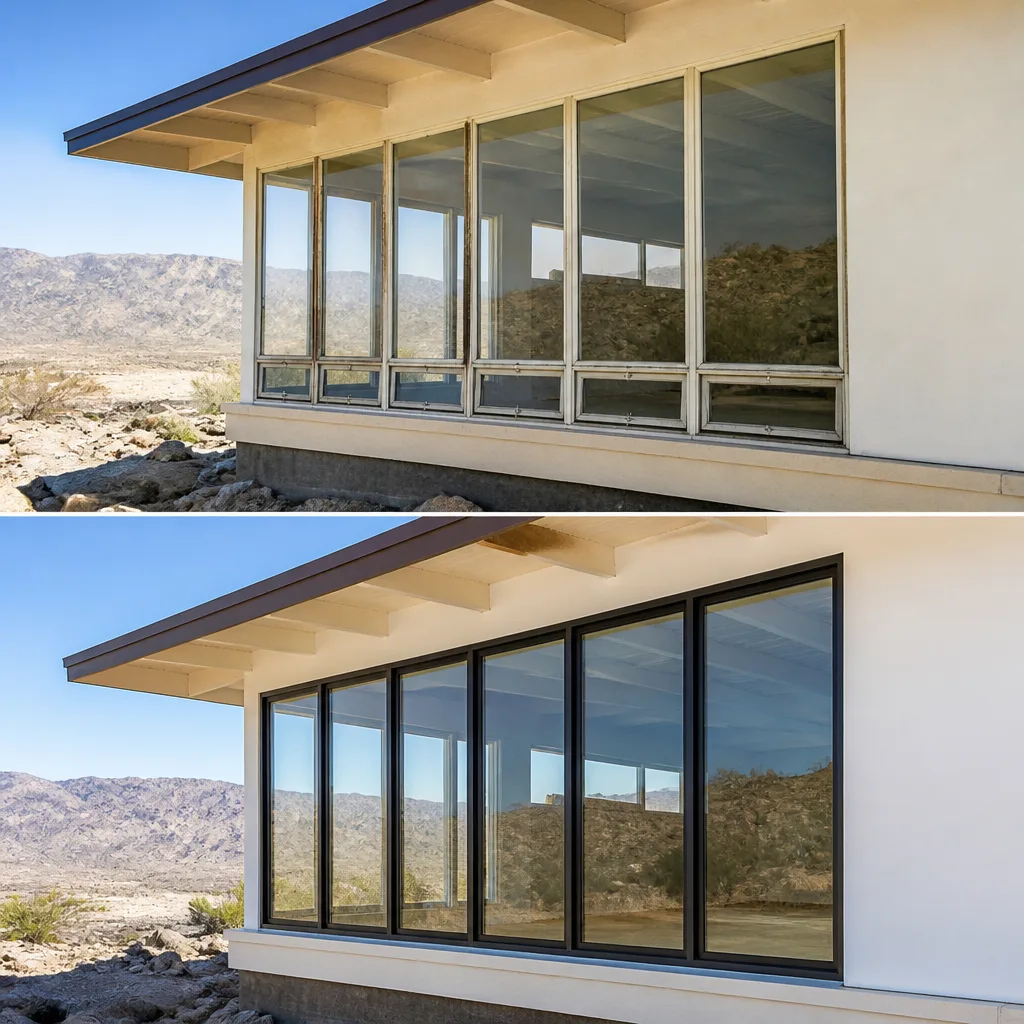
New windows and doors improve comfort, cut energy bills and add long-term value to your home. Sightline Windows & Doors Boulder City pairs proven product lines with a local vetted installing partner for lasting performance - and a price put in writing.
Choose your installer
The unit is half the job - the install is the other half. Background-checked local installers measure, set, seal and insulate every opening, and they know the lines we quote inside and out.
Select the right products
Compare styles, materials and glass packages side by side until the fit is right for your rooms, your budget and your goals. The product-line comparison below is the place to start.
Prepare your home for install
Before install day we walk you through a short checklist - furniture pulled back, treatments down, a clear path to each opening - so install day is watch-it-happen, not scramble.
Compare the Lines We Quote
Every project is priced on the same lines, side by side - the price indicators below are relative, and your consultant shows exact numbers on your actual openings.
PGTThe line homeowners arrive naming - the most impact certifications in the industry$$$
- More impact certifications than any other line we quote
- WinGuard, EnergyVue and ClassicVue Max systems built for every wind zone
- 99% on-time delivery keeps your install date on the calendar
CGIThe heavyweight impact line$$$$$
- Large-missile impact ratings for the strictest wind zones
- Architectural-grade aluminum with commercial-depth frames
- The line we quote when protection is the whole point
CWSThe value pick$$
- Vinyl systems built to strict wind codes
- Strong energy packages at the friendliest price point
- The smart start for whole-home replacements on a budget
ESWSlim lines, big glass$$$$
- Narrow-sightline aluminum for modern elevations
- Oversized openings and floor-to-ceiling glass
- Impact-rated without the bunker look
ECOThe aluminum impact workhorse$$$
- Factory-built aluminum impact systems
- A strong price-to-protection ratio for coastal homes
- Proven lines with short lead times
The Complete Energy-Efficient Windows Guide for Boulder City Homeowners
Most window advice written for Southern Nevada was written for Las Vegas or Phoenix, and it doesn’t survive a trip up the hill. Boulder City sits around 2,500 feet, its winters are meaningfully colder than the valley floor, and its historic district design standards reject several exterior solar control products that Clark County installers recommend without a second thought. Homeowners tend to learn this at the building department counter, after the deposit is already down. This guide covers what actually works here: the U-factor and SHGC numbers worth targeting, how the historic district narrows your product list, where state energy code and city minimums diverge, and why a measured survey matters more in Boulder City’s older housing stock than almost anywhere else in the metro.
Quick Answer
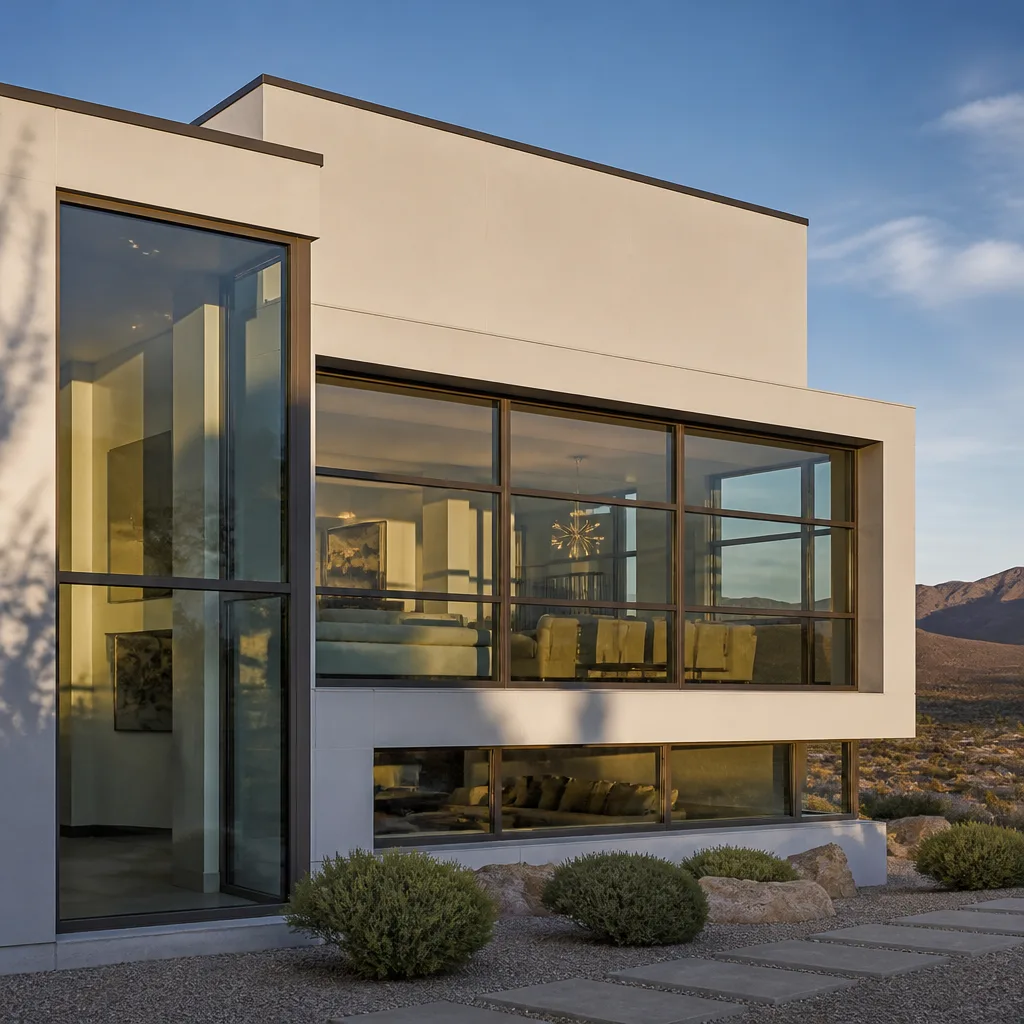
For energy-efficient windows in Boulder City, Nevada, aim for a U-factor of 0.30 or lower and an SHGC in the 0.25 to 0.40 range, then confirm the product is permitted for your lot before you commit. In the historic district, frame color, exterior profile depth, and visible muntin patterns are restricted, so product selection starts with the design standards, not the spec sheet. A measured survey of your existing rough openings should come first, because non-standard sizing is common in Boulder City’s older homes.
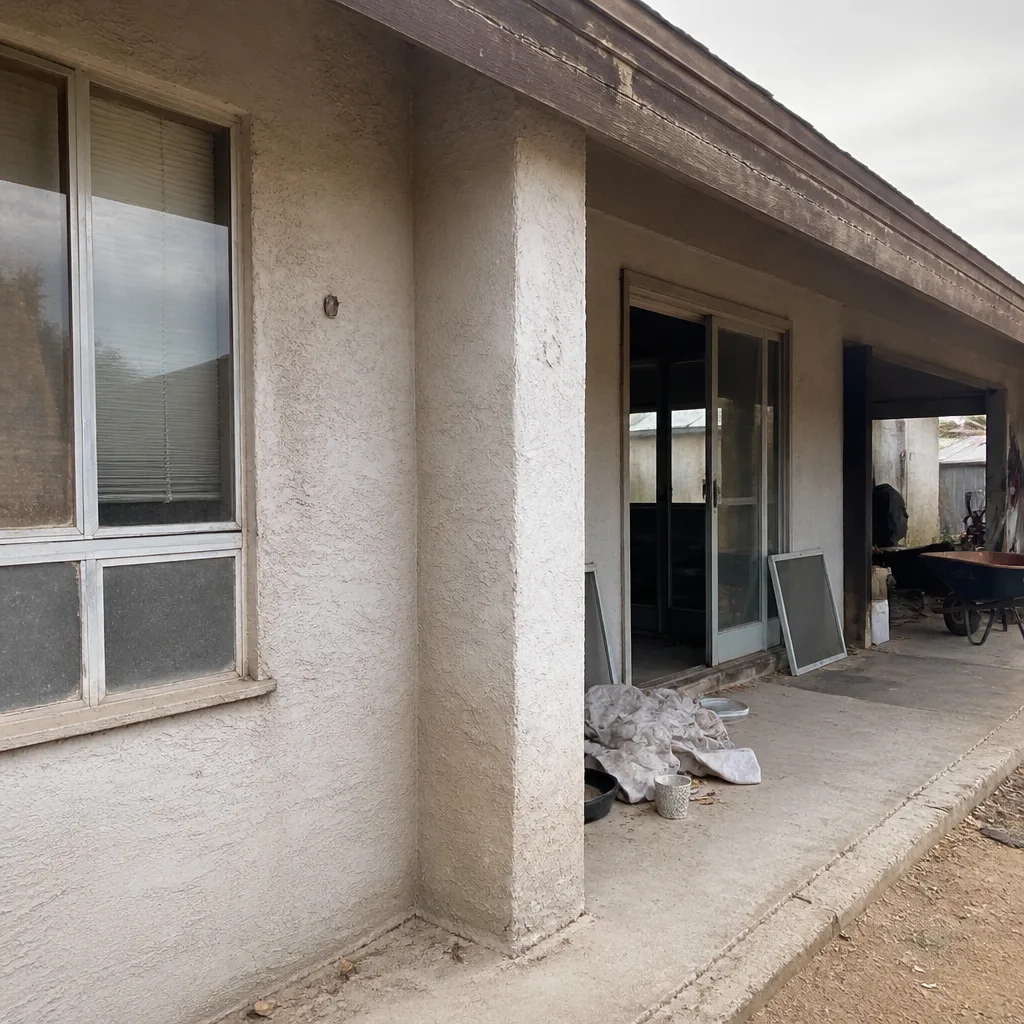 Before
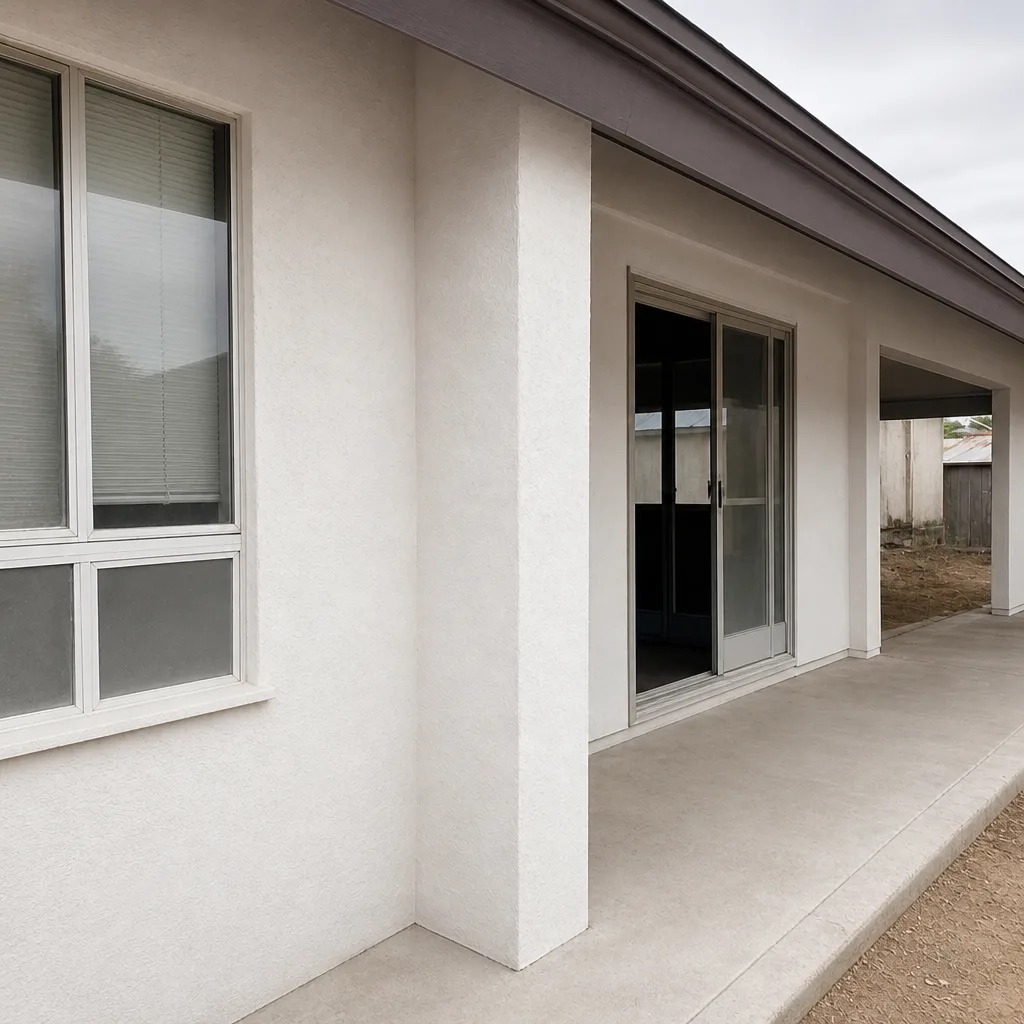 After
Table of Contents
- Why Boulder City’s Elevation Changes the U-Factor Math
- What the Historic District Allows and What It Rules Out
- SHGC vs. U-Factor: Weighting Them for This Climate
- Nevada Energy Code vs. Boulder City Building Department Minimums
- Why the Measured Survey Comes Before the Product
- The Six-Step Process for a Compliant Window Upgrade
- Reading Manufacturer Lines by Performance Tier
Why Boulder City’s Elevation Changes the U-Factor Math
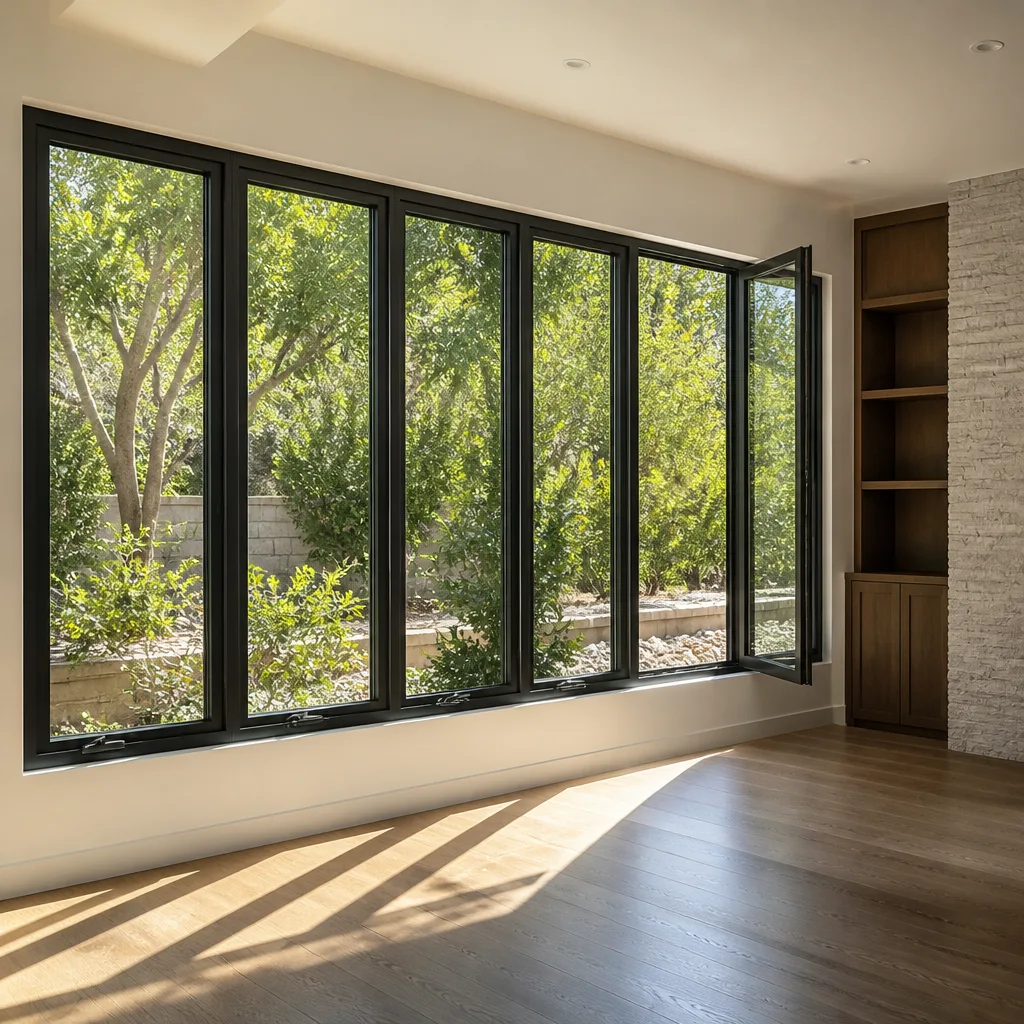
Heating degree days are a measure of how much heating a building needs over a year. They’re calculated from how far the daily average temperature falls below a base (usually 65°F for residential work). Boulder City runs a real heating load from roughly November through March that Las Vegas proper largely doesn’t. A Las Vegas installer optimizing for summer cooling can push SHGC down and treat U-factor as an afterthought. Do that here and you’ll have a cold house in January.
In our experience surveying homes across Boulder City, the practical effect is a U-factor target closer to 0.30 than the 0.35 to 0.40 some valley-focused installers will quote you. That’s the whole point of a U-factor number: it measures how quickly heat escapes the building. The lower the number, the slower the loss, and in a 2,500-foot-elevation winter that difference is measurable on your gas or electric bill.
Elevation also affects wind exposure. Homes on the ridges above town see more sustained wind than the sheltered blocks near the lake, and air infiltration through poorly sealed frames matters about as much as the glass. A double-pane window with an excellent U-factor installed with a sloppy frame seal will underperform a slightly cheaper unit with a careful install. We’ve seen this repeatedly, and it’s why we treat the frame condition as part of the energy calculation, not a separate line item.
- U-factor: how quickly heat passes through the window. Lower is better in winter.
- Heating degree days: a measure of how much heating a building needs annually. Boulder City’s are higher than Las Vegas’s.
- Air infiltration: air leaking around the frame and sash, independent of glass performance.
- Frame condition: a warped or rotted frame undermines any glass spec, no matter how good.
What the Historic District Allows and What It Rules Out
The Boulder City historic district design standards are specific about what a window can look like from the street. Frame color, exterior profile depth, and visible muntin patterns are all in scope. Several products marketed as desert-heat solutions, particularly exterior films, applied reflective coatings, and certain protruding or projecting profiles, don’t pass review. That’s not a technicality. It’s a hard limit on product selection.
Practical consequences to know before you shop:
- Frame color: applied finishes and some factory colors aren’t permitted. The color you see in a showroom may not be approved for your block.
- Exterior profile depth: the observable depth of the frame from the exterior wall face is regulated. Certain replacement and flush-flange profiles exceed it.
- Visible muntin patterns: divided-light and simulated divided-light patterns must match existing configurations. You can’t add grilles the neighbors don’t have.
- Exterior solar film: often prohibited, which removes a common cooling strategy from the table.
This is where ENERGY STAR numbers have to meet design review. A product with a mouth-watering 0.22 SHGC may be ineligible if its exterior is out of spec. The workable approach is to shortlist products that meet both, then compare where they land on performance.
If your home is outside the historic district, you skip most of this, but the surrounding neighborhoods still have their own character considerations. Either way, if you’re moving from an older unit to a modern replacement, our guide to Window Replacement in Boulder City walks through the changeover in more detail.
SHGC vs. U-Factor: Weighting Them for This Climate
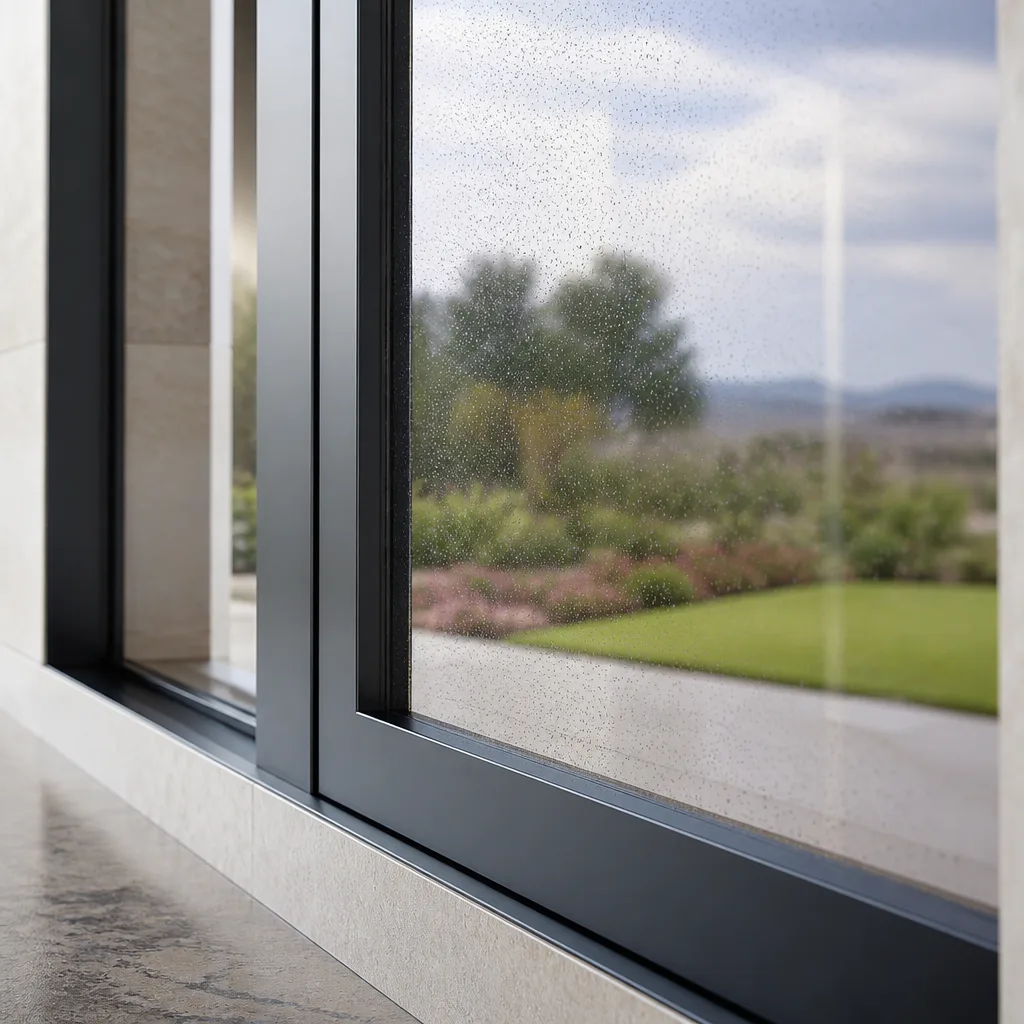
Solar heat gain coefficient (SHGC) measures how much solar heat gets through the window. It matters most in summer, when solar gain adds cooling load. U-factor matters most in winter, when heat loss drives heating cost. These two sometimes pull in opposite directions: a very low SHGC glass is often more reflective and can slightly reduce passive winter gain.
For Boulder City specifically, the weighting breaks down by season:
- June through September: SHGC dominates. A low-SHGC glass cuts afternoon cooling load, which is the single biggest driver of summer bills here.
- December through February: U-factor dominates. Boulder City’s cooler nights and short daylight mean heat-loss performance beats solar gain performance.
- Shoulder months: both matter roughly equally, but so does air infiltration through the frame, which is where a lot of low-grade installs leak.
What does this mean in a single product? A window in the 0.30 U-factor, 0.25 to 0.35 SHGC range is a sensible middle for most Boulder City homes. It cuts summer solar gain without strangling winter passive heat. If your home is entirely north-facing with lots of shaded glass, you can lean toward a slightly higher SHGC and lower U-factor without much winter penalty. South-facing glass with no shading benefits from the opposite. We measure orientation as part of the survey because “average house” windows don’t exist.
Nevada Energy Code vs. Boulder City Building Department Minimums
These are not the same number, and mixing them up is one of the more common mistakes we see. Nevada’s adopted energy code sets a prescriptive baseline for window performance. Boulder City’s building department, working within that framework, applies its own review that layers in historic district standards and local permit requirements. A window that meets the state’s prescriptive path may not clear Boulder City’s review if the product falls outside the design standards.
Two consequences:
- State code is a floor, not a target. Meeting Nevada’s minimum is the baseline. In this climate, and with federal tax credit tiers available for higher-performance products, going past the minimum is usually worth the marginal cost.
- The city review is the gate. Before you order glass, confirm the product is permitted for your lot. If your home is in the historic district, that confirmation happens at design review, not at the supplier.
Nevada Energy Star tier requirements and the city’s minimums sit on different scales. A window can carry an ENERGY STAR label and still be ineligible for a Boulder City address. Ask your installer to confirm the letter of the applicable standard, in writing, for the specific product and the specific property. If the installer can’t show you that, or waves it off as paperwork, be careful. That’s a signal, and not a good one.
Why the Measured Survey Comes Before the Product
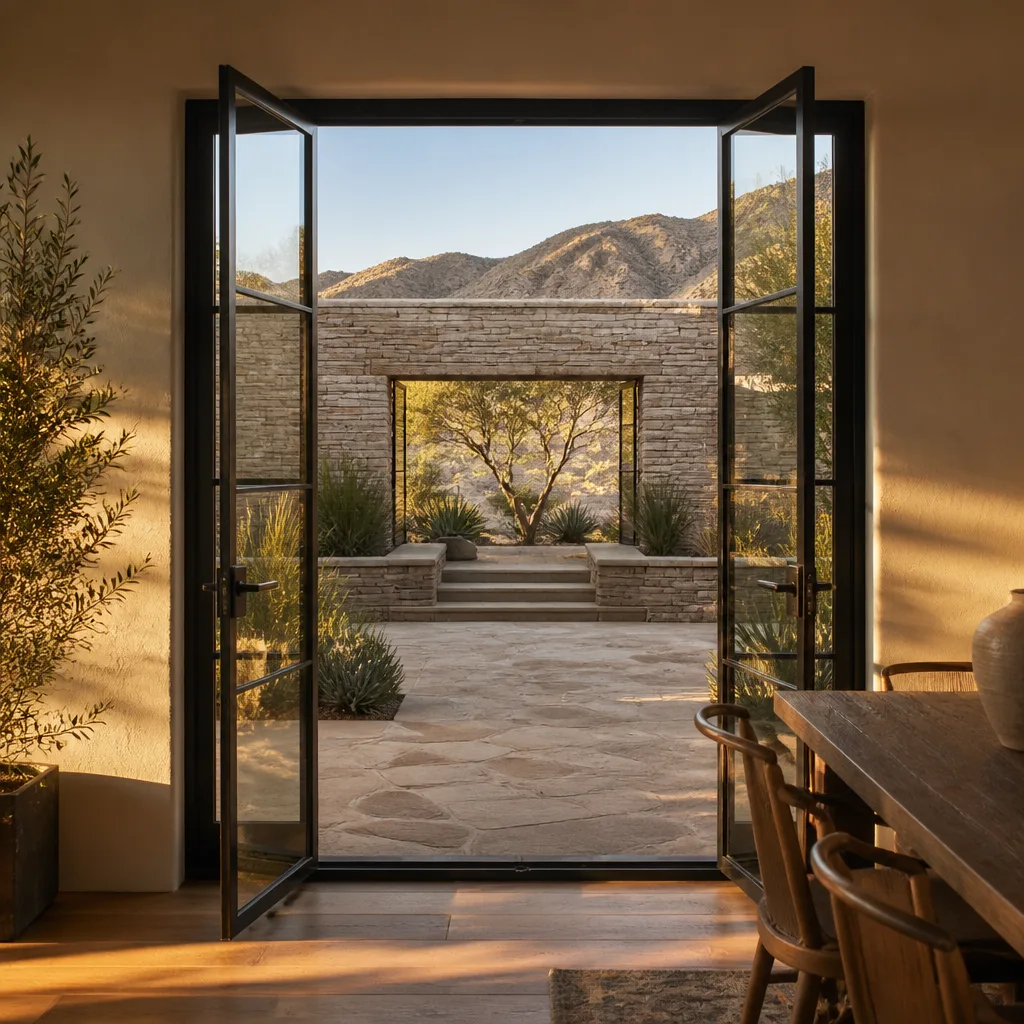
Boulder City’s housing stock includes a lot of homes built between the 1930s and 1970s, and the original framing wasn’t always square. Rough-opening tolerances in these homes can vary by a quarter inch or more from one window to the next, and replacement units that assume a standard opening won’t fit without expensive rework. This isn’t a defect. It’s just how older construction worked.
A measured survey records the actual dimensions of each opening, not a stock size from a plan book. It also captures the current frame condition, the wall depth, the existing glass type, and the orientation. From those numbers, the quote is built. Every measurement and every dollar in the quote draw from the same document.
Non-standard sizes also mean special-order lead times, which we tell every Boulder City customer to plan for. A standard-size window might ship in a couple of weeks; a custom size can run six to ten. The measured survey catches that early, so the timeline you’re given isn’t adjusted twice.
This is the same discipline we apply at every scale of the job. If you’re weighing new construction versus a like-for-like changeover, the Window Installation in Boulder City page covers how we handle both. We also review any competitor’s written estimate at no charge, so you can compare the scope line by line.
The Six-Step Process for a Compliant Window Upgrade
We run every project through the same six steps, because skipping any one of them is where the surprises come from:
- Measured survey. We measure each opening, record frame condition, wall depth, glass type, and orientation. You keep the survey.
- Design-standards check. If your home falls within the historic district, we review the design standards against the proposed product before specifying anything. Frame color, profile depth, and muntin patterns get confirmed early.
- Performance selection. We match U-factor and SHGC to your orientation and your priority between summer cooling and winter heat retention, using products from established manufacturer lines where they fit the spec.
- Written price. The quote follows from the survey and the specified product. It’s written before any work starts, and it doesn’t drift after the fact.
- Permit. Where the Boulder City building department requires a permit, we pull it. Where design review is required, we coordinate that. Inspections are scheduled, not deferred.
- Installation and record. The install follows the written scope. Every job ends with a documented photo record of what was installed, how it was sealed, and the condition of the surrounding frame, delivered along with the warranty paperwork.
Homeowners who skip step two tend to discover the problem in step five, and the cost of the discovery is a deposit already paid, a product that has to be returned, and a delay measured in weeks. Skipping step one is the second-costliest mistake, because a special-order window measured wrong can’t be made right on the spot.
Reading Manufacturer Lines by Performance Tier
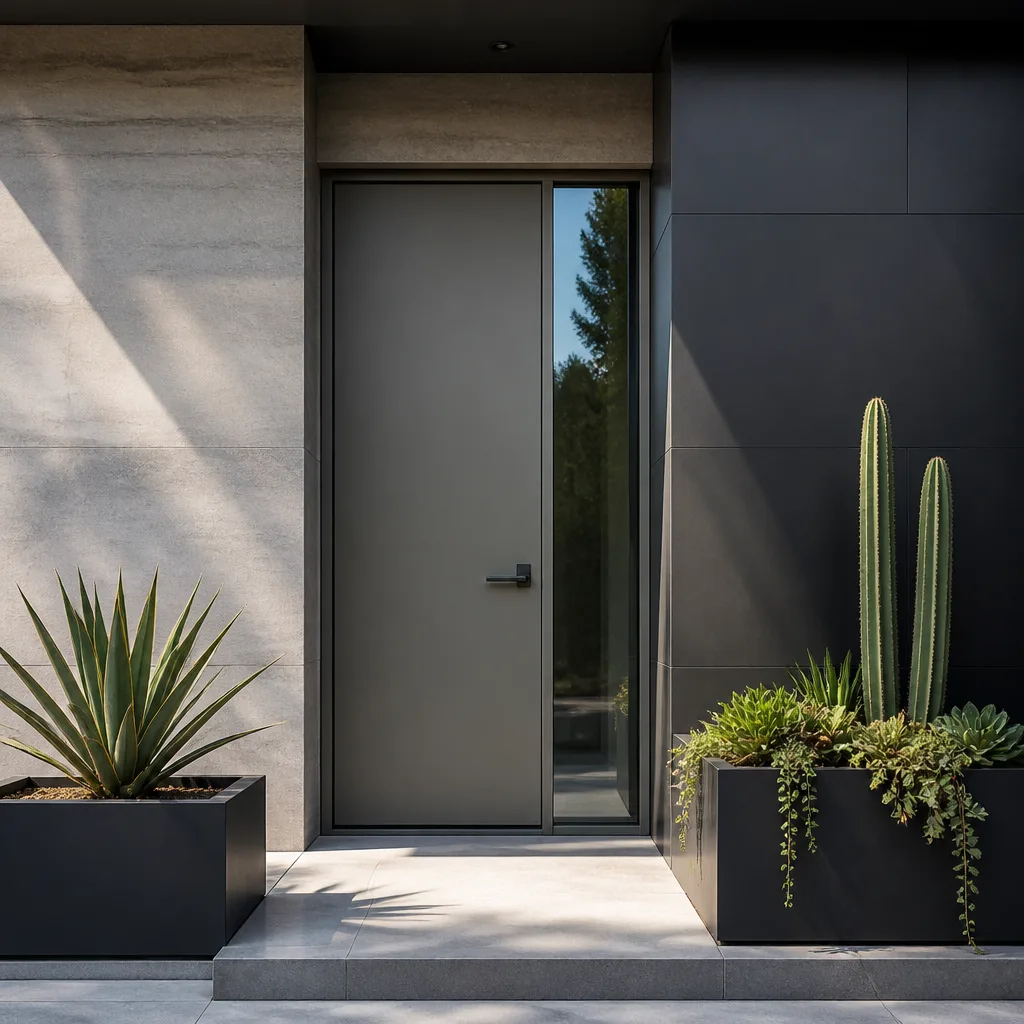
We work across eight manufacturer lines, and the useful way to specify them is by what the opening requires, not by which brand is trending. For most Boulder City homes, the decision comes down to a few tiers:
An entry tier that meets Nevada code and fits historic district constraints, useful when budget is the primary driver and the window is on a wall that isn’t load-bearing to comfort. A mid tier that brings U-factor into the 0.30 range with better frame and glazing. And a high-efficiency tier for homes where performance is the point.
In our experience, ES Windows and ECO Window Systems both offer strong mid-tier options, and product lines like those often clear historic district review without custom changes because the exterior profiles stay shallow. Mr-Glass product families are a reasonable entry-tier fit where the opening is standard. When the project also involves the entry door, Therma-Tru is a common pairing because the door performance can be specified against the same energy criteria.
The critical point is that specifying a brand before you specify the required U-factor, SHGC, and design-standard constraints is backwards. Brand selection follows the spec. It’s the same approach across every category we install, including when we handle the Door Installation in Boulder City side of a combined project. And if you’re just starting the research at the top, the Sightline Windows & Doors Boulder City home page is the right place to begin.
Common Mistakes to Avoid
- Buying a valley-climate window. Products tuned for Phoenix or Las Vegas summer heat may be out of spec for Boulder City’s colder winters. Check the U-factor against the 2,500-foot winter, not the valley’s.
- Committing to a product before design review. In the historic district, applied films and some finishes are rejected outright. Confirm eligibility before the deposit, not after.
- Mixing up state code and city minimums. A window that meets Nevada’s prescriptive path may not clear Boulder City’s review. Ask for the written confirmation against the specific product and property.
- Relying on a stock size. Older Boulder City homes have non-standard rough openings. A stock-size order fit to them will leak, or won’t fit, and special-order lead times blow the schedule.
- Prioritizing SHGC when U-factor drives your bill. The winter heating load matters here. Chasing a very low SHGC can hurt more than it helps if the U-factor isn’t also strong.
- Accepting a verbal price. Verbal estimates and written quotes drift. Get the price in writing against the measured survey and you’ll know exactly what you’re paying for.
- Skipping the photo record. A documented install record matters at resale, warranty time, and if you ever need to show what’s behind the wall. Ask for it.
When to Call a Professional
Call a professional when the frame is warped or visibly rotted, when the existing glass is single-pane and noisy, when the historic district applies, or when you’re replacing more than a couple of windows at once. Those are jobs where the measured survey and the design-standards check do more work than the shopping. If your home has a custom opening, or if a prior installer’s work has left the opening in a state you don’t trust, that’s also a call-a-pro situation. Sightline Windows & Doors Boulder City offers free estimates in Boulder City. Our technicians have up to 14 years of experience, every job is covered by the Haven Standard and its 365-Day Done Right Promise, and you’ll get a written price before any work starts. Call (833) 847-4018 to schedule your free estimate.
Frequently Asked Questions
Aim for 0.30 or lower for most Boulder City homes. The elevation sits higher than Las Vegas, so the winter heating load is real, and a U-factor in the 0.35 to 0.40 range leaves heat on the table. If your home is heavily shaded north-facing, a slightly higher U-factor is tolerable, but 0.30 is the sensible floor. Call (833) 847-4018 for an exact quote against your specific openings; estimates are free.
SHGC controls how much solar heat enters the window (summer). U-factor controls how fast indoor heat escapes (winter). In Boulder City, SHGC matters most June through September, and U-factor matters most December through February. A 0.30 U-factor with 0.25 to 0.40 SHGC balances both seasons. Call (833) 847-4018 and we’ll review the numbers against your home’s orientation.
Generally no. Exterior solar film and applied coatings are commonly rejected under Boulder City’s historic district design standards because they change the visible appearance from the street. Low-SHGC glass inside a code-compliant frame is the usual workaround. Confirm eligibility with your installer and the city before ordering. Call (833) 847-4018 for a free second opinion on any written estimate you’ve received.
No. Nevada’s adopted energy code sets a prescriptive performance floor, and Boulder City’s building department layers its own permit and design review on top. A window can meet state code and still be ineligible for a Boulder City address. Always ask for written confirmation against the specific product and property. Call (833) 847-4018 to review the spec against your address.
Timeline depends mostly on special-order lead times. Standard-size windows may ship in a couple of weeks; custom sizes common in older Boulder City homes often run six to ten weeks. Installation itself is usually one to three days for a whole house, depending on the count. Call (833) 847-4018 and we’ll build a timeline against your measured survey.
No. The written price follows from the measured survey and stays fixed. If we didn’t measure it and didn’t write it, it’s not on you. That’s the Haven Standard: have it in writing before anyone lifts a tool. Call (833) 847-4018 to schedule the survey and get the price in writing.
The Bottom Line
Boulder City window efficiency comes down to four specifics: a U-factor around 0.30 to answer the elevation’s winter load, an SHGC in the 0.25 to 0.40 range to handle summer solar gain, a design-standards check before any product is committed, and a measured survey that catches the non-standard openings common in the city’s older homes. Get all four right and the product selection, the price, and the permit all follow. Skip any one of them and the process stalls at the building department or at the supplier. The written price should be there before anyone lifts a tool, and that’s how we run every Boulder City job.
Written by the team at Sightline Windows & Doors Boulder City.
Six Reasons Homeowners Choose Sightline Windows & Doors Boulder City
Laminated glass and reinforced frames hold up to wind-driven rain, hail and flying debris, so your openings stay sealed when the weather turns.
Low-E insulated impact glass from our manufacturer lines commonly cuts monthly cooling bills 20-30%.
Laminated impact glass shuts out up to 40% of outside noise - traffic, neighbors, weather.
Monitoring services run $30-90 a month. Laminated impact glass resists forced entry around the clock, with no subscription.
Tighter seals and insulated glass even out hot and cold rooms and stop the drafts at the frame.
A full impact package upgrades curb appeal, buyer confidence and appraised value in one project.
Other Sightline Windows & Doors Boulder City Services