Last updated November 17, 2026
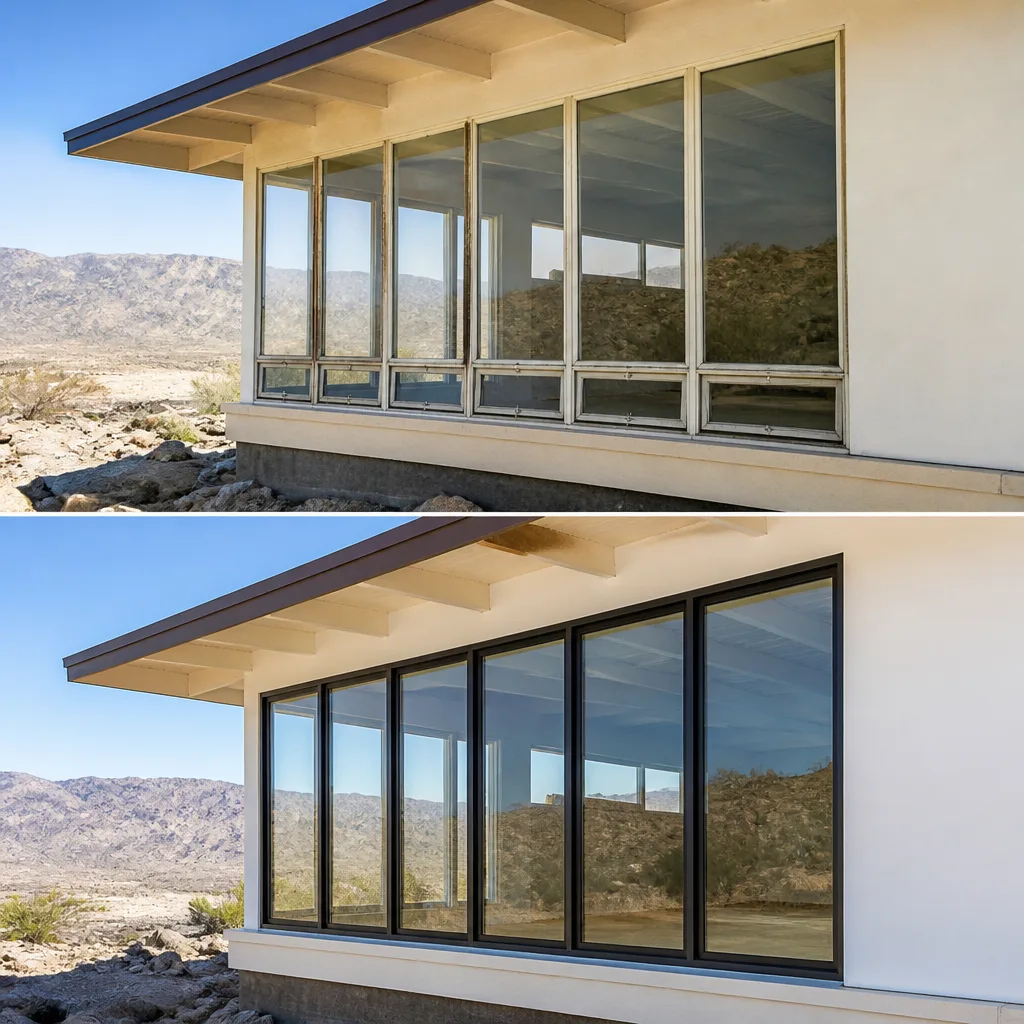
New windows and doors improve comfort, cut energy bills and add long-term value to your home. Sightline Windows & Doors Boulder City pairs proven product lines with a local vetted installing partner for lasting performance - and a price put in writing.
Choose your installer
The unit is half the job - the install is the other half. Background-checked local installers measure, set, seal and insulate every opening, and they know the lines we quote inside and out.
Select the right products
Compare styles, materials and glass packages side by side until the fit is right for your rooms, your budget and your goals. The product-line comparison below is the place to start.
Prepare your home for install
Before install day we walk you through a short checklist - furniture pulled back, treatments down, a clear path to each opening - so install day is watch-it-happen, not scramble.
Compare the Lines We Quote
Every project is priced on the same lines, side by side - the price indicators below are relative, and your consultant shows exact numbers on your actual openings.
PGTThe line homeowners arrive naming - the most impact certifications in the industry$$$
- More impact certifications than any other line we quote
- WinGuard, EnergyVue and ClassicVue Max systems built for every wind zone
- 99% on-time delivery keeps your install date on the calendar
CGIThe heavyweight impact line$$$$$
- Large-missile impact ratings for the strictest wind zones
- Architectural-grade aluminum with commercial-depth frames
- The line we quote when protection is the whole point
CWSThe value pick$$
- Vinyl systems built to strict wind codes
- Strong energy packages at the friendliest price point
- The smart start for whole-home replacements on a budget
ESWSlim lines, big glass$$$$
- Narrow-sightline aluminum for modern elevations
- Oversized openings and floor-to-ceiling glass
- Impact-rated without the bunker look
ECOThe aluminum impact workhorse$$$
- Factory-built aluminum impact systems
- A strong price-to-protection ratio for coastal homes
- Proven lines with short lead times
Impact Windows & Doors Warning Signs Every Homeowner Should Know
A hairline crack in impact-rated laminated glass can be invisible at arm’s length and structurally significant at the same time. In standard annealed glass, that same crack would have run to the edge of the pane already, and you’d have found it. Impact glazing holds itself together by design, which means its failures arrive quietly and look like nothing until they don’t. This guide is about the places to look that routine visual checks skip: delamination you can only see with a flashlight at an angle, millimeter gap thresholds at frame corners, the sound a failed insulating unit makes under your palm, and the hardware symptoms specific to multi-point locking doors. We install windows and doors in Boulder City, where wind-driven sand and 40-degree summer swings put impact products through their paces, and we’ve learned where the real evidence lives.
Quick Answer

Impact window failure shows up as delamination inside the laminated interlayer, frame corner gaps wider than about 2 mm, fogging or a hollow knock in the sealed unit, and partial engagement of multi-point door hardware. Check with a flashlight held at a 15-degree angle to the glass in a dark room, measure frame corner gaps with a feeler gauge, and press each door handle slowly to confirm every locking point catches. Cracks that look cosmetic in impact glass still need a professional assessment because the interlayer is what holds the pane together under wind load.
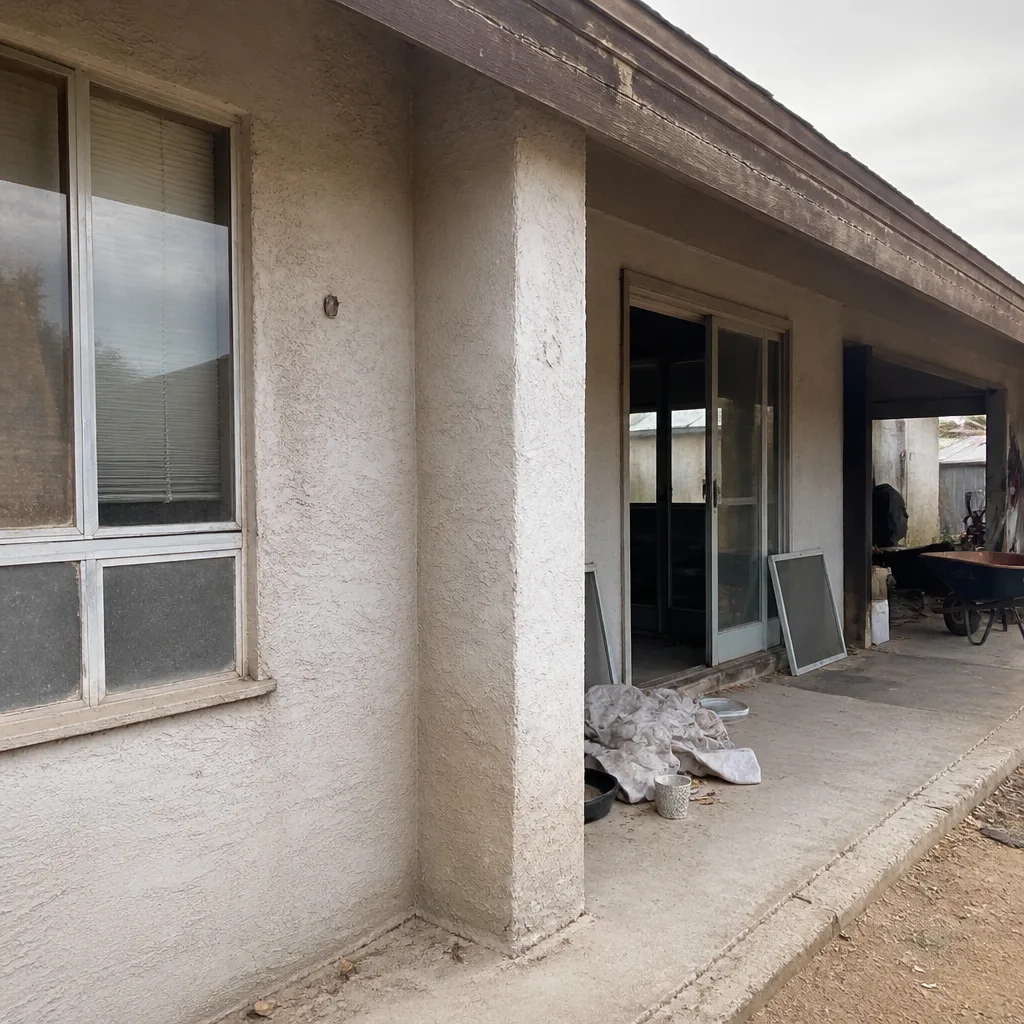 Before
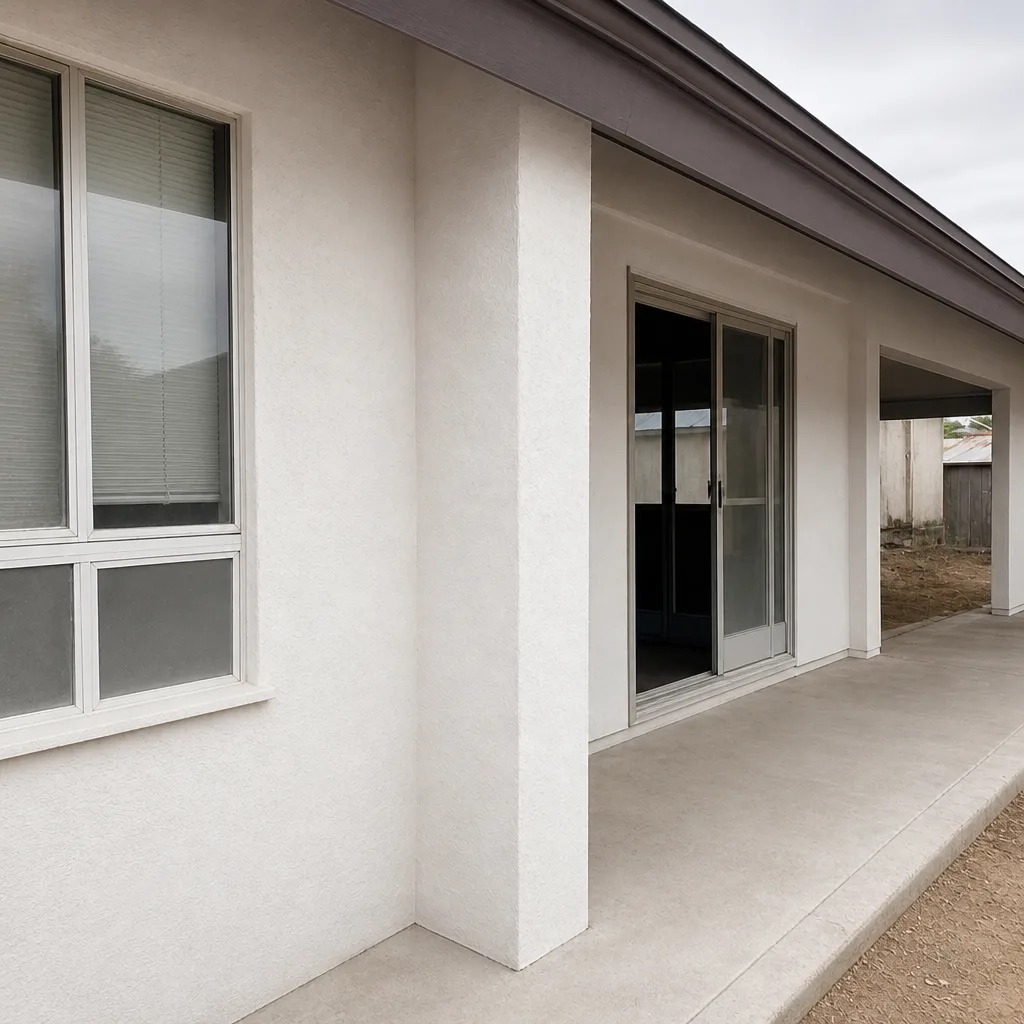 After
Table of Contents
- How to Spot Delamination in Impact-Rated Laminated Glass
- Frame Corner Separation: What’s Normal and What’s Weld Failure
- Why a Door That “Just Started Sticking” Is Rarely the Door
- The Sound Test for Insulating Glass Seal Failure
- Multi-Point Door Hardware: Reading Partial Engagement
- Boulder City Climate and Impact Product Wear
- Reading the Paperwork Your Installer Should Have Left
- Common Mistakes to Avoid
How to Spot Delamination in Impact-Rated Laminated Glass
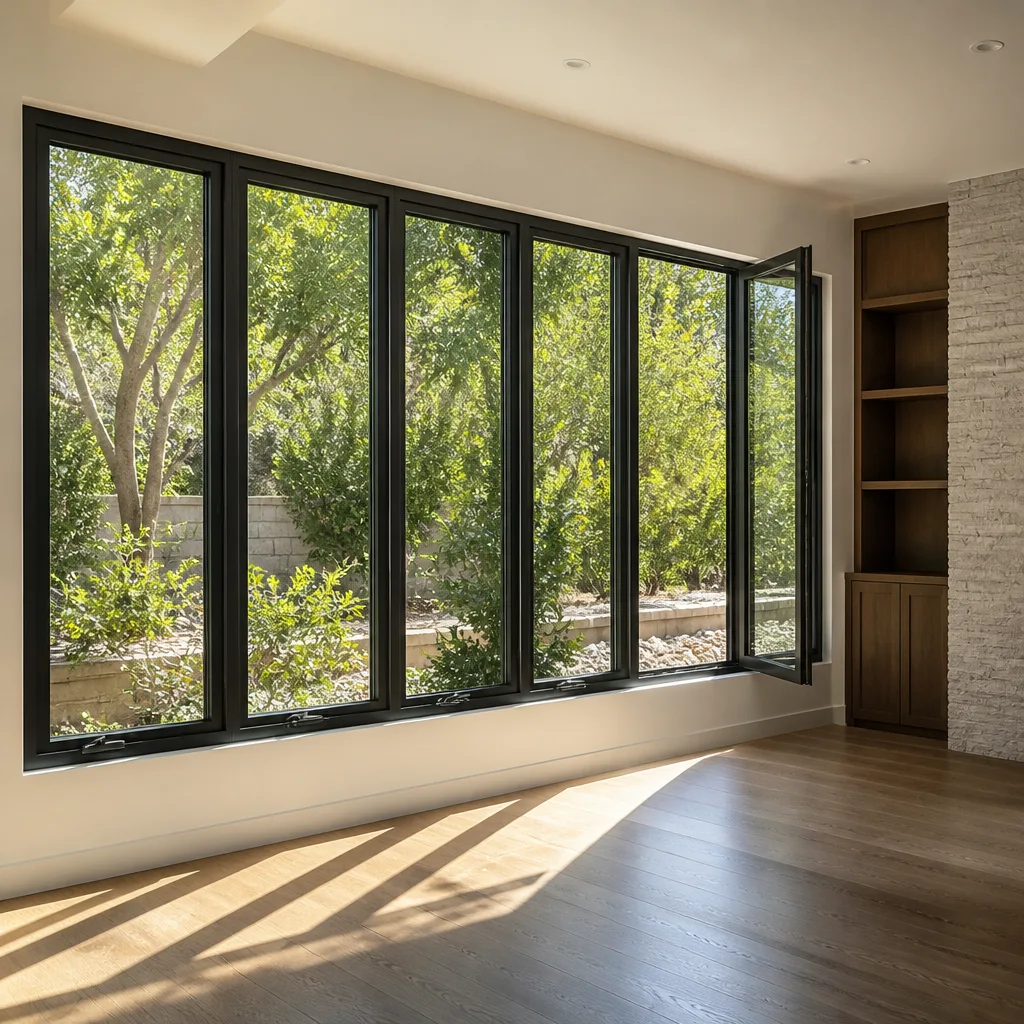
Impact glass is two or more panes bonded to a plastic interlayer. When that bond starts to let go, the glass stays in place. There’s no shatter, no cracking sound, no obvious sign from the couch. What happens instead is a thin, cloudy line or patch that appears at the edge of the glass and creeps inward over months, or a bubble at the perimeter that catches the light oddly.
The check takes about two minutes per window and the only tool you need is a flashlight. Here’s the method we use during post-install inspections:
- Wait until it’s dark outside, or pull the blinds and turn off the room lights.
- Hold a flashlight or phone light flat against the glass and tilt it about 15 degrees so the beam skims the surface at a shallow angle.
- Look for lines that don’t move when you move the light. A true delamination line stays put; a smudge or reflection shifts as you change the angle.
- Pay special attention to the bottom edge and any corner that faces the sun. Sun exposure is where the interlayer bond weakens first.
- Photograph any line with the flashlight in frame so you have a record of what you saw and when.
What you’re trying to tell apart: the interlayer in ViewLux and PGT impact units has a faint texture you can see under raking light, and that’s normal. Delamination is more defined, often brighter or cloudier, and it doesn’t extend past the edge seal. If you see anything orange or pink creeping from the edge inward, that’s moisture reacting with the interlayer and it needs a professional look. In our experience around Boulder City, sun-facing panes on west and south walls are the ones that show delamination first because of the combination of direct afternoon sun and late-day heat buildup.
For a fresh install or a replacement, our window installation in Boulder City process includes a flashlight inspection at handoff so you know what the glass looked like on day one.
Frame Corner Separation: What’s Normal and What’s Weld Failure
Vinyl frames are welded at the corners. Those welds aren’t perfect and they do move as the frame expands and contracts with temperature. A gap of about half a millimeter to 1.5 mm at a corner can be normal thermal expansion for a residential vinyl frame in a climate with a 30 to 40 degree swing between summer afternoon and winter night. Above roughly 2 mm, and especially above 3 mm, you’re likely looking at weld failure rather than expansion.
Here’s how to make the call:
- Feeler gauge test. A $6 set of feeler gauges from any auto parts store will tell you more than your eye can. Slide the 1.5 mm blade into the corner gap. If it fits easily, you’re at the edge of normal. If the 2.5 mm blade fits, you’re in the failure range.
- Check all four corners. A single wide gap on one corner is more suspicious than a slight gap on all four, which usually points to overall expansion.
- Look at the gap orientation. Expansion gaps run parallel to the glass. A wedge-shaped gap that widens as it goes away from the glass plane suggests the weld is failing at the miter joint.
- Check for stress cracking nearby. Cracked glass near a corner with a wide gap is the weld failure announcing itself.
- Look at the sightline. Impact frames have a deeper glazing pocket and heavier wall thickness than standard vinyl. A frame that looks parallel to the glass on the inside but is bulging on the outside has shifted, not expanded.
West-facing windows on Boulder City homes tend to show this first. The afternoon sun at 100+ degrees softens vinyl to its limits, then the evening drop pulls it back. Repeated cycling is what stress-tests a weld year after year. If you had your windows replaced recently, our window replacement in Boulder City service includes a corner-gap measurement on every frame we touch, and that measurement is written on the survey you keep.
Why a Door That “Just Started Sticking” Is Rarely the Door
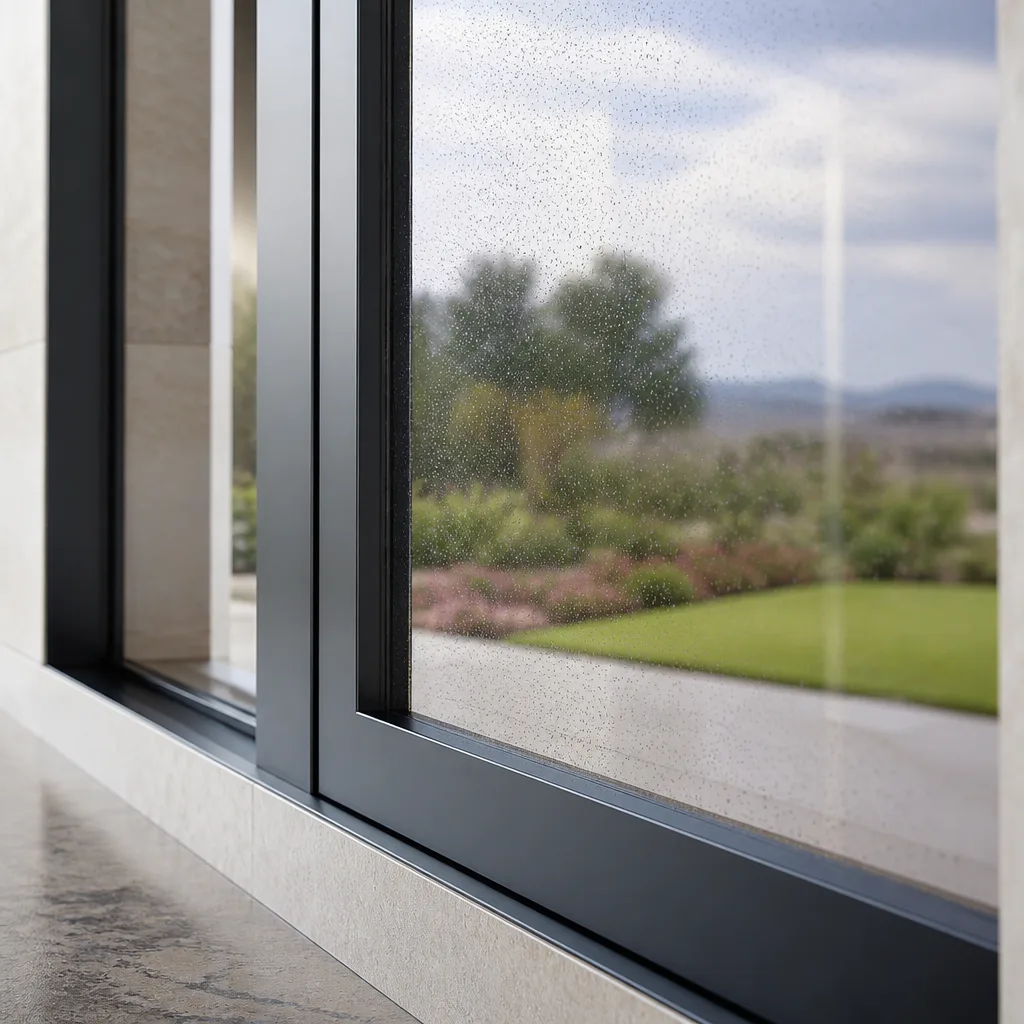
A door that suddenly drags on a humid morning or catches at the strike plate is usually telling you about the wall, the sill, or the slab under it – not the door. This distinction matters because replacing a door that sticks because of a shifting sill will give you a new door that sticks the same way within one season.
The clue is in the pattern of sticking. Here’s how to tell a door problem from a building problem:
- Doors that stick at the top and bottom of the frame in the same season usually indicate the frame opening has changed shape, not that the door slab has warped.
- Doors that stick on one side of the frame only, always, at every temperature are usually hinge or strike plate adjustment, which is a door issue.
- A door that only catches on humid days and frees up on dry days points to seasonal movement in the structure or in the sill system. In Boulder City, the swing from monsoon-season humidity in July and August to bone-dry spring air is a real test of sill and jamb installation.
- A door that sticks and shows water staining at the bottom rail is a sill drainage problem. The frame is swelling because moisture is trapped.
- A door that sticks after the concrete patio outside was poured or replaced is almost always a slab or threshold issue.
Impact doors are heavier than standard doors because the glazing and the hardware carry real mass, so they’re more sensitive to a frame that’s out of square. When we install a sliding door or a patio door, the survey records the frame square to the millimeter before trimming, and the door is hung to that measurement. If a door you already own is sticking and the pattern points at the frame, our door installation in Boulder City team can measure the sill and the jamb and tell you which one moved.
The Sound Test for Insulating Glass Seal Failure
An insulating glass unit – the sealed sandwich of two panes with a desiccant spacer – fails when the perimeter seal lets moisture in. Once it fails, the unit fogs between the panes, and the low-E coating and argon fill that made it energy-efficient are gone. The catch is that fogging often shows up months after the seal actually failed.
You can hear the difference with your palm. Here’s the test:
- Intact unit: press your palm flat against the interior glass and push gently. You should hear a firm, tight sound with no rattle or give. The two panes are effectively one stiff assembly.
- Compromised unit: push again and listen for a faint hollow knock or a slight flex between the panes. The two panes now move independently because the spacer has lost its grip. You may also hear a subtle wobble if you tap the glass with a fingernail near the corner.
The visual check is the second step: look at the bottom edge of the glass from inside at an angle, then look from outside. Fogging starts at the bottom of the unit and appears as a milky patch or a line of condensation that won’t wipe off from either side. A quick test: if the fog doesn’t wipe away, it’s inside the sealed unit.
Seal failure is worth catching early because a single failed unit in a Boulder City home on a west-first wall can mean a unit under 10 years old has lost its performance rating. Impact glazing from CGI, CWS, and PGT all use sealed insulated glass in their laminated impact products, and the flash test and sound test work the same on all of them. If a unit reads as failed, our home team at Sightline Windows & Doors Boulder City can check the warranty documentation that came with the original install – the written scope we leave on every job records the product line and the date.
Multi-Point Door Hardware: Reading Partial Engagement

Impact-rated doors with multi-point locking systems have three to five locking points along the door edge, plus a shoot bolt at the top and bottom if the system runs that way. Under wind load, all of them carry load together. That’s why the door passed wind load certification. If even one point stops engaging, the load-bearing assumption behind the rating is no longer accurate.
Partial engagement is easy to spot once you know what to look for. Here’s the routine:
- Open the door and look at the door edge where the locking points extend. Each point should extend about 15 to 20 mm when the handle is up in the locked position. Measure one with a ruler and compare the rest to it.
- Close the door gently and turn the handle to lock. You should feel even resistance through the lever travel, not a soft spot in the middle.
- Stand on the inside and press on the door near the handle, then near the top corner, then near the bottom. A door with all points engaged won’t move noticeably. A door with a stuck point will flex slightly at that location.
- Check the strike plates on the frame. The receiving pocket should show clean wear at all points, not wear at some and none at others.
- Look at the handle spindle. If the handle has developed any looseness or wobble, the linkage inside the door edge may have slipped, and the points can start to travel unevenly.
Partial engagement is not something to leave for later, especially on a door that faces the afternoon wind off the McCullough Range. The locking points are what distribute force into the frame. If they don’t extend, all the force routes to the hinges and the latch, and a door that passed its wind load test with all points working has no guarantee when they don’t. A Boulder City home with a north-facing patio door that’s showing one stuck point is a call we take seriously, and we don’t touch a door’s hardware without looking at the whole system.
Boulder City Climate and Impact Product Wear
Boulder City sits at about 2,500 feet with a desert climate that pressures impact products in a very specific way. Three factors shape the wear pattern:
- Wind-driven sand. Spring gusts regularly top 30 mph along the east side of town, and sand scours the exterior face of every window on a west or north wall. Over time, the fine scratches on the glass exterior don’t affect structure, but they scatter light in a way that can mask delamination lines when you’re doing a visual check.
- Direct sun plus afternoon heat. A west-facing laminated pane can hit 160 degrees at the surface in July. Interlayer bond failure tends to happen on that wall first. A window that’s 10 years old on the west side tells you more about a product’s performance than the same window on the shady side.
- Monsoon humidity swings. July and August bring enough humidity that wood and composite doors swell at the bottom rail. The swell-and-shrink cycle stresses the sill seal, and a door that starts sticking after a wet August is doing exactly what this climate predicts.
What this means for a Boulder City homeowner reading warning signs: the west wall is your early-warning wall. Look there first for delamination, corner separation, and seal failure. The south and east walls will almost always tell you the same story a season or two later. If you’re on a wall that faces open desert wind and your windows are 8 years old or more, a flashlight check every spring after the last hard gusts is a useful habit.
Weather on the west wall drives more window replacement in Boulder City than interior wear does. If a wall of windows has failed, our window replacement in Boulder City service starts with a measured survey that records the frame condition on every opening, and the written quote matches that survey line for line.
Reading the Paperwork Your Installer Should Have Left

Almost every warning sign in this guide gets easier to interpret against documentation. When a frame corner starts to gap, you want to know what the corner measured on the day it was installed. When a sealed unit fogs, you want the brand, model, and date so you can check the warranty. When door hardware stops extending, you want the survey that recorded how far each point extended on day one.
That’s why our installs leave three written records: the measured survey the homeowner keeps, the written scope with the price per opening, and a photo record of every opening before and after work. The photo record is not an upsell or a marketing add-on – it’s standard evidence on every job, under Haven Clause 4 (Evidence on every job). If a problem shows up two or three years later, the flash photos from install day tell you whether the glass looked clean or already had a delta on it. And under Haven Clause 1, the price in the written scope is the same as the invoice, so a warranty claim never turns into a pricing argument.
Bring us any competitor’s estimate and we’ll review it line by line at no charge. That free second opinion is only worth something because we put it in writing, and every number we review comes with the survey that produced it.
Common Mistakes to Avoid
- Trusting a visual check at arm’s length. Delamination and corner separation are visible but not obvious. Without the flashlight at 15 degrees or a feeler gauge on the corners, you’ll routinely miss a developing problem by a full season.
- Replacing a door that sticks before checking the frame. A new door hung into an out-of-square frame will stick within one season, exactly as the old one did. The frame is the thing to measure first.
- Assuming cracks in impact glass are harmless because the glass is still in place. The interlayer holding fragments together is doing its job, but a crack near the edge is a stress riser, and impact glass that has cracked has lost part of its rating. Get it looked at.
- Ignoring fogging between panes because “it’s just cosmetic.” Fogging means the seal failed and the low-E coating has already broken down. Aesthetics aside, the window’s energy performance is gone.
- Assuming partial door hardware engagement will self-correct with use. It doesn’t. The linkage inside the door edge slips gradually, and a door that starts with one stuck point often loses a second point within a year.
- Skipping the west wall on a Boulder City home. The west-facing openings tell you more about product condition in this climate than any other wall. If you only check one side of the house, check the side that takes the July sun.
- Not keeping the install paperwork. A wet bottom rail or a corner with a growing gap needs a baseline measurement to diagnose correctly. Without the survey and the photo record, you’re guessing.
When to Call a Professional
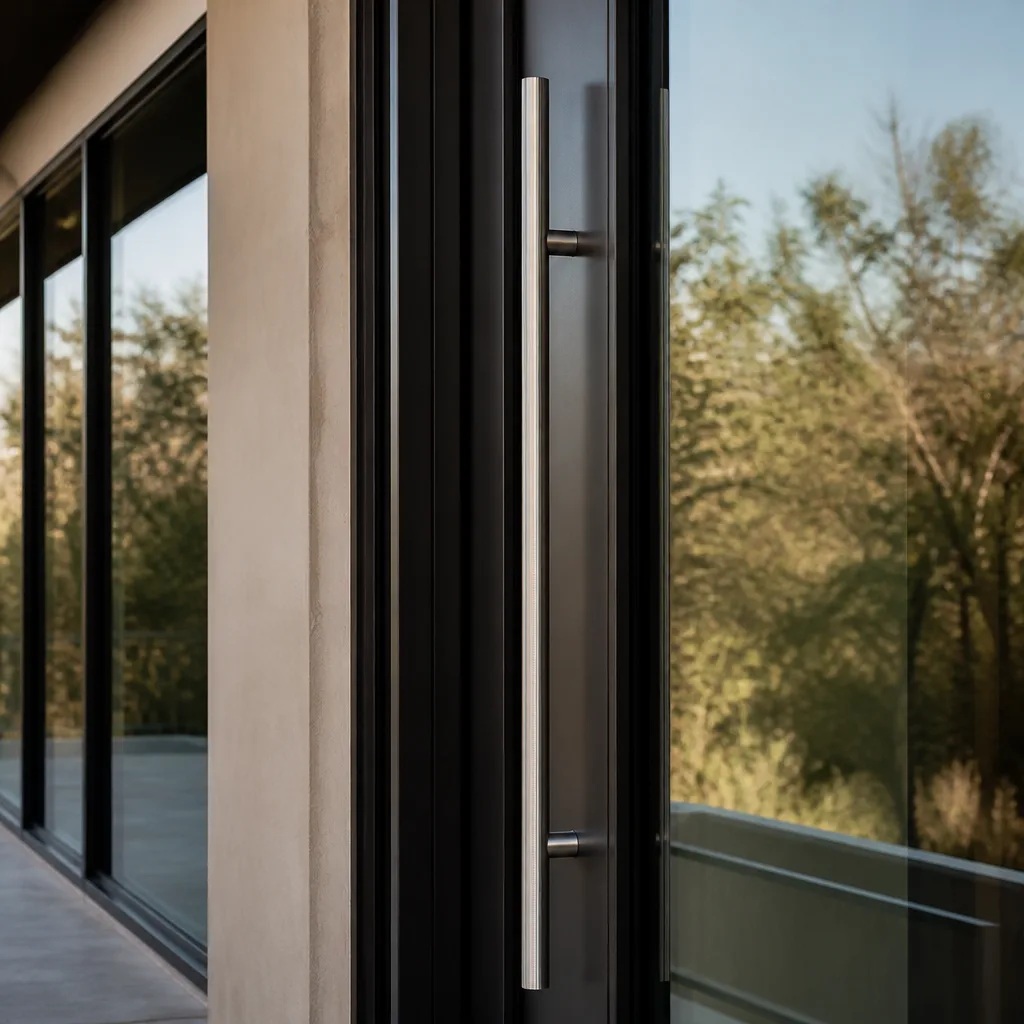
Call a professional when the flash test shows a defined line that won’t shift, when a corner gap measures 2 mm or more on a feeler gauge, when a sealed unit fogs and won’t clear, or when any locking point on a multi-point door stops extending. Those four readings are the signal that a component has moved past the range of normal wear. Also call if a door suddenly sticks and there’s staining at the bottom rail, or if the frame is visibly out of square – that’s a sill or structural issue, not a door issue, and replacing the door won’t fix it.
Sightline Windows & Doors Boulder City offers free estimates throughout Boulder City. Every visit starts with the measured survey the homeowner keeps, a written price before any work begins, and a free second opinion on any estimate you already have. Call (833) 847-4018 for a free estimate.
Frequently Asked Questions
Use a flashlight held flat to the glass and tilted about 15 degrees, in a dark room. Delamination shows as a defined line or milky patch that stays in the same place as you move the light. Normal interlayer texture shifts with the angle and looks uniformly faint. Photograph anything that stays put and have it evaluated.
Above about 2 mm of gap at a corner is the range to inspect closely, and above 3 mm is typically weld failure rather than thermal expansion. A 1.5 mm gap is usually within normal expansion for this climate. A feeler gauge from any auto parts store settles it in about a minute. Call (833) 847-4018 for a free estimate on frame evaluation.
Most of the time it’s a sill or frame issue, not a door-slab issue. Summer humidity swells bottom rails and stresses sill seals, and a door that sticks only in July and August is telling you about the sill, not the leaf. Check for staining at the bottom rail and call for a frame measurement.
A compromised insulating glass unit gives a faint hollow knock or a slight flex between the panes when you push flat against the glass with your palm. An intact unit feels stiff and sounds tight. You may also spot fogging at the bottom edge that doesn’t wipe away from either side.
Yes. The wind load certification assumes all locking points engage together, and one point that doesn’t extend routes force to the hinges and the latch instead. That’s a hardware service call, not a wait-and-see.
Always. Every Sightline install begins with a measured survey that becomes the written quote you keep, and the invoice matches it under Haven Clause 1. If you already have a competitor’s estimate, we’ll review it at no charge. Call (833) 847-4018 for a free estimate.
The Bottom Line
Impact-rated glazing and doors protect their own failures, which is why the warning signs have to be looked for in specific places: the glass under raking flashlight, the corner gap under a feeler gauge, the sealed unit under your palm, the door hardware under measured lever travel. In Boulder City’s sun and wind, the west wall is the early-warning wall for most of these. Read the paperwork your installer left – the survey, the photo record, the written scope – because every warning sign you find means more when there’s a baseline to read it against. If any of the readings in this guide point at a problem, call (833) 847-4018 for a free estimate and we’ll put what we find in writing.
Written by the team at Sightline Windows & Doors Boulder City.
Six Reasons Homeowners Choose Sightline Windows & Doors Boulder City
Laminated glass and reinforced frames hold up to wind-driven rain, hail and flying debris, so your openings stay sealed when the weather turns.
Low-E insulated impact glass from our manufacturer lines commonly cuts monthly cooling bills 20-30%.
Laminated impact glass shuts out up to 40% of outside noise - traffic, neighbors, weather.
Monitoring services run $30-90 a month. Laminated impact glass resists forced entry around the clock, with no subscription.
Tighter seals and insulated glass even out hot and cold rooms and stop the drafts at the frame.
A full impact package upgrades curb appeal, buyer confidence and appraised value in one project.
Other Sightline Windows & Doors Boulder City Services