Last updated November 17, 2026
New windows and doors improve comfort, cut energy bills and add long-term value to your home. Sightline Windows & Doors Boulder City pairs proven product lines with a local vetted installing partner for lasting performance - and a price put in writing.
Choose your installer
The unit is half the job - the install is the other half. Background-checked local installers measure, set, seal and insulate every opening, and they know the lines we quote inside and out.
Select the right products
Compare styles, materials and glass packages side by side until the fit is right for your rooms, your budget and your goals. The product-line comparison below is the place to start.
Prepare your home for install
Before install day we walk you through a short checklist - furniture pulled back, treatments down, a clear path to each opening - so install day is watch-it-happen, not scramble.
Compare the Lines We Quote
Every project is priced on the same lines, side by side - the price indicators below are relative, and your consultant shows exact numbers on your actual openings.
PGTThe line homeowners arrive naming - the most impact certifications in the industry$$$
- More impact certifications than any other line we quote
- WinGuard, EnergyVue and ClassicVue Max systems built for every wind zone
- 99% on-time delivery keeps your install date on the calendar
CGIThe heavyweight impact line$$$$$
- Large-missile impact ratings for the strictest wind zones
- Architectural-grade aluminum with commercial-depth frames
- The line we quote when protection is the whole point
CWSThe value pick$$
- Vinyl systems built to strict wind codes
- Strong energy packages at the friendliest price point
- The smart start for whole-home replacements on a budget
ESWSlim lines, big glass$$$$
- Narrow-sightline aluminum for modern elevations
- Oversized openings and floor-to-ceiling glass
- Impact-rated without the bunker look
ECOThe aluminum impact workhorse$$$
- Factory-built aluminum impact systems
- A strong price-to-protection ratio for coastal homes
- Proven lines with short lead times
Seasonal Windows & Doors Care for Boulder City: Year-Round Homeowner’s Guide
Boulder City averages roughly 294 sunny days per year. That single number changes almost everything about how you care for windows and doors here. UV degrades window seals and door gaskets at a pace well above the national average most manufacturers use to set their maintenance intervals, which means the schedule printed in the product manual was written for a milder climate than the one your house actually sits in. This guide maps Boulder City’s calendar into four distinct stress periods for glazing, frames, and hardware, then gives you the specific maintenance task for each one. What follows is the same failure pattern we document in service calls around Boulder City, organized so you can catch it before it starts costing you money.
Quick Answer
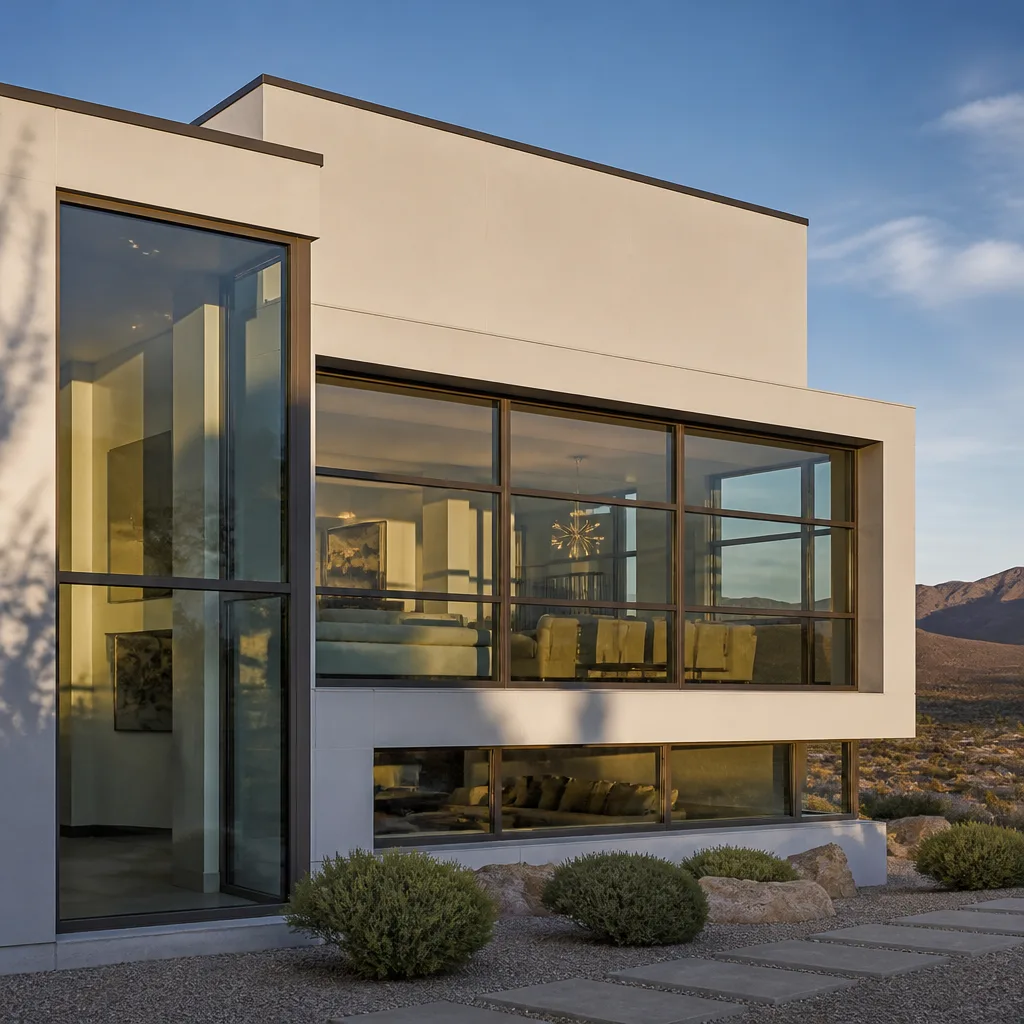
Care for windows and doors in Boulder City by timing maintenance to four stress periods instead of the four seasons: pre-heat prep in April, solar-load checks in June through August, weep-hole and drainage clearing before the July monsoon, and seal inspection during the December through February contraction window. Photograph every opening once a year and store the file. Done consistently, this prevents the large majority of seal, gasket, and hardware failures we see in Boulder City homes.
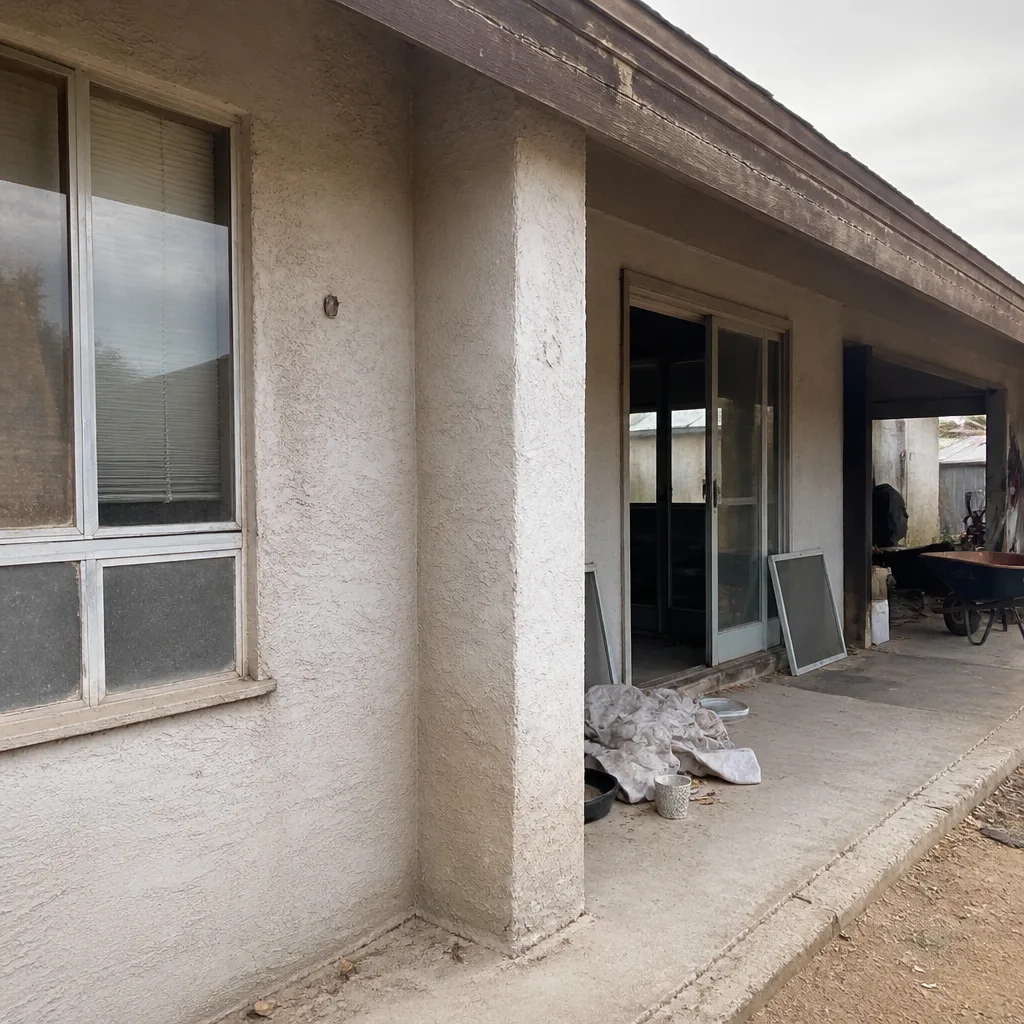 Before
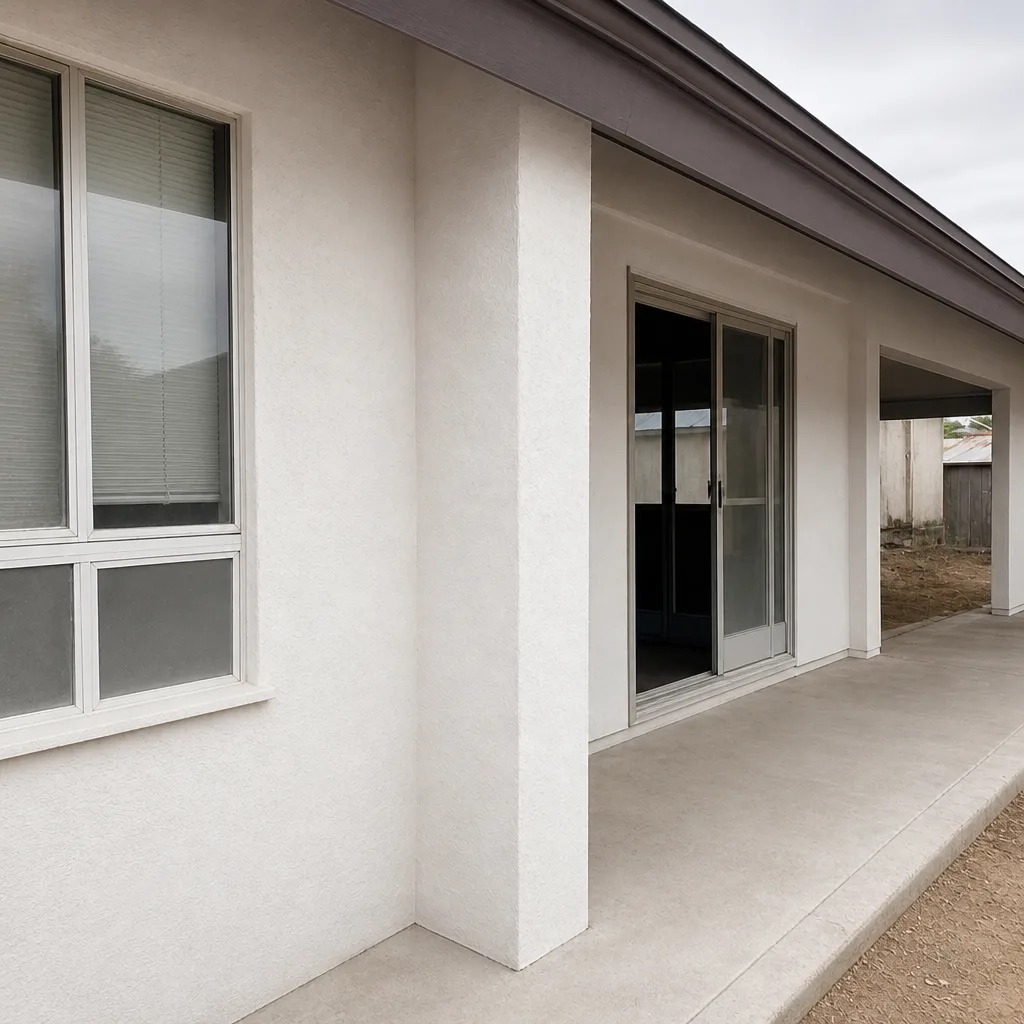 After
Table of Contents
- Why Boulder City Runs on Stress Periods, Not Seasons
- Pre-Heat Period (April): What to Check Before Summer Loads Arrive
- Peak Solar Load (June-August): Protecting Seals and Glazing
- Monsoon Overlap (July-September): Weep Holes and the 90-Second Water Test
- Thermal Contraction (December-February): Why Threshold Seals Fail in February
- Hardware Lubrication in a Desert Climate
- The Annual Documentation Checklist
- Common Mistakes to Avoid
- When to Call a Professional
- Frequently Asked Questions
Why Boulder City Runs on Stress Periods, Not Seasons
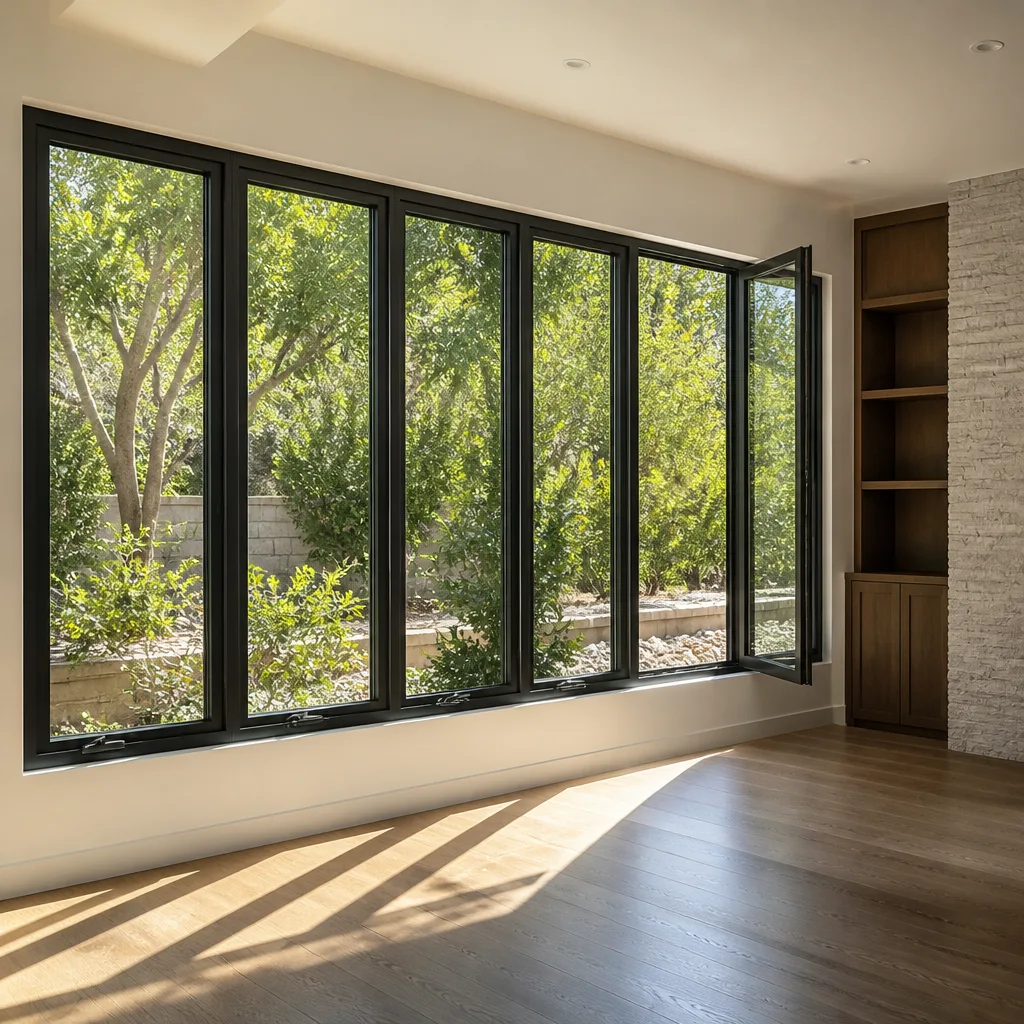
Most window and door maintenance advice assumes a temperate climate with four gentle seasons. Boulder City doesn’t work that way. The year here divides into four periods that each stress a different part of an opening, and some of them overlap. April loads heat into frames that have been cool all winter. June through August delivers the sun angle and intensity that cook sealant and gasket material. July through September brings monsoon moisture across exactly the openings that spent the summer drying out. December through February drops nighttime temperatures hard enough to contract vinyl and aluminum frames faster than the seals around them can follow.
A homeowner who services the house on the printed manufacturer schedule – typically some version of “inspect annually” – will almost always be late on the frame-contraction and gasket issues, because those two failures concentrate in two narrow windows of the year. When we walk a Boulder City home during a window replacement in Boulder City, we can usually read the past few years of weather in the wear pattern. Gaskets flattened on the sun-facing side. Weep holes packed with dust and pollen. Threshold sweeps worn at the strike side. None of it needs a catastrophic event – it’s just the calendar.
The four stress periods at a glance
- Pre-heat (April): Inspect seals, clean tracks, tighten hardware, clear drainage before heat loads arrive.
- Peak solar load (June-August): Check glazing and sealant for UV cracking, monitor interior heat gain, inspect weatherstripping on sun-facing openings.
- Monsoon overlap (July-September): Clear weep holes, run the 90-second water test, verify drainage channels and thresholds.
- Thermal contraction (December-February): Check door sweeps and threshold seals, inspect frame-to-wall joints, test gaskets on hinges and locks.
Pre-Heat Period (April): What to Check Before Summer Loads Arrive
April is the last calm month in Boulder City before the heat really settles in. That makes it the best window of the year to walk every opening, clean it, and note problems while a technician can still fix them without rushing. UV damage that started last summer is now visible, and the cracks and dryness you find now will expand through July. The work is straightforward and mostly free.
- Wipe every track and sill. Dust, pollen, and desert grit collect in slider tracks and act like sandpaper on rollers and seals through the summer. A vacuum and a damp cloth take ten minutes per opening.
- Inspect weatherstripping on all four sides of every door. Look for flattened, cracked, or peeling material. Run a finger along the seal – if it feels hard, it’s past its service life.
- Check the glazing seal on every fixed and operating window. Look for cloudiness, water spots between panes, or visible sealant gaps at the frame. A hazy double-pane is a failed seal, not a cleaning problem.
- Clear weep holes. These small drainage slots at the bottom of window and door frames are what let monsoon water escape. A plugged weep hole turns a normal rain event into an interior leak.
- Tighten visible hardware. Hinges, handles, and lock strikes work loose over a year of use. A screwdriver and five minutes per opening handle this.
If glazing seals or frame joints look suspect in April, that’s the moment to bring in a professional review rather than waiting for summer heat to widen the problem. Our team handles window installation in Boulder City and can review the opening without pressure.
Peak Solar Load (June-August): Protecting Seals and Glazing
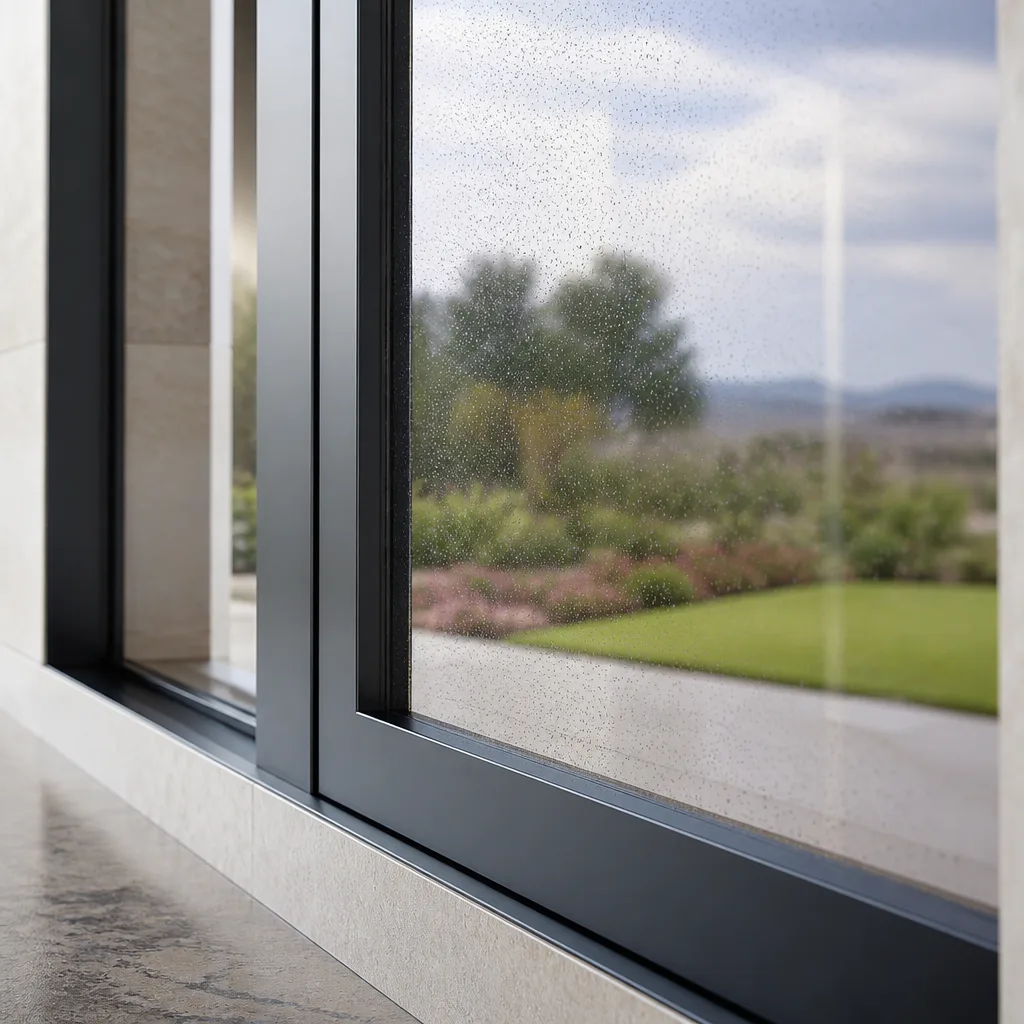
These are the months when UV does the most damage to window seals and door gaskets in Boulder City. The sun angle here pours through west- and south-facing openings for hours, and the surface temperature on a dark-framed window can run significantly hotter than ambient air. That heat cycling is what dries out sealant, hardens gaskets, and eventually causes the seal failure that shows up as fog between panes.
The maintenance work in peak season is inspection, not intervention. You want to know what’s happening so you can act in September.
- Check sealant at frame-to-wall joints and at glass-to-frame edges on the interior and exterior. Look for cracking, gaps, or pulling away. Paintable exterior sealant has a shorter service life under Boulder City sun than in cooler regions, so it’s worth a visual check monthly through the summer.
- Test window operation on every operating window. If it drags, binds, or gives resistance, the track has probably swollen or the hardware has loosened from heat expansion. Catch it now – a sluggish slider becomes a stuck slider by October.
- Watch for interior condensation on windows that were clear last summer. Condensation inside a sealed unit means the seal has failed and the gas fill has escaped. The unit needs replacement, not a repair kit.
- Inspect door gaskets where doors face the sun. A west-facing entry door takes the most UV load in the house. If the sweep or the gasket around the strike side feels brittle, plan to replace it before winter.
- Note interior heat gain. If particular rooms got noticeably hotter than last year, the window’s insulating performance has likely degraded. That’s a glazing question, not an HVAC question.
Product lines like CWS and CGI specify glazing and coating options by performance tier, and holding a spec sheet in hand during the summer inspection makes the fall decision easier.
Monsoon Overlap (July-September): Weep Holes and the 90-Second Water Test
Monsoon moisture arrives in Boulder City at exactly the wrong moment – right after three months of sun have dried out gaskets, and right when the household has stopped thinking about water intrusion. This is where we find the most preventable damage in service calls: plugged weep holes, packed drainage channels, and threshold seals that quietly failed in the spring, all showing up as stains on the drywall under a window in August.
Clear weep holes before the first storm
Weep holes are the small slots or slots with cover flaps at the outer edge of window and door sills. Their job is to let rainwater that gets past the exterior seal drain out before it reaches the interior. Desert dust, insect activity, pollen, and paint overspray all plug them. Use a stiff plastic brush or a piece of trimmer line – never a metal tool that can score the frame – and clear every hole you can find on every opening. If the hole has a cover flap, push it lightly to ensure it opens and closes. Test it by pouring a cup of water into the sill channel and watching it drain to the outside.
The 90-second water test
- Choose a dry, calm day. Have a second person inside the house watching the interior of the opening.
- Starting at the top of the exterior frame, run a garden hose on a gentle spray for about 30 seconds, working slowly down one side.
- Repeat on the opposite side for 30 seconds.
- Spray across the sill and threshold for 30 seconds.
- During and immediately after the test, your partner checks the interior for water at the frame, sill, threshold, and drywall edge. Any water appearing inside means the drainage or the seal has failed and the opening needs professional attention.
The whole test takes about 90 seconds and tells you more about how the window actually performs in a storm than any visual inspection. A failing result is cheap to fix in July and expensive to fix in October. When a threshold seal or drainage channel leaks during the test, that’s the point where a door installation in Boulder City review is worth scheduling.
Thermal Contraction (December-February): Why Threshold Seals Fail in February
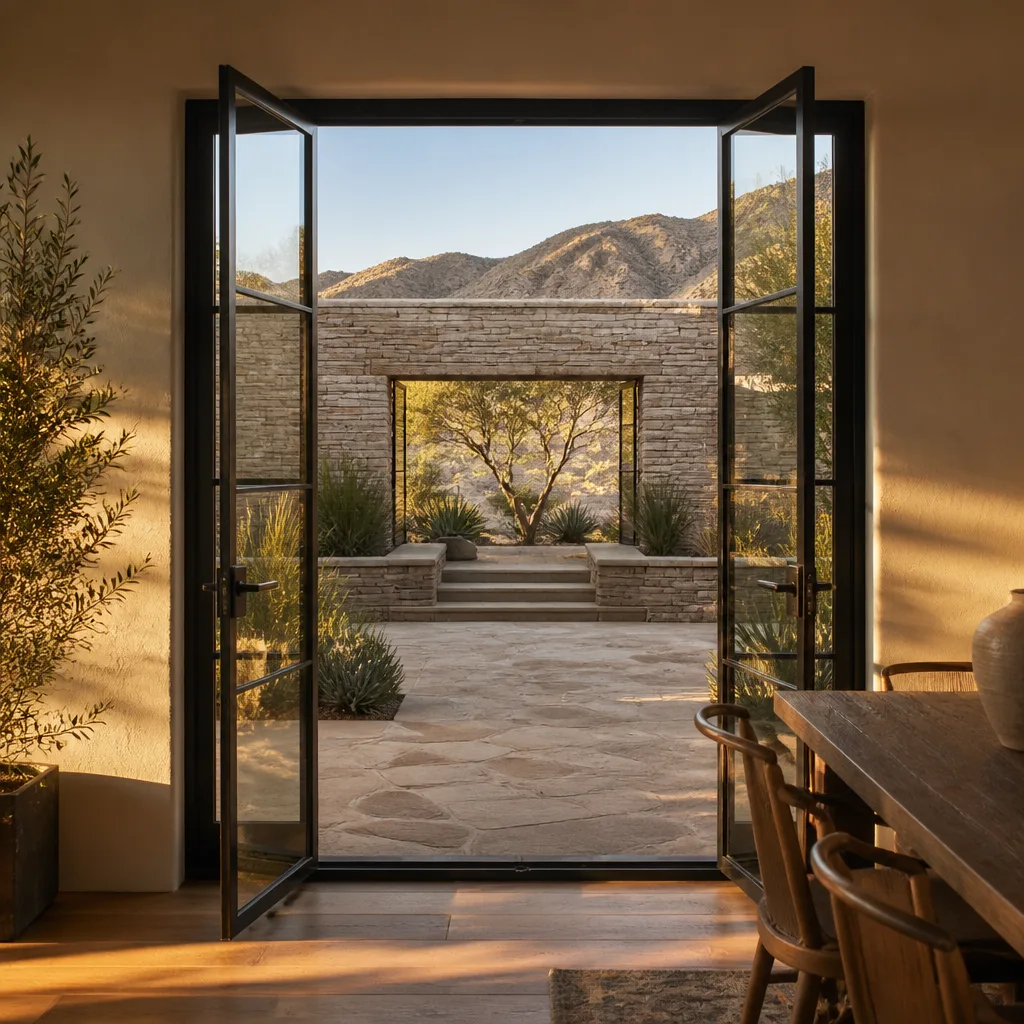
February is when door threshold seals fail disproportionately in Boulder City, and the reason is physics, not product quality. An exterior door frame – especially aluminum – moves with temperature. The frame that sat at 90°F in August and expanded accordingly will shrink when the overnight low drops into the 30s. Over a 60-degree swing, an aluminum frame on a 36-inch door can contract a millimetre or more in each direction, and a vinyl frame either side of that. If the threshold sweep or the gasket around the strike side was already compressed by a summer of UV, the millimeters of contraction finish the job.
The result is a visible gap you can put a coin through, cold air pouring in, and dust tracked in at the same spot every year. That gap is also a security weakness – an unresolved door gap that a credit-card tool can defeat is the opposite of a sealed entry. The good news is that this failure mode is almost always a $12 fix rather than a $340 replacement. A replacement door sweep or a fresh run of weatherstripping solves the vast majority of February gap problems. You cross the $340 threshold only when the frame itself has warped, the door has dropped on its hinges, or the threshold pan is bent. Our team can help you tell the difference before you spend money on a replacement you don’t need.
The February door audit
- Close the door on a dollar bill at four points around the frame. If the bill pulls out with no drag, the seal is not making contact at that point.
- Look for daylight at the threshold with the door closed. Any visible line of daylight is a seal gap.
- Feel for a draft at the strike side, hinge side, and top and bottom with the door shut. A tissue taped to a skewer makes a good draft indicator.
- Check the sweep itself: is it cracked, flat, or missing a section of its pile or blade? Replace if so.
Therma-Tru door systems are among the lines we specify because the sweep and weatherstrip components are replaceable on their own, which keeps February fixes in the $12 category.
Hardware Lubrication in a Desert Climate
Hardware corrosion in Boulder City looks nothing like coastal corrosion, and treating it like coastal corrosion is a mistake. Low humidity means less rust from moisture, but it also means grime and dust get into hinges, rollers, and locks and stay there as a dry abrasive. Meanwhile UV bakes any lubricant film off faster than in a wetter, cooler climate. The result is that hinges squeak, window rollers drag, and locks start to feel stiff at a point where a coastal homeowner would only be starting to think about rust.
- Hinges: A light application of a dry PTFE or silicone spray twice a year – once in April, once in October – handles the friction without attracting dust. Avoid heavy grease in Boulder City; it collects grit.
- Window rollers: Blow out the track with compressed air or a vacuum, then lubricate the roller assembly per the manufacturer’s spec. On sliding doors and windows from lines like ES Windows or ECO Window Systems, use only the roller lubricant the manufacturer specifies.
- Locks and latches: Graphite or a dry film lubricant in the keyway once a year. Wipe the strike plate and latch mechanism clean every six months. Dust in a lock cylinder is the main cause of “stiff key” in Boulder City.
- Patio door tracks: Vacuum first, then a dry spray on the rollers, never oil on the aluminum track itself.
A 15-minute pass across every hinged and sliding opening twice a year keeps hardware working at the level it left the factory, and it prevents the kind of cumulative drag that shows up as seized hardware after three summers.
The Annual Documentation Checklist
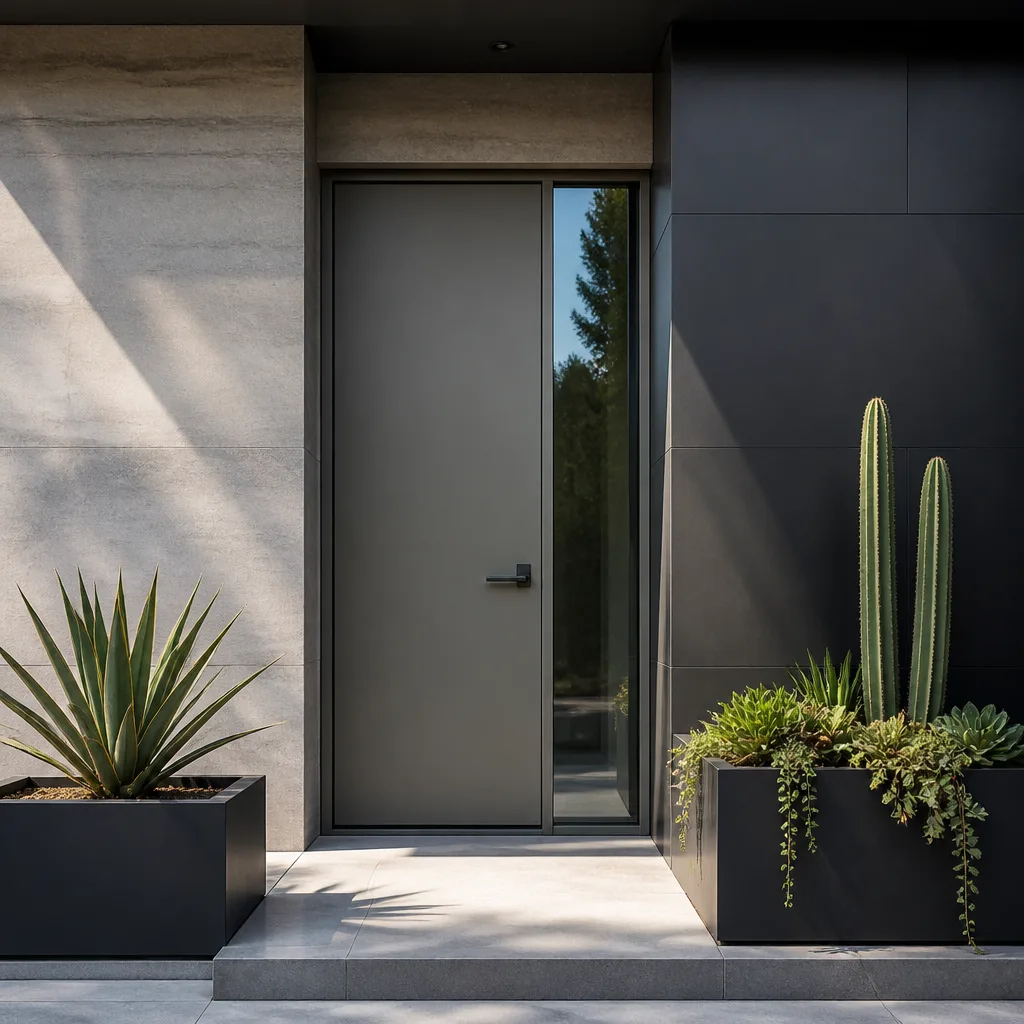
A photograph dated today is worth more than any verbal memory of a warranty conversation. When a glazing seal fails in year four, or an insurance adjuster asks whether a monsoon leak was pre-existing, the file with dated photos does more work than any receipt. When we finish a job, we leave a documented photo record – it’s part of the Haven Standard’s Evidence on every job clause. Your year-over-year record builds on that industry practice and protects you years later.
What to photograph each year
- Every opening, exterior, straight-on. Full frame in the picture, taken in daylight. One photo per window and door.
- Every sill and threshold, exterior, close-up. These are the first failure points and the most important to have documented.
- Glazing panels with failure symptoms. Any interior fog, haze, crack, or water spot gets its own close-up.
- Interior conditions around every window and door. Drywall, trim, and floor immediately under the opening. This is your evidence baseline for a leak claim.
- Hardware close-ups. Rollers, hinges, sweeps, gaskets – a clear photograph means you can prove wear versus defect.
- Manufacturer labels and serial plates. Photograph them once when you move in, and again any time an opening is serviced or replaced.
Where to store the file
Store the photographs in cloud storage, not on a single device. Name the folder by year and month. Save the written scope and warranty document in the same folder. If you bought the home new or bought a home recently built, ask for the original installation documentation – our written scope and photo record are set up to hand over cleanly, which is why we leave a copy with the customer.
Common Mistakes to Avoid
- Servicing on the manufacturer’s national schedule. Boulder City runs hotter and sunnier than the average the schedule was written for, so a once-a-year inspection in September misses the entire pre-heat window.
- Ignoring weep holes after one season. Dust in Boulder City plugs weep holes faster than in wetter climates, and a plugged weep hole is the single most common cause of the interior leaks we see in monsoon season.
- Using heavy grease on desert hinges and rollers. Grease holds grit. A light dry-film lubricant is the right choice here, and the wrong choice every time on a Boulder City slider.
- Treating a February door gap as a door replacement. The large majority of February threshold failures are a $12 sweep and a fresh strip of weatherstripping – not a $340 new door.
- Skipping the interior draft test on doors. By the time a draft is noticeable in the house, the gap has usually been open through one monsoon and one winter.
- Waiting to call about a hazy double-pane. Fog between panes is a seal failure that only gets worse. It’s cheap to plan in June and expensive to find in a storm in August.
- Not photographing the openings. Without dated photos, a warranty claim or insurance claim comes down to memory. With them, it’s a document.
When to Call a Professional
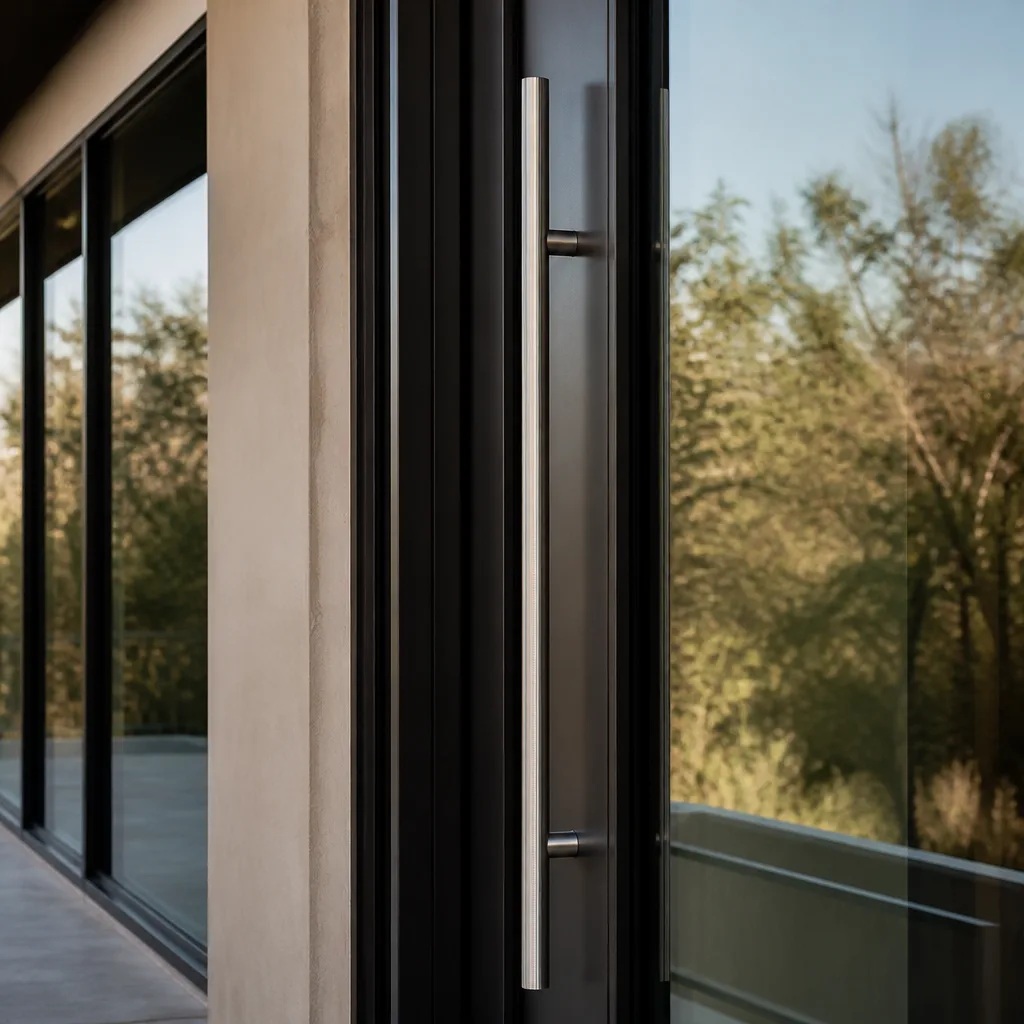
Most of the tasks in this guide are homeowner work. A few are not. Call a professional if a glazing seal has failed and the unit is showing interior condensation, fog, or a visible water line. Call if the 90-second water test produces water on the interior at any point. Call if a door frame has warped, the door has dropped on its hinges, or the threshold pan is bent, because that’s the point where the $12 fix becomes a $340 replacement. Call if hinge or roller replacement turns into frame damage. And call if the frame-to-wall joint has opened and exterior sealant no longer holds. Installing, replacing, or repairing an opening affects the building envelope, and a poorly sealed one costs more than the repair. Sightline Windows & Doors Boulder City offers free estimates in Boulder City. Call (833) 847-4018.
Frequently Asked Questions
Inspect your windows and doors four times a year, timed to the four stress periods: April, June, July, and December through February. The once-a-year schedule most manufacturer manuals suggest is written for a milder climate and will miss the February threshold failure and the pre-monsoon weep-hole blockage that cause most damage we see in Boulder City homes. The April and December walks are the most important of the four.
February seals fail because of thermal contraction. Exterior door frames – especially aluminum – shrink in cold overnight temperatures, and after a summer of UV drying out the gaskets, that contraction opens a visible gap. The fix is almost always a new door sweep or fresh weatherstripping, usually around $12 in materials. It only becomes a replacement job at about $340 when the frame has warped or the door has dropped. A quick dollar-bill test around the frame tells you which you have.
The 90-second water test is a drainage check: run a garden hose on gentle spray for 30 seconds down one side of an exterior opening, 30 seconds down the other, and 30 seconds across the sill, with a second person watching the interior for water. Any water appearing inside means the seal or drainage channel has failed, and it usually means a plugged weep hole. Clear the weep holes first, then retest. If it still leaks, schedule a professional evaluation.
Use a stiff plastic brush or a piece of trimmer line to clear each hole, never a metal tool that can score the frame. If the weep hole has a cover flap, push it lightly to make sure it still opens. Pour a cup of water into the sill channel afterwards and watch it drain out. In Boulder City, dust and pollen plug weep holes faster than in milder climates, so check them in April and again before the July monsoon.
Yes. Use a dry PTFE or silicone spray instead of heavy grease. In low-humidity, high-UV Boulder City conditions, grease collects dust and holds it in the joint as an abrasive, while a dry film sheds it. Apply twice a year – once in April, once in October – to every hinge, window roller, and sliding door track. Locks take a graphite or dry film lubricant once a year.
A written scope, the measured survey, the documented photo record, and the written warranty. At Sightline Windows & Doors Boulder City, every completed job leaves with all four. Under the Haven Standard and the 365-Day Done Right Promise, the measured survey and the written quote cannot differ, and the photo record is evidence you can hand to an insurer or a future buyer. Call (833) 847-4018 for a free estimate, or bring us a written estimate from another installer and we’ll review it at no charge.
The Bottom Line
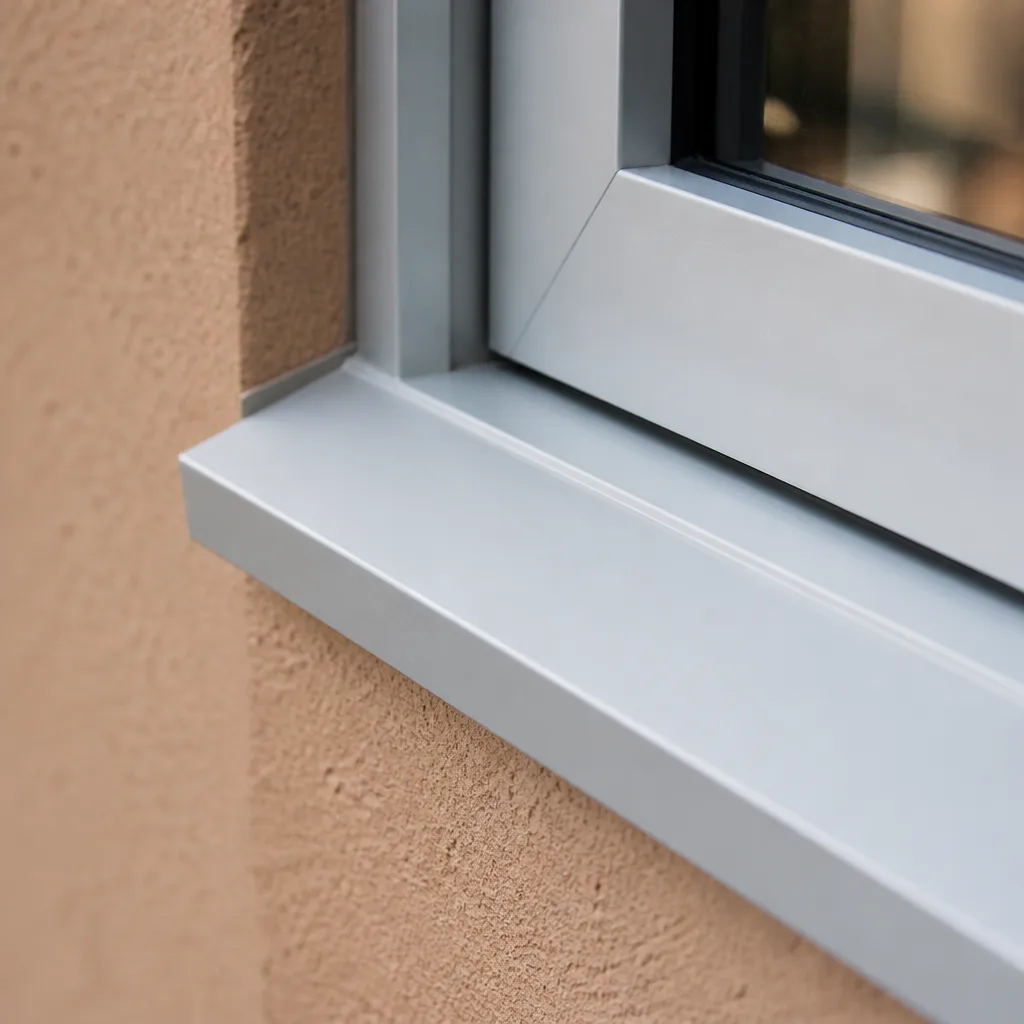
Boulder City doesn’t have four seasons for windows and doors – it has four stress periods, and the maintenance calendar needs to match them. Pre-heat prep in April, seal and glazing checks through the summer, weep-hole clearing and a water test before the monsoon, threshold sweep audit in February. Add a twice-yearly hardware pass and a dated photo record, and you prevent the large majority of failures we document in Boulder City service calls. The rest – a failed glazing seal, a warped frame, a threshold leak – is the work a professional does with a written estimate before any tool is lifted. That’s the Haven Standard’s whole point: Have it in writing, Arrive on schedule, Verified crews, Evidence on every job, No surprises. Our technicians have up to 14 years of experience, and we install across Sightline Windows & Doors Boulder City home product lines from PGT, CGI, CWS, ES Windows, ECO Window Systems, Mr-Glass, Therma-Tru, and ViewLux, specified by what each opening actually requires.
Contact us to schedule your free estimate. Call (833) 847-4018 and speak with a live person – our phones are answered around the clock, not sent to a voicemail queue. Bring us any written estimate from another installer and we’ll give you a free second opinion. If the work goes ahead, you’ll have the price in writing before a single tool comes out, a background-checked, uniformed technician with a license number on the record, and a documented photo record when the job is done.
Written by the team at Sightline Windows & Doors Boulder City.
Six Reasons Homeowners Choose Sightline Windows & Doors Boulder City
Laminated glass and reinforced frames hold up to wind-driven rain, hail and flying debris, so your openings stay sealed when the weather turns.
Low-E insulated impact glass from our manufacturer lines commonly cuts monthly cooling bills 20-30%.
Laminated impact glass shuts out up to 40% of outside noise - traffic, neighbors, weather.
Monitoring services run $30-90 a month. Laminated impact glass resists forced entry around the clock, with no subscription.
Tighter seals and insulated glass even out hot and cold rooms and stop the drafts at the frame.
A full impact package upgrades curb appeal, buyer confidence and appraised value in one project.
Other Sightline Windows & Doors Boulder City Services