Last updated November 17, 2026
New windows and doors improve comfort, cut energy bills and add long-term value to your home. Sightline Windows & Doors Boulder City pairs proven product lines with a local vetted installing partner for lasting performance - and a price put in writing.
Choose your installer
The unit is half the job - the install is the other half. Background-checked local installers measure, set, seal and insulate every opening, and they know the lines we quote inside and out.
Select the right products
Compare styles, materials and glass packages side by side until the fit is right for your rooms, your budget and your goals. The product-line comparison below is the place to start.
Prepare your home for install
Before install day we walk you through a short checklist - furniture pulled back, treatments down, a clear path to each opening - so install day is watch-it-happen, not scramble.
Compare the Lines We Quote
Every project is priced on the same lines, side by side - the price indicators below are relative, and your consultant shows exact numbers on your actual openings.
PGTThe line homeowners arrive naming - the most impact certifications in the industry$$$
- More impact certifications than any other line we quote
- WinGuard, EnergyVue and ClassicVue Max systems built for every wind zone
- 99% on-time delivery keeps your install date on the calendar
CGIThe heavyweight impact line$$$$$
- Large-missile impact ratings for the strictest wind zones
- Architectural-grade aluminum with commercial-depth frames
- The line we quote when protection is the whole point
CWSThe value pick$$
- Vinyl systems built to strict wind codes
- Strong energy packages at the friendliest price point
- The smart start for whole-home replacements on a budget
ESWSlim lines, big glass$$$$
- Narrow-sightline aluminum for modern elevations
- Oversized openings and floor-to-ceiling glass
- Impact-rated without the bunker look
ECOThe aluminum impact workhorse$$$
- Factory-built aluminum impact systems
- A strong price-to-protection ratio for coastal homes
- Proven lines with short lead times
Energy-Efficient Windows Warning Signs Every Homeowner Should Know
A sealed insulating glass unit (IGU) that has lost half its argon fill looks completely intact from the curb. No fog, no streaks, no visible defect. Yet it can be leaking heat at a rate that shows up as $30 to $60 a month on a Boulder City summer electric bill. The utility statement, in our experience, is often a more honest diagnostic tool than the eye. This guide walks through how to read your bill against your window’s published performance spec, the four visual signs of seal failure ranked by severity, the frame problems specific to vinyl units in Mojave heat, and why a documented photo baseline matters more than any single inspection.
Quick Answer

Energy-efficient windows fail in two ways: visible seal failure (edge fogging, center condensation, moisture lines, permanent haze) and invisible gas loss that only shows up as rising utility costs. If your Boulder City home’s summer electric bill has climbed 15 percent or more with no other change, and your windows are more than eight years old, you likely have measureable performance loss even if the glass looks clear.
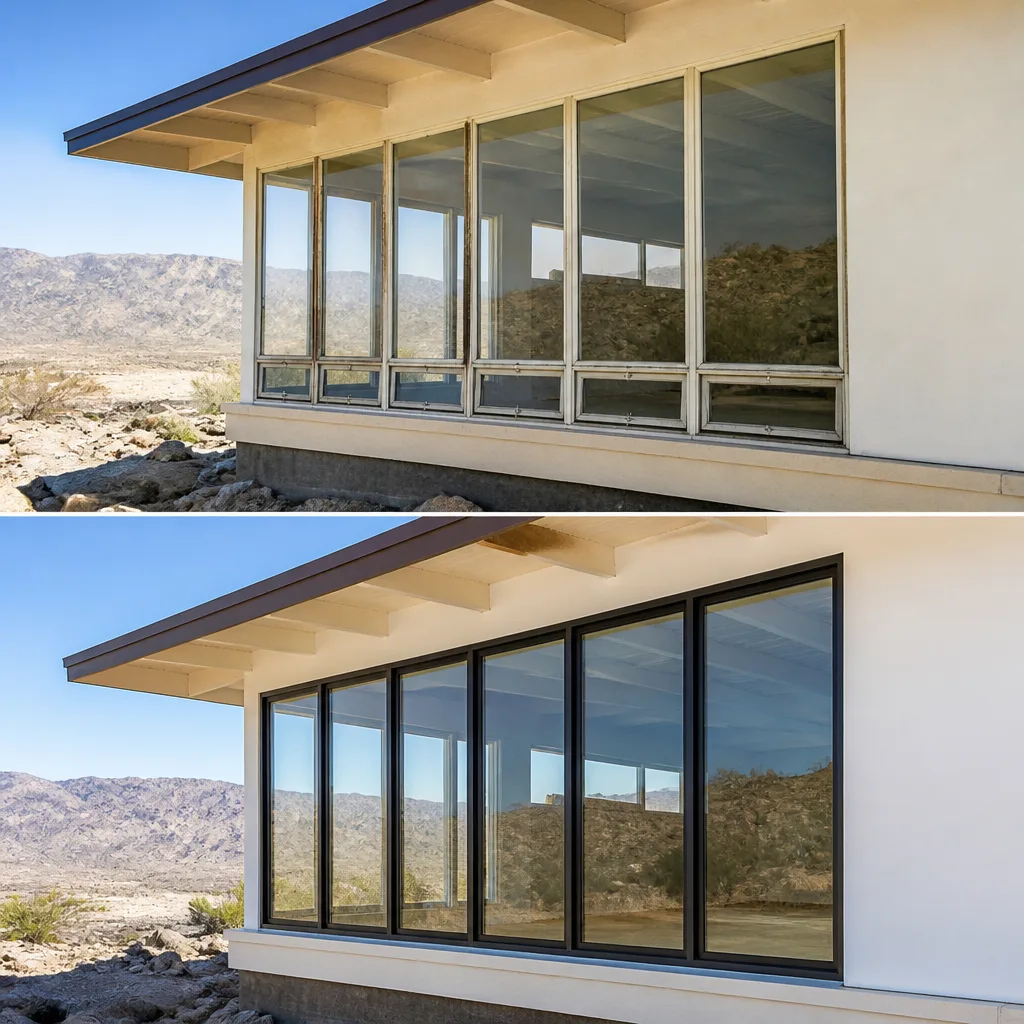
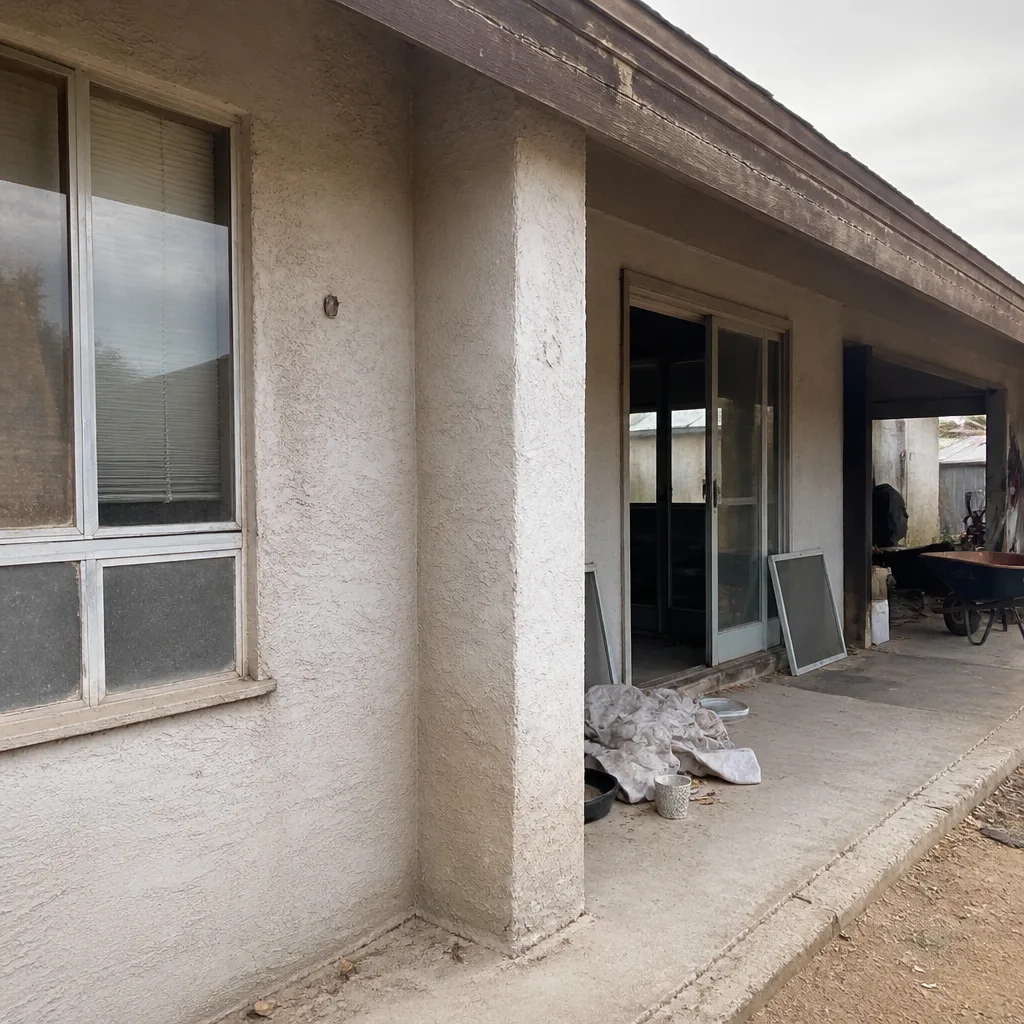 Before
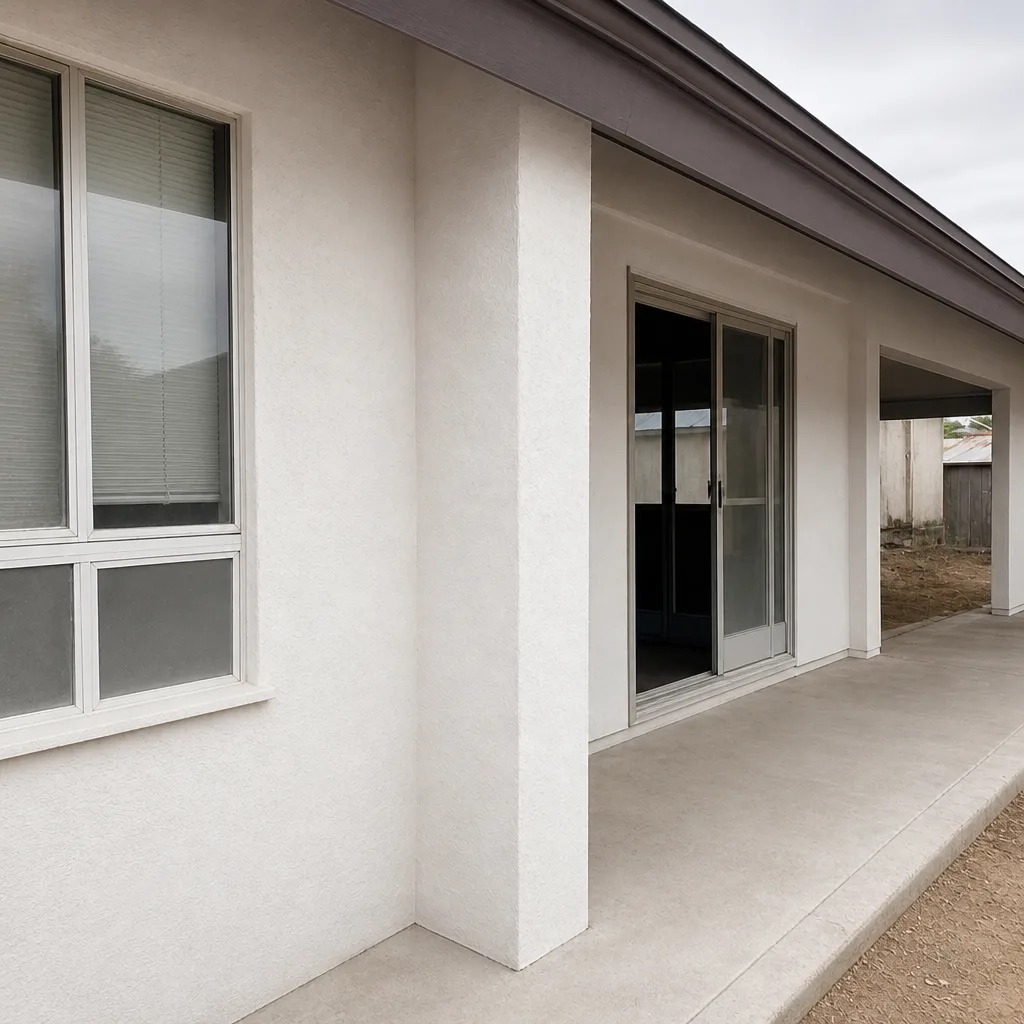 After
Table of Contents
- Reading Your Utility Bill as a Window Diagnostic
- Expected Cooling Load Versus Actual: The Comparison That Reveals Failure
- The Four Visual Signs of IGU Seal Failure, Ranked by Severity
- Vinyl Frame Warning Signs in Mojave-Region Heat
- Why Morning Fog in Boulder City Winter Isn’t Always Seal Failure
- The Photo Baseline That Makes “Worse Than It Was” Measurable
- Reading the Spec Sheet: U-Factor, SHGC, and What Boulder City Actually Needs
- When to Repair and When to Replace
Reading Your Utility Bill as a Window Diagnostic
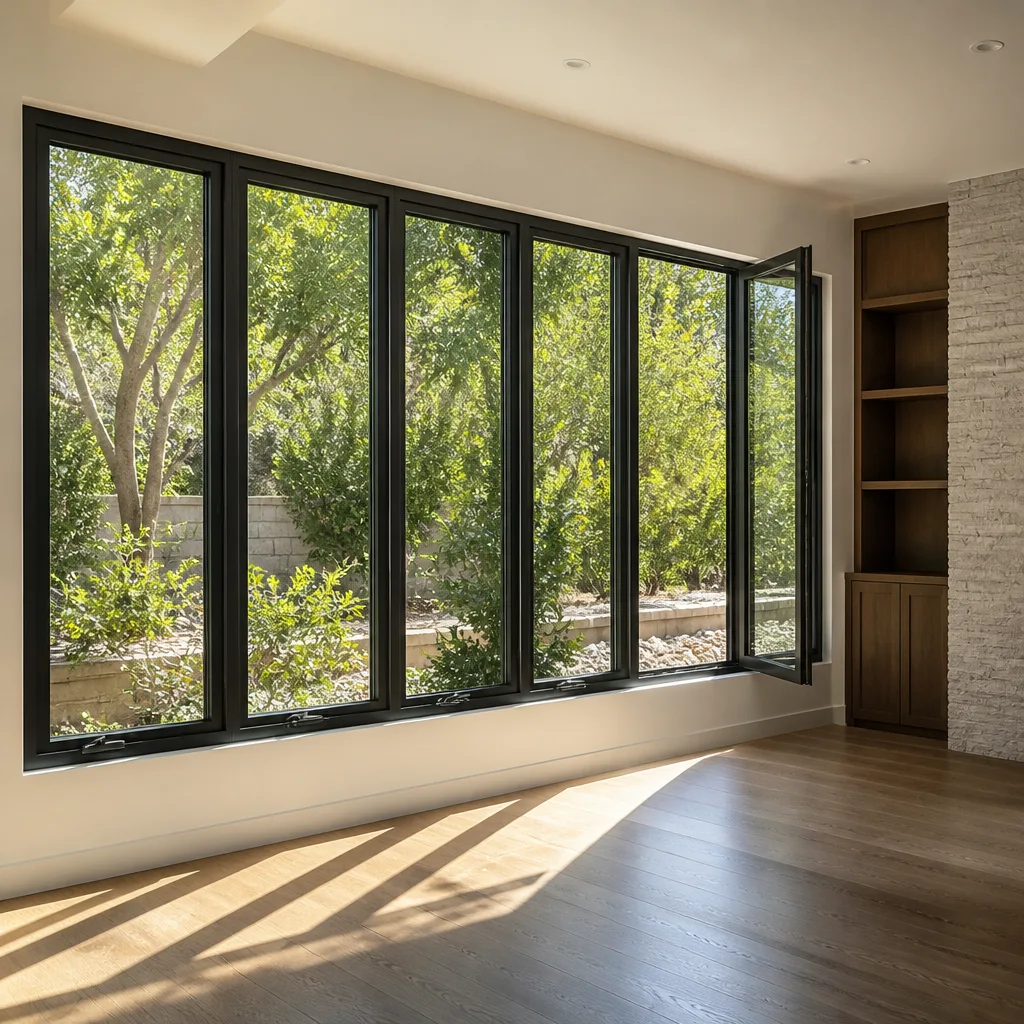
Most homeowners inspect windows with their eyes. The better instrument is the electric bill from your utility, compared year over year for the same billing month. A window’s performance spec is a warranty-like promise: this unit will resist heat transfer at a stated rate. When that rate degrades, the HVAC system runs longer to compensate, and the delta appears on the bill before any visual symptom.
Here is the comparison we recommend for Boulder City homeowners, where summer cooling is the dominant energy load:
- Pull the same billing month from two consecutive years. July to July, August to August. Compare kilowatt-hours used, not dollars, since rates shift.
- Adjust for weather. The National Weather Service publishes monthly cooling degree days for the Las Vegas valley; a summer that ran 8 percent hotter accounts for roughly that much of any usage increase.
- Adjust for equipment changes. If you replaced the AC, upgraded attic insulation, or added a shade structure, subtract the expected savings from the delta.
- Look at what remains. A residual increase of 10 percent or more, with no explanation, points at the building envelope – and windows are typically 25 to 35 percent of that envelope in a single-family home.
- Check a shoulder month too. March to March comparison filters out peak-load noise and reveals whether the problem is year-round transfer (frame or seal) or a summer-only issue (solar gain through degraded low-E coating).
If you don’t have the historical bills, your utility’s online portal typically keeps 24 months of usage data. Export it. The chart usually makes the answer obvious. When a specific room runs hotter than the rest of the house, the window in that room is the leading suspect long before any fog appears.
Expected Cooling Load Versus Actual: The Comparison That Reveals Failure
This is the step almost every homeowner skips, and it’s the one that separates a guess from a diagnosis. A window installed with a specified U-factor has a calculable heat gain for your climate zone. If your actual cooling load exceeds what the spec predicts, the window is performing worse than it’s supposed to.
You don’t need a manual J calculation to do a useful version of this. Here’s the working method:
- Get the window’s U-factor from the NFRC label on the glass (or the spec sheet the installer left). U-factor measures how fast heat moves through the whole assembly; lower is better. In our Boulder City market, a decent energy-efficient vinyl unit runs U-0.30 to U-0.35.
- Get the window’s SHGC (solar heat gain coefficient). This measures how much of the sun’s radiant heat passes through. In Boulder City’s climate, an SHGC in the 0.22 to 0.27 range is a reasonable target for west- and south-facing glass.
- Count the square footage of west- and south-facing glass. These are the solar load drivers on a Boulder City house.
- Calculate the theoretical peak solar load in BTUs: square feet × SHGC × peak insolation (roughly 250 BTU/sq ft/hr for west-facing glass at 4 p.m. in July). Write that number down.
- Compare against what your HVAC actually delivers. If your system is rated for 3 tons (36,000 BTU/hr) and it’s running continuously mid-afternoon while the house still climbs past setpoint, the envelope is imposing more load than the equipment can remove.
We’ve seen Boulder City homes built in the 2015 to 2019 range where the west-facing great room windows were spec’d at SHGC 0.40 instead of the SHGC 0.25 target. That 60 percent higher solar gain shows up as a hot room every July afternoon, and it explains why the bill climbs. The fix isn’t always replacement; sometimes a targeted re-glaze of the worst-facing units resolves 80 percent of the discomfort at half the cost of a full window package. That’s a conversation worth having with a written price in hand, not a verbal estimate over the phone. Our window installation in Boulder City survey includes the as-built spec review that surfaces exactly this mismatch.
The Four Visual Signs of IGU Seal Failure, Ranked by Severity
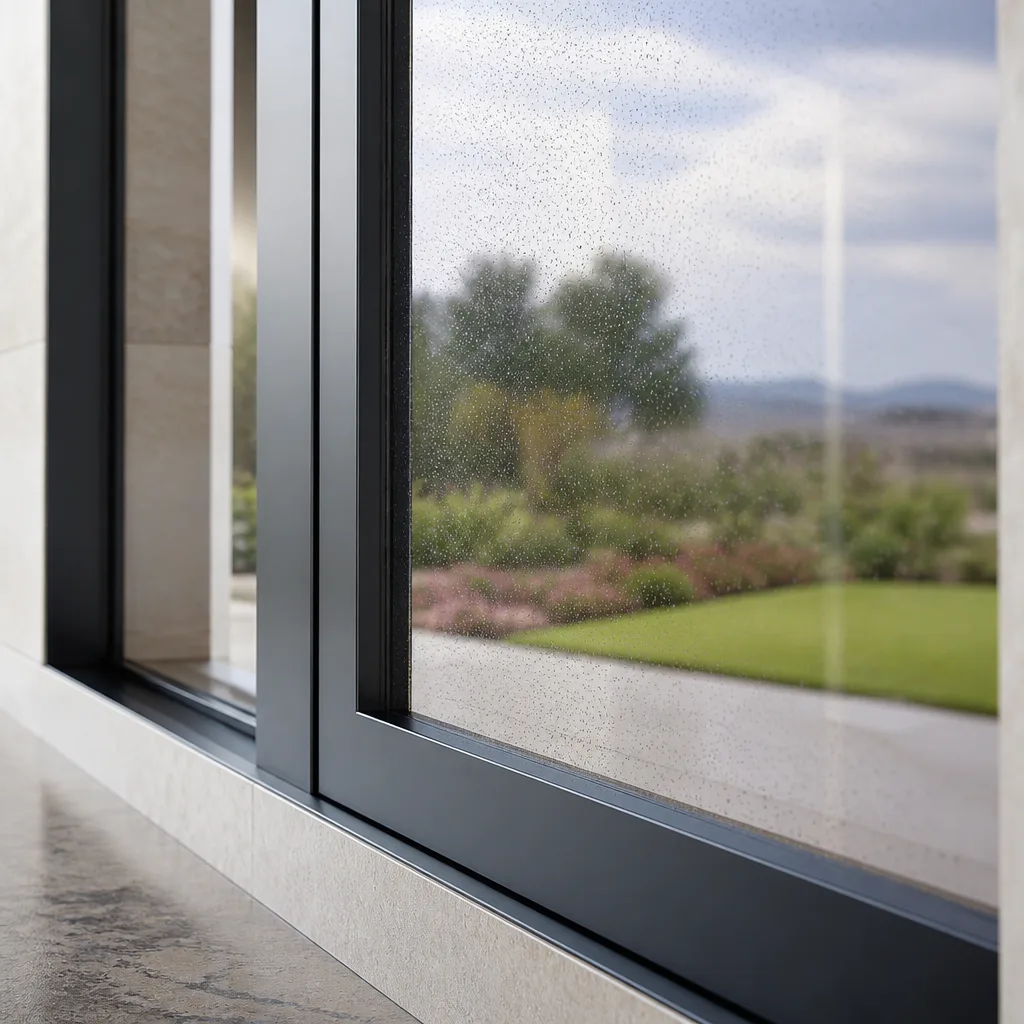
An IGU (insulating glass unit) is two or three panes of glass separated by a sealed spacer and filled with argon or krypton gas. When the primary seal fails, the gas escapes and moisture enters. The visual progression follows a predictable order. Here are the four signs, mildest to worst:
1. Edge fogging (early seal failure)
A thin white line or cloud appears along the inside perimeter of the glass, usually within 1 to 2 inches of the spacer. This is the earliest visible symptom of desiccant saturation. Remaining service life at this stage: typically 2 to 5 years before the seal fully breaches. Performance loss is already measurable; the argon is bleeding.
2. Center condensation (advanced seal failure)
Fog migrates from the edge toward the center of the panes. At this point the gas fill is largely gone and the dead-air space has absorbed moisture. Remaining service life: 1 to 3 years. U-factor has degraded by 20 to 40 percent versus the new spec.
3. Visible moisture lines (failed seal)
You can see a distinct line of liquid water between the panes, or a streak that runs with a tilt of the sash. The seal is fully breached. Remaining service life: months, not years. Replace the IGU now.
4. Permanent haze or discoloration (total degradation)
The interior of the unit shows a milky haze or a faint film, often yellowish. The desiccant is saturated, sometimes the argon fill is gone completely, and in some units the low-E coating itself has begun to break down at the edges. This is no longer a performance problem; it’s a cosmetic one as well, and it can’t be reversed by cleaning. Replacement is the only option.
Worth noting on severity: a unit at stage 3 or 4 doesn’t just cost you energy. In our Boulder City work, we’ve seen failed seals progress to where the thermal shock of a summer afternoon causes the glass to crack at the edge. A crack from a fully-degraded IGU in 110-degree July heat is a replacement you can’t put off.
Vinyl Frame Warning Signs in Mojave-Region Heat
Vinyl frames are the default energy-efficient choice in our climate: they don’t conduct heat the way aluminum does, and they hold a tight seal at the sash. But they have thermal limits, and Boulder City’s 100-plus-degree July afternoons push them. Here are the failure patterns we watch for:
- Warping at the corners. Look at the mitred joint where two frame pieces meet. If the seam is opening (e.g., a visible gap wider than a credit card width), the frame has lost dimensional stability. Corners are the first to go because they concentrate stress.
- Color fade with a pattern. Uniform fade might be normal weathering. But a fade pattern that’s darkest at the shaded edge and lightest at the sun-exposed edge is UV degradation of the vinyl substrate itself. West- and south-facing units go first. This looks like a pale ghost of the original color, and it means the plasticizers have migrated out.
- Sash sag or racking. Open the window halfway and release. If the sash drops on one side or the frame flexes visibly, the vinyl has softened and re-set in a distorted position. This is a replacement-grade problem, not a repair.
- Seal shrink at the glass line. The gasket between the glass and the vinyl frame should sit tight against both surfaces. If you can slip a business card between them, the weather seal is gone and the frame is admitting air directly around the IGU perimeter – no matter how good the glass spec is.
Brand matters less than the extrusion quality, but that’s the thing you can only see over time. CWS and ES Windows vinyl extrusions hold their dimensional stability well in this climate; Mr-Glass units in the mid-range have held up on our Boulder City installs. We don’t oversell this point. A cheap extrusion will look fine at year two and fail at year nine. If you’re buying now, look for a frame with a published thermal expansion coefficient and a wall thickness of at least 0.08 inches. Our Sightline Windows & Doors Boulder City home page has the full spec sheets for the lines we carry.
Why Morning Fog in Boulder City Winter Isn’t Always Seal Failure
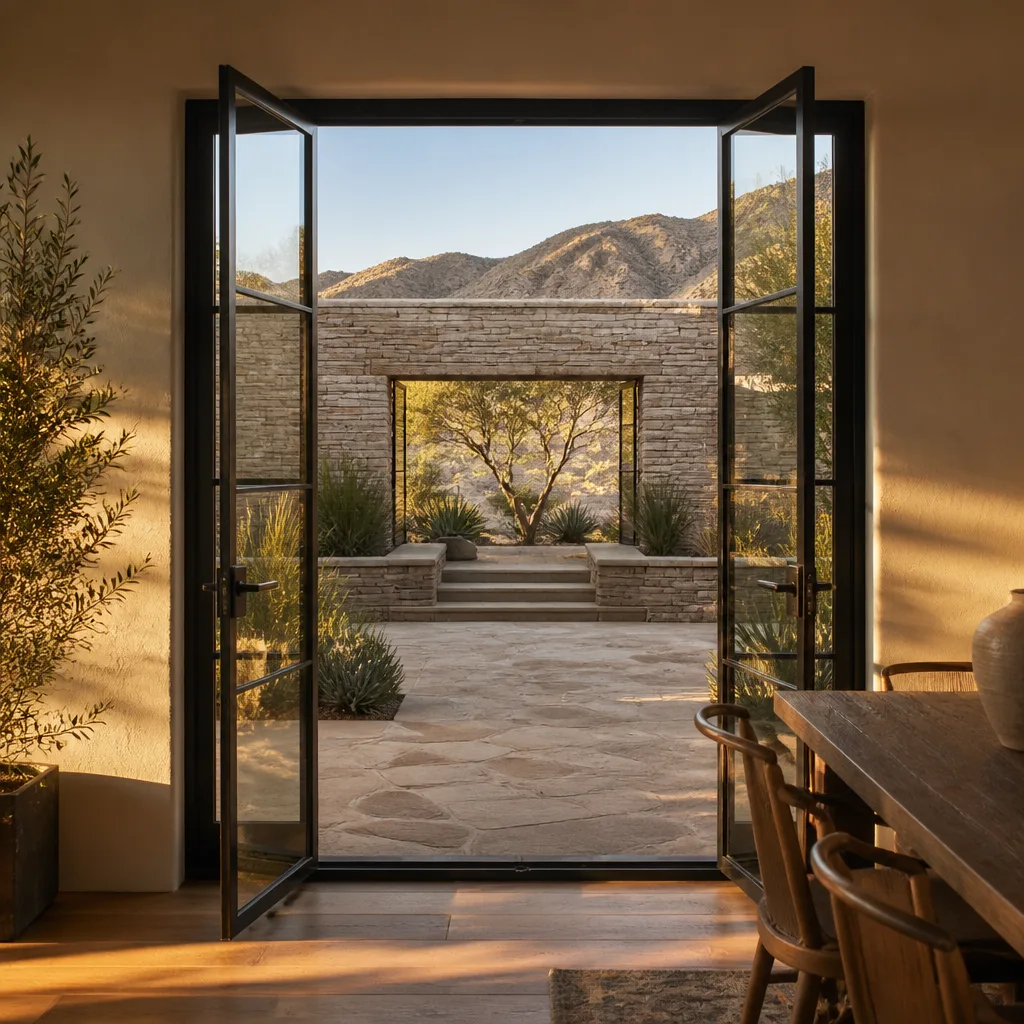
A window that fogs on the inside face (the side you touch, not between the panes) on a January morning is not necessarily failing. It’s doing its job. Warm moist indoor air hits a cold glass surface and condenses. That’s physics, not seal failure.
The distinction matters because the first instinct is to call for replacement, and that’s a $400 to $700 per-unit mistake if the seal is intact. Here’s the diagnostic test we run:
- Wipe it. Interior-face condensation wipes off easily. Condensation between panes does not – it’s behind the seal, and no amount of wiping removes it.
- Check the indoor humidity. Get a cheap hygrometer ($15 at a hardware store) and read the relative humidity near the window. If it’s above 40 percent in a Boulder City winter, you have a humidity problem (bathroom fans, house plants, cooking, or a humidifier), not a window problem.
- Look for the fog’s pattern. Interior condensation forms a film that runs the entire glass surface. Between-pane fog concentrates at the edges first. The distinction is clear once you know what to look for.
- Verify with the pinky test. Run a finger along the interior perimeter of the glass near the frame. If it’s wet on the room side, it’s a humidity issue. If the exterior of the glass (or the exterior pane) is wet and the interior is dry, the seal is fine.
In Mojave-region homes, the winter interior humidity often swings well above 40 percent because the HVAC is off and the house has been closed tight. The morning fog that follows is a symptom of a house too well-sealed, which is a ventilation conversation, not a window replacement conversation. If you’re in this situation in a Boulder City home, our free second opinion on any written estimate includes a humidity check before we recommend a single replacement. That’s how window replacement in Boulder City should actually start.
The Photo Baseline That Makes “Worse Than It Was” Measurable
Here’s the quiet problem with every visual inspection: without a reference point, “worse than it was” is a feeling, not a measurement. You can’t prove the fog is creeping further in than it did last year, or that the corner seam gap has widened by 3 millimeters, or that the color fade has progressed. This is why we include a documented photo record on every installation as standard – not as an upsell.
What the photo record captures at the end of a job:
- Every unit photographed straight-on with a tape measure visible against the glass for a scale reference.
- Close-ups of every frame corner (mitred joints) and the glass-to-frame gasket line.
- A photo of the NFRC label intact on each glazing, so the spec is documented at install.
- A photo of the measured survey document and the written price, signed, dated, and showing the same opening count as the install photo set.
Two years later, the comparison is simple. You have a dated photo of the corner seam at install, and you have the current state. If the seam has opened by anything measurable, you can prove it. If the fog has progressed from a 1-inch edge band to a center haze, you can prove it. That comparison converts a “maybe we should replace” hunch into a documented case – which matters both for warranty conversations and for anyone evaluating a written estimate from a competitor. Our 365-Day Done Right Promise is stamped on every job under the Haven Standard, not offered as a courtesy, and the photo record is the evidence that backs it.
Reading the Spec Sheet: U-Factor, SHGC, and What Boulder City Actually Needs

The spec sheet is the only way to compare one quote against another honestly. Two windows look identical from the curb and behave completely differently. The three numbers that matter:
- U-factor (lower is better): whole-assembly heat transfer. Boulder City target: 0.30 to 0.35 or below. Below 0.28 is premium territory and generally worth the upcharge only on the highest-load openings.
- SHGC (varies by orientation): the fraction of solar heat that passes through. West- and south-facing: 0.22 to 0.27. North-facing: 0.35 to 0.42 is appropriate; over-spec’ing North-facing glass for SHGC adds cost without benefit.
- Visible transmittance (VT): how much daylight passes through. Higher is brighter. Standard energy-efficient units land 0.40 to 0.55. If you’re replacing a clear-glass unit and want the same brightness, don’t let a very low SHGC pull your VT down without discussing the trade-off.
In our Boulder City work, we routinely see quotes that specify a beautiful U-factor and quietly omit the SHGC. Solar gain, in our climate, is the dominant cooling load. A unit with U-0.28 and SHGC 0.40 will run hotter than a unit with U-0.32 and SHGC 0.24, and the first one usually costs more. The spec and the price need to be evaluated together. That’s why the measured survey and the written price are the same document at Sightline – the spec, the opening count, and the number on the page can’t drift from each other. If you’re comparing quotes, our door installation in Boulder City team also reviews the door-window interface, since the door’s U-factor and air seal affect the same load calculation as the adjacent windows.
When to Repair and When to Replace
Replacement isn’t always the answer, and treating it as the default wastes money. Here’s the working rule of thumb we apply to Boulder City homes:
- Stage 1 edge fog, single unit, frame sound: Reglaze. Replace the IGU only. Cost is typically a fraction of full replacement, and the frame is doing its job.
- Stage 2 to 4, frame sound: Reglaze. Same as above. Once the seal is fully breached, replacement of the IGU resolves both the thermal loss and the visual issue.
- Any stage, frame warped or sash racked: Full window replacement. Reglazing a warped frame is throwing money into a structural problem.
- Multiple units, 8-plus years old, bill climbing: Evaluate full replacement. The economies of scale on install make it the more cost-effective path once three or more units are failing.
- Spec is wrong for orientation (SHGC mismatch): Replacement. No repair resolves a specification problem.
The right call is documentable in every case. Bring us a competitor’s written estimate and we’ll review it for free as a second opinion – the spec, the opening count, the warranty terms. We don’t need you to have decided anything to do that review. Haven Clause 1 (Have it in writing) is the whole point.
Common Mistakes to Avoid
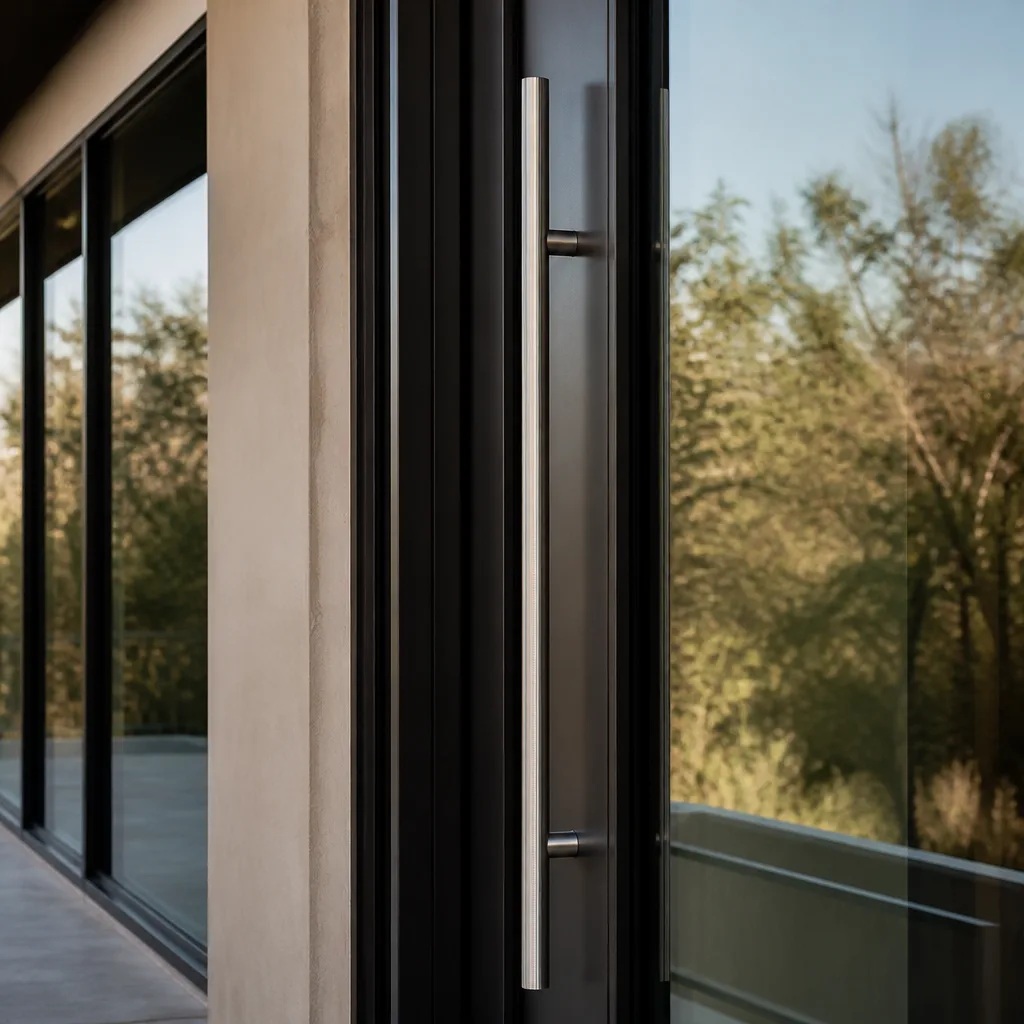
- Judging window performance by eye without checking the utility bill against the spec. A 50-percent gas loss looks identical to an intact unit. The bill is the test, and skipping it means you might replace working windows.
- Confusing interior-face condensation with between-pane fog. Morning fog in a Boulder City winter is often a ventilation issue. Check the humidity reading before calling for replacement.
- Buying the lowest U-factor number without looking at SHGC. In Mojave heat, solar gain drives the bill far more than conducted heat does. A great U-factor paired with a 0.40 SHGC is a worse window here than a modest U-factor with SHGC 0.24.
- Accepting a verbal quote on replacement windows. Ask for the same document that will be your invoice – line-item, with product specs and the opening count. “Call for a price” should not be how any window quote starts.
- Skipping the photo record at install. Without a baseline, there’s no way to prove deterioration under a warranty. Ask the installer to include the photo set as standard, not as an add-on.
- Replacing all the windows when only two are failing. Target the failing openings first, verify the fix, and stagger the rest. Full-package replacement of functioning windows rarely pays back in this climate.
- Ignoring vinyl frame corner seams because the glass looks fine. Once the mitred joint opens, the seal at the frame is compromised and the glass replacement alone doesn’t fix it.
When to Call a Professional
Call a licensed window professional when: you’ve observed any stage-3 or stage-4 seal failure (visible moisture lines or permanent haze between panes); the frame corners show measurable gap or the sash sags or racks when opened halfway; a unit has cracked from thermal shock in summer heat; or the utility bill shows a documented 15-percent year-over-year increase that controls for weather and equipment changes but has no other explanation. A failed seal that’s left for a Boulder City summer is a problem that can escalate to a crack, and a cracked fixed glass in a 115-degree July afternoon is a same-week replacement. A second opinion on a written estimate you’ve been given is also a legitimate trigger to call – it’s free, and it’s the only way to validate that the spec on the quote matches the orientation of your glass. Sightline Windows & Doors Boulder City offers free estimates in Boulder City – call (833) 847-4018.
Frequently Asked Questions
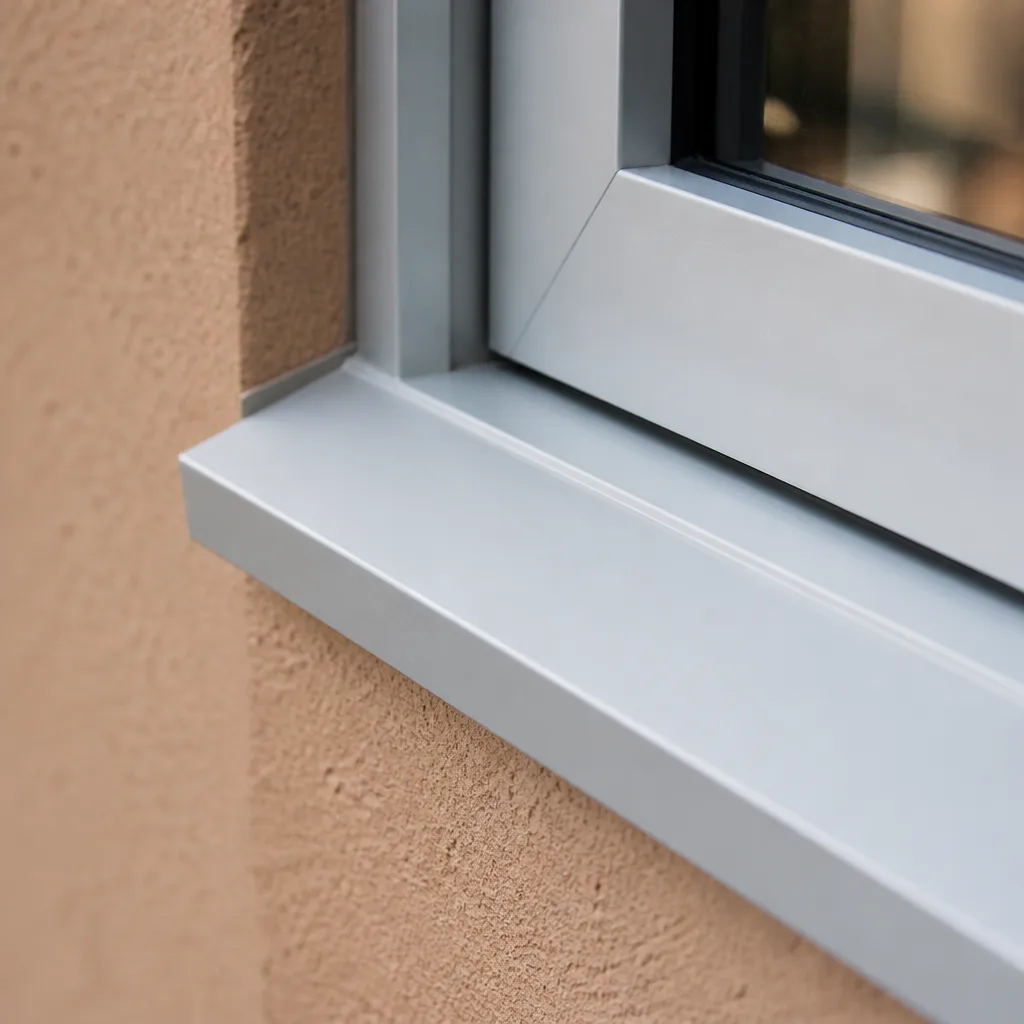
Energy-efficient vinyl replacements in Boulder City typically run $650 to $1,100 per opening for a stock-size unit, and $1,200 to $1,900 for larger custom or geometric openings. Impact-rated units run 20 to 40 percent higher. Full-home packages (10 to 15 openings) usually land $9,000 to $16,000 depending on spec. The written price on the page should be line-item by opening and spec, not a single number. Call (833) 847-4018 for an exact quote – estimates are free.
No. If the frame is solid and the seal failure is contained to the IGU, reglazing – replacing the glass unit only – is a fraction of the cost of full replacement. Fog between the panes is seal failure, but the fix is often the IGU, not the window. A measured survey and photo record of the frame condition is the only way to know which path applies to your specific opening.
Compare the NFRC label U-factor and SHGC against your actual utility usage, adjusted for weather and equipment changes. If your bill shows a 10- to 15-percent year-over-year increase in kilowatt-hours for the same billing month, and your windows are 8-plus years old, the envelope is the leading suspect. The spec sheet plus the utility history is the diagnostic; the visual check is secondary.
Not usually. Interior-face fog wipes off easily and indicates high indoor humidity, not seal failure. Between-pane fog doesn’t wipe off and indicates a failed seal. Check with a hygrometer before assuming the worst; in Boulder City winters, closed-up houses often run above 40 percent relative humidity, which produces fog as a ventilation symptom.
Window replacement in Boulder City typically requires a permit when the replacement changes the size of the opening, product categories, or structural attachment; like-for-like replacement sometimes falls under a lesser permit threshold. The safe rule is to pull the permit. Sightline pulls permits and passes inspections as part of the scope, not as an add-on. Call (833) 847-4018 to review what your specific job requires.
It shouldn’t. The measured survey and the written quote we provide are the same document – the opening count, product specs, and line-item price don’t drift between the quote and the invoice. That’s Haven Clause 1 and Clause 5 (No surprises). If a contractor’s price moves materially after work begins, that’s the warning sign, not the number on the page.
The Bottom Line
Your utility bill sees a failing window before you do. Read it against the spec, adjust for weather and equipment, and treat any documented 10- to 15-percent residual increase as an envelope problem. Then check the four visual stages in order: edge fogging, center condensation, visible moisture lines, permanent haze. Check the frame seams and the color fade pattern. Check the humidity reading before calling a fogged window a failed one. And demand a documented photo baseline at install – the evidence is the whole point, because without a reference, deterioration is a feeling and not a measurement. If your Boulder City home is showing the signs and you want to see them confirmed in writing, call (833) 847-4018 for a free estimate.
Written by the team at Sightline Windows & Doors Boulder City.
Six Reasons Homeowners Choose Sightline Windows & Doors Boulder City
Laminated glass and reinforced frames hold up to wind-driven rain, hail and flying debris, so your openings stay sealed when the weather turns.
Low-E insulated impact glass from our manufacturer lines commonly cuts monthly cooling bills 20-30%.
Laminated impact glass shuts out up to 40% of outside noise - traffic, neighbors, weather.
Monitoring services run $30-90 a month. Laminated impact glass resists forced entry around the clock, with no subscription.
Tighter seals and insulated glass even out hot and cold rooms and stop the drafts at the frame.
A full impact package upgrades curb appeal, buyer confidence and appraised value in one project.
Other Sightline Windows & Doors Boulder City Services
What Neighbors Say About Sightline Windows & Doors Boulder City