Last updated November 17, 2026
New windows and doors improve comfort, cut energy bills and add long-term value to your home. Sightline Windows & Doors Boulder City pairs proven product lines with a local vetted installing partner for lasting performance - and a price put in writing.
Choose your installer
The unit is half the job - the install is the other half. Background-checked local installers measure, set, seal and insulate every opening, and they know the lines we quote inside and out.
Select the right products
Compare styles, materials and glass packages side by side until the fit is right for your rooms, your budget and your goals. The product-line comparison below is the place to start.
Prepare your home for install
Before install day we walk you through a short checklist - furniture pulled back, treatments down, a clear path to each opening - so install day is watch-it-happen, not scramble.
Compare the Lines We Quote
Every project is priced on the same lines, side by side - the price indicators below are relative, and your consultant shows exact numbers on your actual openings.
PGTThe line homeowners arrive naming - the most impact certifications in the industry$$$
- More impact certifications than any other line we quote
- WinGuard, EnergyVue and ClassicVue Max systems built for every wind zone
- 99% on-time delivery keeps your install date on the calendar
CGIThe heavyweight impact line$$$$$
- Large-missile impact ratings for the strictest wind zones
- Architectural-grade aluminum with commercial-depth frames
- The line we quote when protection is the whole point
CWSThe value pick$$
- Vinyl systems built to strict wind codes
- Strong energy packages at the friendliest price point
- The smart start for whole-home replacements on a budget
ESWSlim lines, big glass$$$$
- Narrow-sightline aluminum for modern elevations
- Oversized openings and floor-to-ceiling glass
- Impact-rated without the bunker look
ECOThe aluminum impact workhorse$$$
- Factory-built aluminum impact systems
- A strong price-to-protection ratio for coastal homes
- Proven lines with short lead times
Choosing the Right Windows & Doors Brand: A Buyer’s Guide for Boulder City
The warranty document on a manufacturer’s homepage is usually the national version. The version that governs your claim in Boulder City is often a separate file – a climate-zone addendum mailed after registration or buried in a regional PDF. That gap matters here more than in most places. Boulder City sits at roughly 2,600 feet with a UV index that stays high through most of the year, summer highs that push past 105°F, winter nights that drop near freezing, and a monsoon season that throws wind-driven rain at elevations that face south and west. Brand selection guides tend to rank manufacturers on glossy marketing claims. This one measures them against the conditions your openings actually face and against the warranty terms that survive after the truck leaves. You’ll learn the four specs that matter, how to read the exclusion clauses, and why fiberglass usually beats vinyl on a sun-baked elevation.
Quick Answer
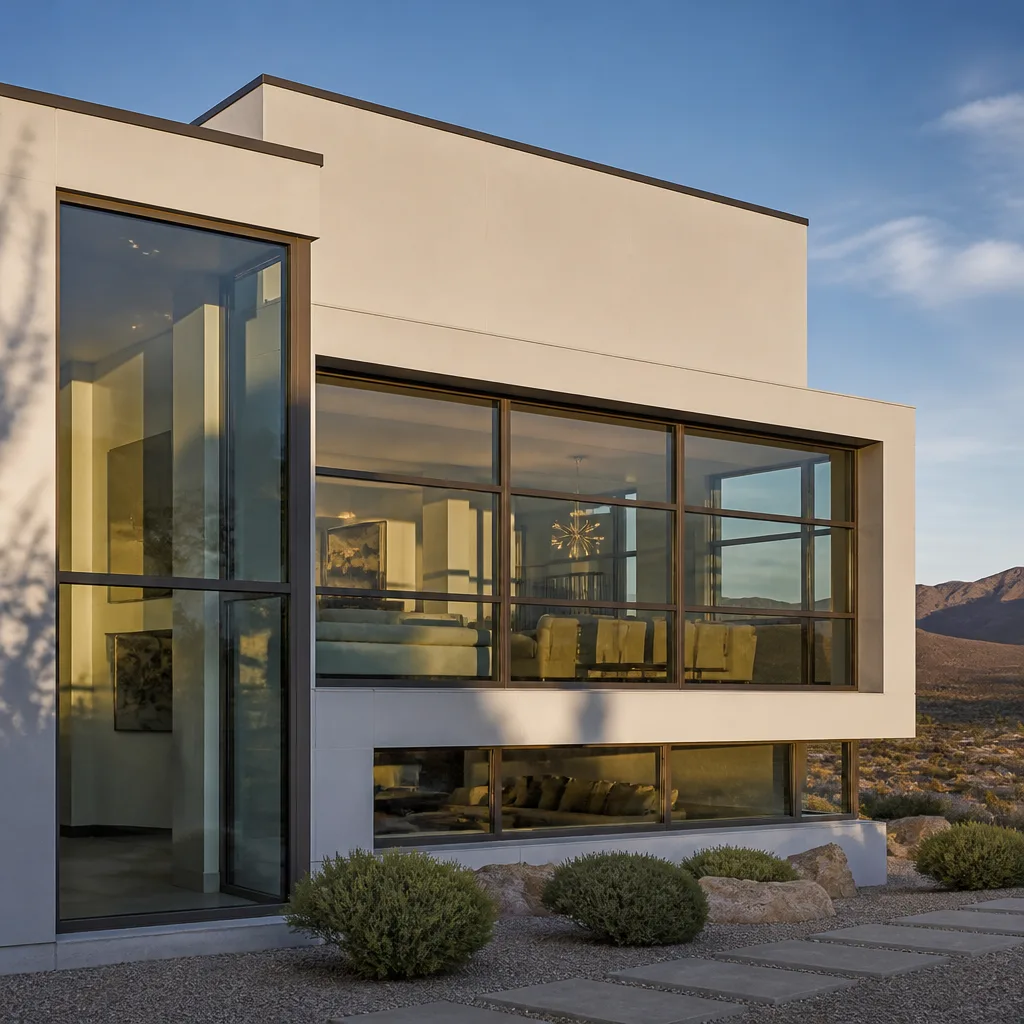
The best window and door brand for Boulder City is the one whose NFRC label meets desert minimums – SHGC at or below 0.25, U-factor at or below 0.30, air infiltration at or below 0.3 cfm/ft², and a design pressure rating of at least DP50 – and whose climate-zone warranty covers seal failure past year three without excluding “extreme heat.” Product name matters less than those numbers and the licensing of the crew installing it. A premium brand installed by an unlicensed contractor can void the warranty entirely, which makes the installer part of the brand decision.
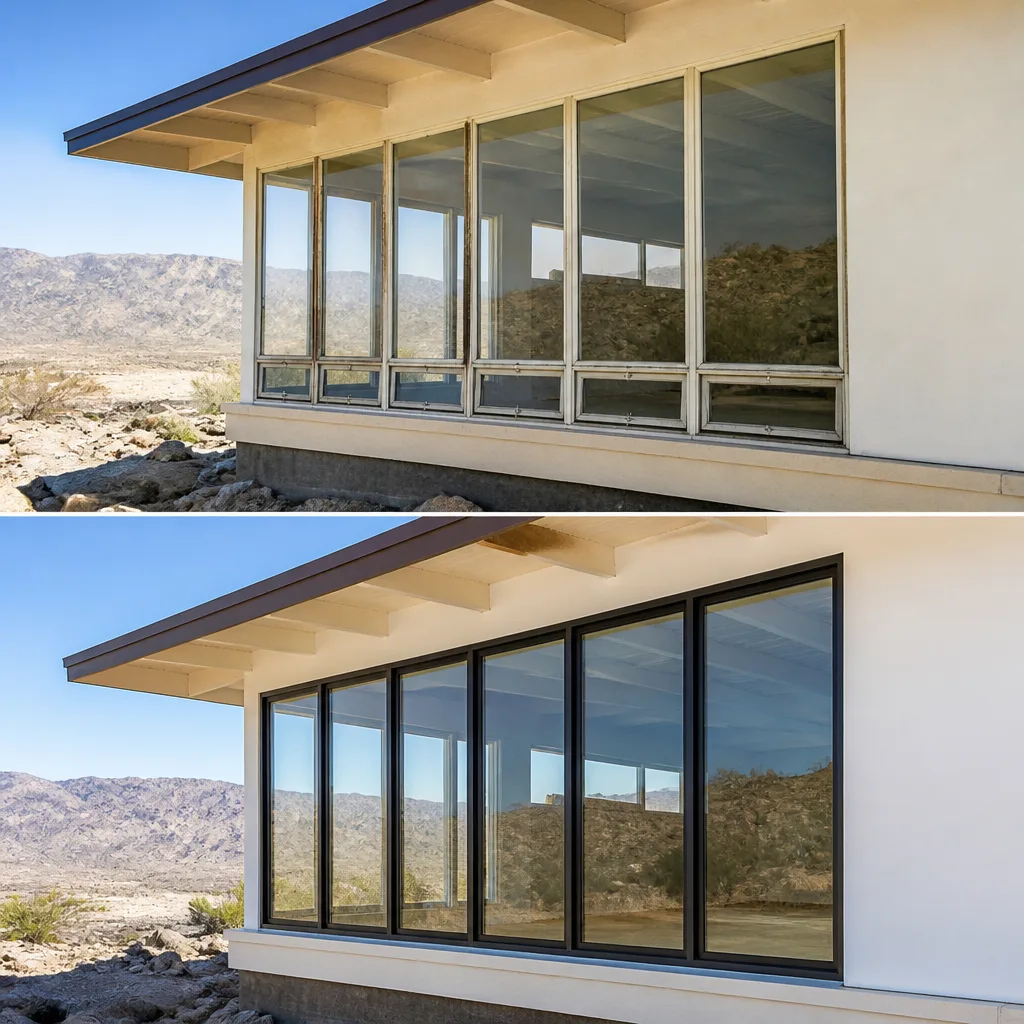
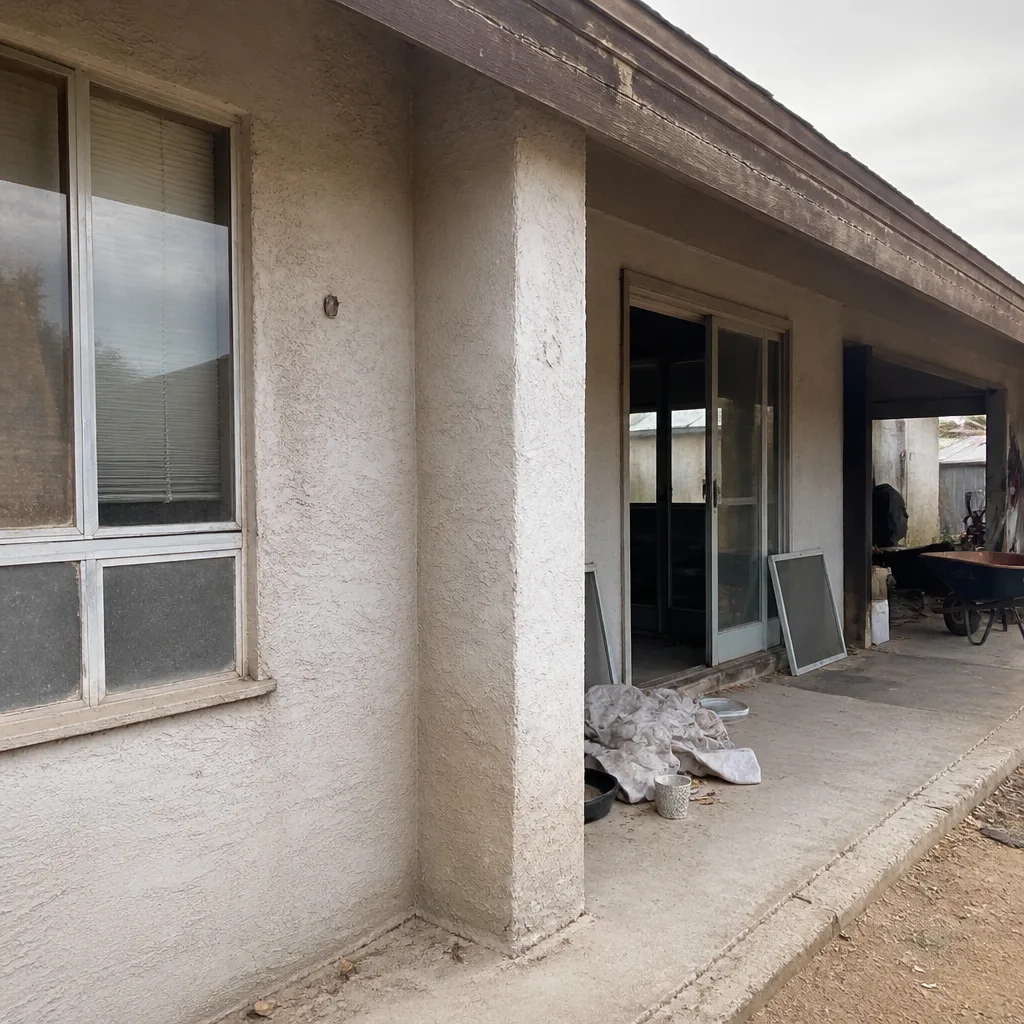 Before
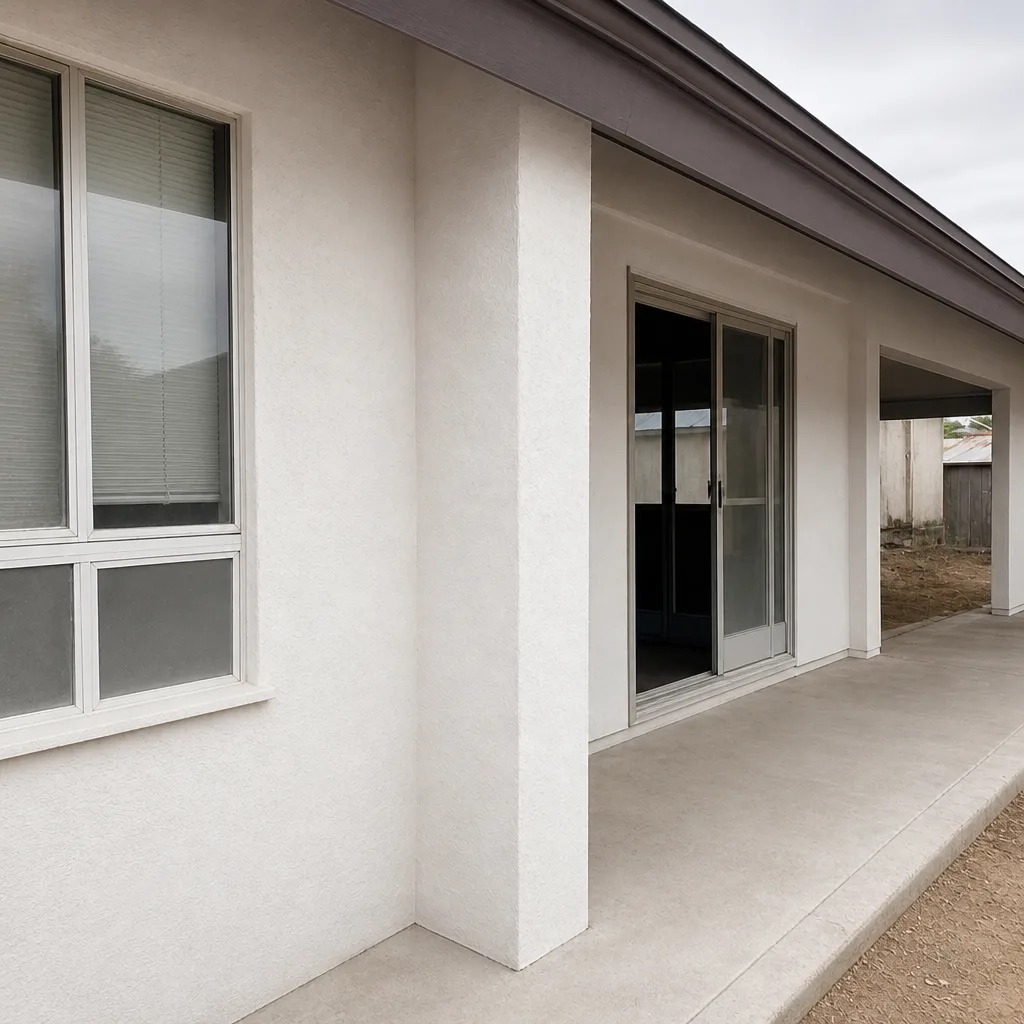 After
Table of Contents
- The Four Performance Specs That Matter in Boulder City
- How to Read a Warranty for a Desert Climate
- Frame Material Ranking for 294-Day Sun Exposure
- Authorized Dealer vs. Licensed Installer: Why It Changes Your Warranty
- What a Brand’s Clark County Track Record Actually Looks Like
- How We Specify the Eight Lines We Install
- A Seven-Step Process for Choosing a Brand
- Common Mistakes to Avoid
The Four Performance Specs That Matter in Boulder City
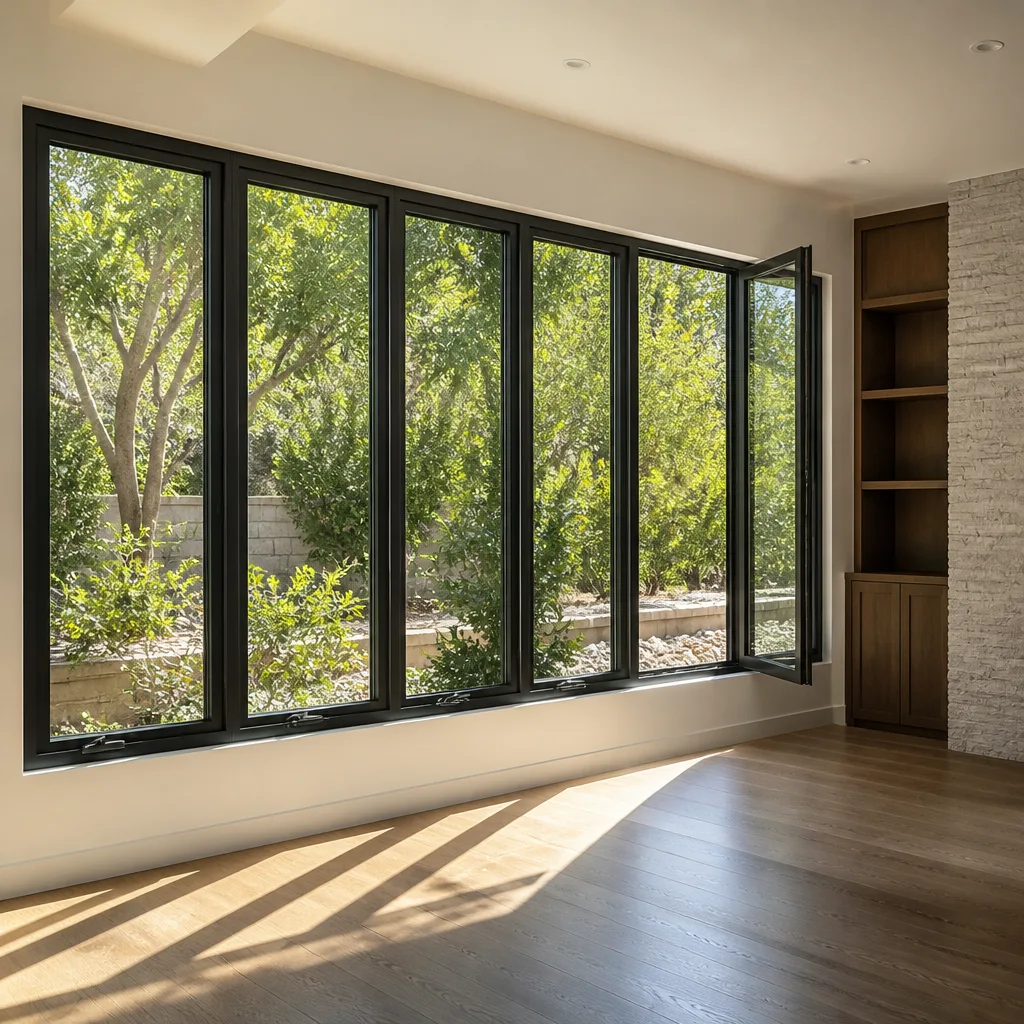
Every window and door sold in the United States carries a label from the National Fenestration Rating Council. That label carries four numbers that decide how the product behaves in southern Nevada. Most homeowners glance at the star rating and move on. Read the numbers instead.
- Solar Heat Gain Coefficient (SHGC) – the fraction of solar heat that passes through the glass. Lower is better in a cooling-dominated climate. For Boulder City’s south and west elevations, we specify 0.25 or lower; a west-facing slider at 0.40 will drive afternoon cooling loads noticeably higher.
- U-factor – how fast heat moves through the whole assembly. In a desert, this matters most in winter nights and in reverse during summer. Target 0.30 or better for double-pane, 0.25 or better for triple.
- Air infiltration rate – measured in cubic feet per minute per square foot (cfm/ft²) under test pressure. Below 0.3 is solid. Below 0.1 is excellent. Drafts around a sliding door in a Boulder City wind event almost always trace back to a poor infiltration rating, not a bad install.
- Design Pressure (DP) rating – the structural number. DP50 means the unit was tested to 50 pounds per square foot of wind load. Boulder City’s monsoon gusts and the elevation-driven wind on hillside lots warrant DP50 minimum; DP60 for anything above the second story or facing open desert.
How to find them: the NFRC label lives on the frame at delivery, and the same numbers appear in the manufacturer’s product data sheet under each model and glass package. Ask for the sheet before signing. If a brand can’t produce it, that’s the answer. The link between these specs and how a job is scoped lives in our Window Installation in Boulder City process, where the measured survey records the readings opening by opening.
How to Read a Warranty for a Desert Climate
A warranty is a contract written by a manufacturer’s lawyer. In a cooling-dominated climate, three clauses decide whether it’s worth anything to you.
- Where “normal use” ends and “extreme condition” begins. Most national warranties exclude damage from “extreme weather” without defining the term. In a Boulder City summer, 110°F is not extreme – it’s Tuesday. Look for language that either names a temperature threshold above 115°F or explicitly states that the climate-zone addendum governs. If the exclusion is undefined, expect a fight at claim time.
- Whether seal failure is covered after year three. Insulated glass units fail when the seal breaks and the cavity fogs. Common schedules cover seal failure for years one through three, then pro-rate or exclude. In a market with this much thermal swing, a 10-year or 20-year seal-failure warranty is a real differentiator. If seal failure drops off after year three, price the risk of replacement into your budget.
- Whether installation voids coverage if the contractor is unlicensed. Almost every manufacturer requires installation by a licensed contractor following published installation instructions. An unlicensed crew can void the warranty even if the product is perfect. Keep the license number on the invoice.
Also check the transfer clause. A warranty that transfers once to the next owner adds resale value. One that dies with the original owner is worth less.
Frame Material Ranking for 294-Day Sun Exposure
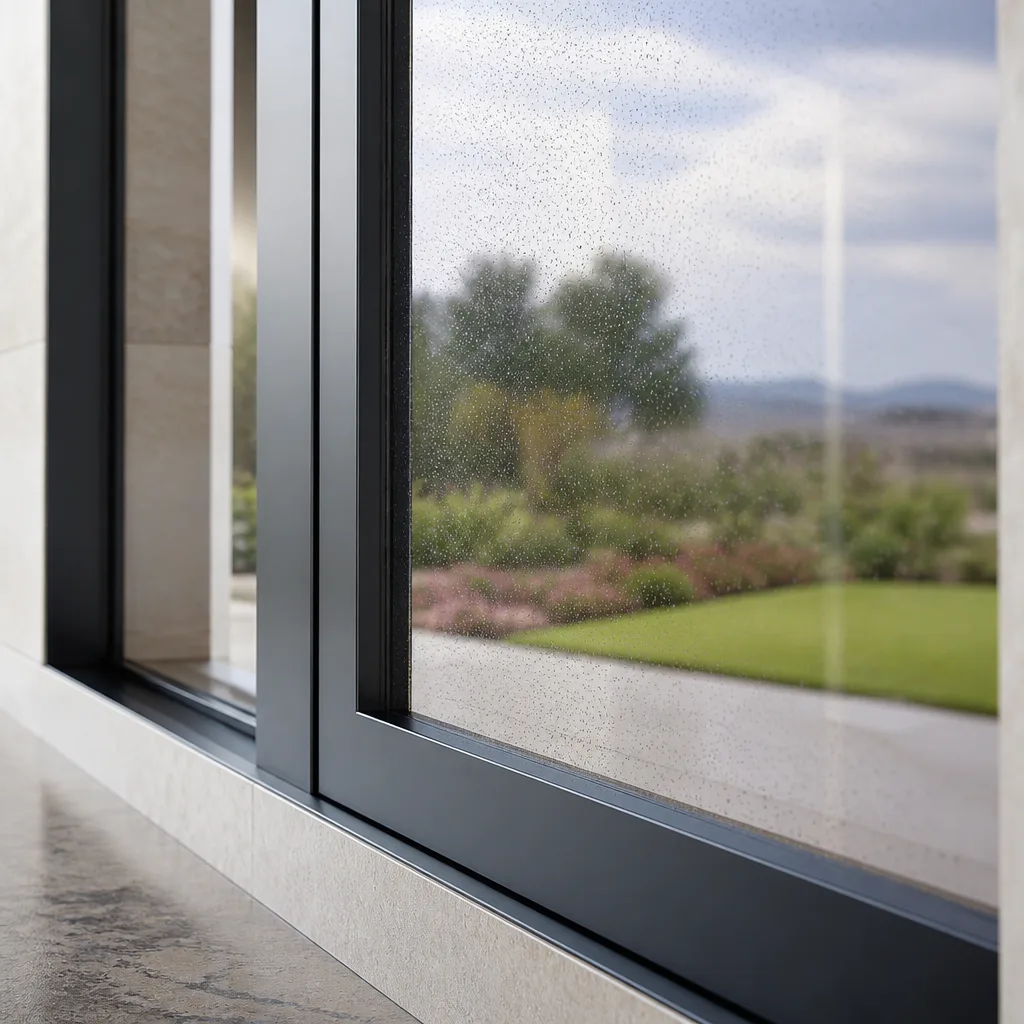
Boulder City sees roughly 294 sunny days a year, and that number drives the frame decision more than any single spec. Ultraviolet exposure degrades some materials faster than others, and the daily swing – which can run more than 30°F in a single Boulder City day – works the frame joints every 24 hours.
- Fiberglass (pultruded) – the strongest choice for a long south- or west-facing elevation. The thermal expansion coefficient is close to that of the glass it holds, so the frame and glazing move together. It handles heat above 90°F without the warping risk that shows up with vinyl over time.
- Vinyl (uPVC) – very good for shaded elevations and shorter runs, and priced lower. Look for a heat-stabilizer additive in the compound; the cheaper grades soften more on a sun-baked wall.
- Aluminum with thermal break – the right answer when a run is oversized, when structural spans matter, or when a commercial-style door is being specified. The thermal break matters; a solid aluminum frame becomes a heat conductor in both seasons.
- Wood clad in aluminum – attractive for entry doors and heritage-adjacent openings, and it needs the cladding to hold because the wood behind it will dry in this climate.
On a south-facing wall in Boulder City, we generally specify fiberglass or a heat-stabilized vinyl over an unspecific composite, and back the choice with the manufacturer’s expansion data. Not a preference – a documented number.
Authorized Dealer vs. Licensed Installer: Why It Changes Your Warranty
These are two separate things, and the distinction is not marketing – it governs whether the full warranty transfers to you when the job is done.
A manufacturer’s authorized dealer has a purchasing agreement with the brand. An authorized installer has passed the manufacturer’s training and certification requirements for that product line. Some brands require installation by a certified installer for the labor warranty to apply at all; others require it for the full glass breakage terms to activate. When you buy from a dealer who isn’t certified for the brand you chose, you may get the product warranty but not the labor coverage. That gap is not visible on the quote.
At completion you want three documents in hand: the manufacturer’s warranty certificate with your name and address on it, the installer’s license number on the invoice, and the registration confirmation from the manufacturer. If any of those are missing, ask. The licensing standard that governs our own crews is Haven Clause 3 (Verified Crews) – background-checked, uniformed, license number on the page, so the person at your door is the person on the record.
What a Brand’s Clark County Track Record Actually Looks Like
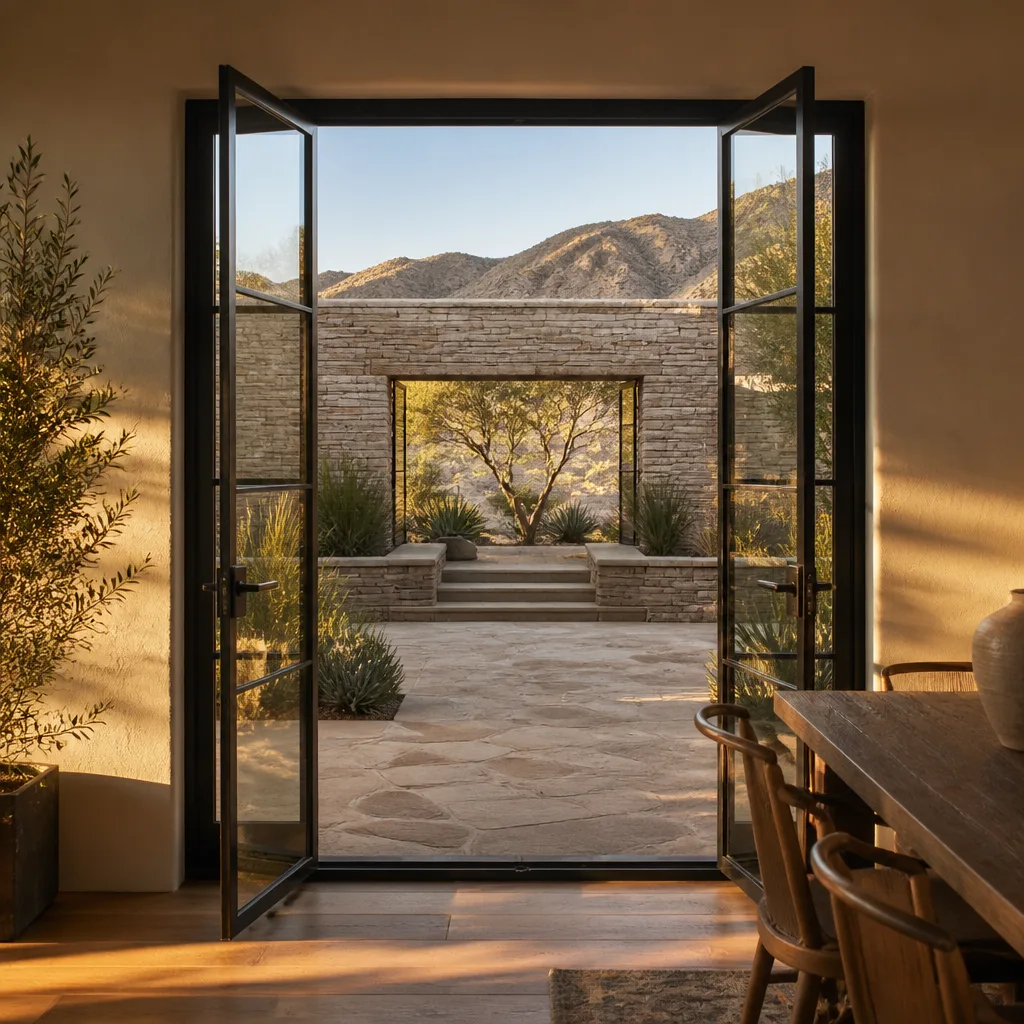
National reliability ratings are averages across dozens of climates. A brand that performs well in Seattle may have a thin service footprint in southern Nevada. In our experience, the question that decides a warranty call isn’t “does the brand stand behind its product?” – it’s “can the brand put a service technician at my door within the week?”
Here’s how to check the Clark County track record before you sign:
- Call the manufacturer’s warranty line and ask for their nearest authorized service provider to a Boulder City address. Note the response and the timeline.
- Ask whether the brand has a regional distribution center within 60 miles. Products sourced from a local DC get parts faster than ones shipped from a national hub.
- Search the Clark County contractor licensing database for the installing contractor and confirm the license is active and matches what’s on your quote.
- Read three-star reviews specifically. A five-star review may just describe a smooth sales call; a three-star review will tell you what happened when something went wrong and how fast the brand sent a tech.
Brands like CWS and ES Windows maintain regional supply relationships in southern Nevada that shorten that service loop. Smaller lines can be excellent products with slower warranty logistics. Both facts belong in your decision.
How We Specify the Eight Lines We Install
We carry eight manufacturer lines – PGT, CGI, CWS, ES Windows, ECO Window Systems, Mr-Glass, Therma-Tru, and ViewLux – and we specify them by what the opening needs, not by what’s easiest to sell. A product line gets picked because the measured survey says it’s the right spec for the window, door, or garage opening it’s going into, not because it carries the best margin.
Some examples of how that plays out in Boulder City:
- Impact-rated windows and doors on a hillside lot – PGT and ES Windows cover the impact categories and the DP ratings we require for elevations above the second story.
- Entry doors in a historic district – Therma-Tru’s fiberglass and steel door lines give us the profile options that fit Boulder City’s design review expectations without giving up the thermal performance.
- Energy-efficient replacement on a 1990s build – CGI and ECO Window Systems offer the right glass package at a lower whole-house price than an impact line that isn’t required by the site.
- Sliding patio doors and garage doors – Mr-Glass and ViewLux fill the runs where a standard-series slider or an impact garage door needs to match an architectural look without a custom lead time.
The point isn’t the list. It’s that a brand recommendation should be written down, tied to the specific opening, and explained in the same document as the price. That’s Haven Clause 1 (Have it in writing) – the measured survey and the quote are one document.
A Seven-Step Process for Choosing a Brand
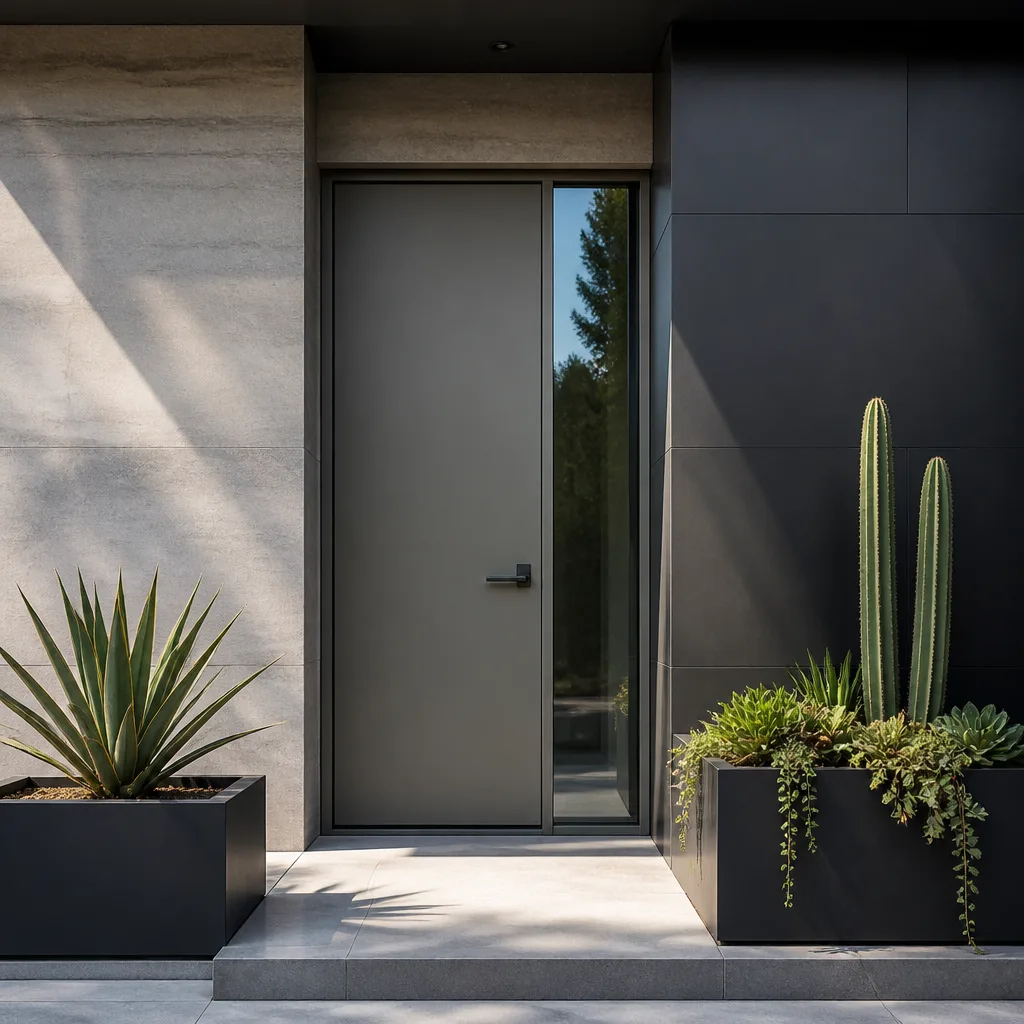
- Measure each opening and record the orientation (north, south, east, west) and existing glass readings. South- and west-facing windows drive the glass spec; a shaded north window in Boulder City can take a lighter package and lower the job cost.
- Set your minimums – SHGC ≤ 0.25, U-factor ≤ 0.30, air infiltration ≤ 0.3 cfm/ft², DP ≥ 50. Write them down before you talk to anyone.
- Request the NFRC data sheet for the specific model and glass package you’re being quoted. Not the brand brochure; the data sheet.
- Ask for the climate-zone warranty PDF and read the seal-failure clause, the extreme-condition clause, and the transfer clause.
- Confirm the installer’s license in the Clark County database and match it to the invoice.
- Price the warranty logistics – call the service line and ask their response time to a Boulder City address. If the loop is longer than a week, discount the warranty’s value accordingly.
- Collect the completion documents – warranty certificate, license number on the invoice, registration confirmation, and photo record of the install.
Our Window Replacement in Boulder City and Door Installation in Boulder City process follows that sequence on every job, and every completed install is covered by the 365-Day Done Right Promise. The technical specs that shape a Boulder City product selection map onto the process you’ll see on those pages.
Common Mistakes to Avoid
- Trusting the homepage warranty instead of the climate-zone addendum. The version that governs your claim is often a separate PDF. Require it before signing.
- Assuming a high star rating covers extreme heat. Star ratings average national performance; in 105°F summers, the U-factor and SHGC numbers decide the actual bill.
- Skipping the infiltration spec because the showroom was quiet. A slider with a 0.5 cfm/ft² rating will whistle in a Boulder City wind event regardless of how nicely it closes on the demo floor.
- Specifying vinyl on a sun-baked west wall without checking the heat stabilizer. The cheaper vinyl compound can warp visibly within a few summers on a south or west elevation.
- Hiring an unlicensed installer to save $400. The savings disappear the first time a seal fails and the manufacturer refuses the claim.
- Choosing a line that has no Clark County service footprint. Convenient up front; inconvenient at warranty time when a technician needs to reach Boulder City.
- Accepting a verbal quote. If the price isn’t written before work starts, you cannot prove what was agreed.
When to Call a Professional
Windows and doors involve structural openings, glass under tension, and weatherproofing that has to hold through the next monsoon. If a frame is fogging on the interior, a seal has failed and the insulated glass unit needs replacement before the moisture damages the frame. If a slider sticks or the latch misses its strike, the opening is out of square and needs measurement, not more force. If a door has started to crack at the frame within a year of install, that’s a warranty claim that depends entirely on who installed it and whether the license number is on your invoice. A trained professional measures before replacing, documents the readings, and puts the price in writing. Sightline Windows & Doors Boulder City offers free estimates in Boulder City – call (833) 847-4018 if you’d rather have a written scope than a phone pitch.
Frequently Asked Questions
There isn’t a single “best” brand – there are brands whose NFRC data meets Boulder City minimums for your specific elevations and whose climate-zone warranty holds up. Any brand whose product carries an SHGC of 0.25 or lower, a U-factor of 0.30 or lower, and a DP50 rating is in the running; a fiberglass frame is preferred for south and west elevations. The installer’s license is just as important as the brand label.
The NFRC label is on the window frame at delivery, and the same numbers appear in the manufacturer’s product data sheet under each model and glass package. Ask your contractor for the data sheet for the exact model and glass package being quoted – not the brand brochure – before you sign. A contractor who can’t produce the sheet doesn’t have the spec.
Impact-rated glass can meet desert performance specs, but the glass package inside the impact laminate has to be specified for solar control. Impact ratings (large-missile or small-missile) describe the assembly’s resistance to impact, not its SHGC or U-factor. Ask for the NFRC data on the impact version of the model being quoted, side by side with the non-impact version, and compare the SHGC numbers.
In most cases, yes – the manufacturer’s warranty terms typically require installation by a licensed contractor following the published installation instructions. Some brands further require installation by an authorized installer for the labor and glass-breakage warranty to apply. Keep the license number on the invoice and confirm it in the Clark County database.
Meaningful. West-facing windows absorb the harshest afternoon heat, and the daily thermal swing works the frame joints repeatedly. Fiberglass expands and contracts at roughly the same rate as the glass, so the frame holds up; heat-stabilized vinyl performs well at a lower price, but the cheaper compound can warp on a sun-baked western elevation after several summers.
The manufacturer’s warranty covers the product itself – glass, frame, hardware, and seals – and follows the terms in the manufacturer’s document. The installer’s warranty covers the labor and workmanship – how it was set, flashed, and sealed. You want both in writing. The 365-Day Done Right Promise covers workmanship for a full year on our jobs; the manufacturer’s document covers the product per its own terms.
The Bottom Line
Brand selection in Boulder City comes down to four numbers (SHGC, U-factor, air infiltration, DP), one document (the climate-zone warranty), one installer (licensed and, for some brands, certified), and one warranty service footprint (how fast a tech can reach your address). A brand that meets all four is the right brand for your opening; a brand that meets one and not the others is a marketing department doing the work of an engineer. Get the NFRC sheet and the climate-zone PDF before you sign anything. The written price and the written spec belong in the same document – that’s the standard that governs our work under the Haven Standard, and it’s the standard to hold any installer to. If you’d like a free second opinion on any written estimate, we’ll review it at no charge.
Get a Free Estimate for Boulder City Windows and Doors
Call (833) 847-4018 to schedule your free estimate. We’ll bring the measured survey, specify the right product line for each opening against the four specs above, and hand you a written price before any work starts – plus a documented photo record when the job is done. If you have a competitor’s quote in hand, send it over; the second opinion is free. Start with our Sightline Windows & Doors Boulder City home page for the full picture of what we do, or call us directly and skip the tour – the estimate is the point.
Written by the team at Sightline Windows & Doors Boulder City.
Six Reasons Homeowners Choose Sightline Windows & Doors Boulder City
Laminated glass and reinforced frames hold up to wind-driven rain, hail and flying debris, so your openings stay sealed when the weather turns.
Low-E insulated impact glass from our manufacturer lines commonly cuts monthly cooling bills 20-30%.
Laminated impact glass shuts out up to 40% of outside noise - traffic, neighbors, weather.
Monitoring services run $30-90 a month. Laminated impact glass resists forced entry around the clock, with no subscription.
Tighter seals and insulated glass even out hot and cold rooms and stop the drafts at the frame.
A full impact package upgrades curb appeal, buyer confidence and appraised value in one project.
Other Sightline Windows & Doors Boulder City Services
What Neighbors Say About Sightline Windows & Doors Boulder City