Last updated November 17, 2026
New windows and doors improve comfort, cut energy bills and add long-term value to your home. Sightline Windows & Doors Boulder City pairs proven product lines with a local vetted installing partner for lasting performance - and a price put in writing.
Choose your installer
The unit is half the job - the install is the other half. Background-checked local installers measure, set, seal and insulate every opening, and they know the lines we quote inside and out.
Select the right products
Compare styles, materials and glass packages side by side until the fit is right for your rooms, your budget and your goals. The product-line comparison below is the place to start.
Prepare your home for install
Before install day we walk you through a short checklist - furniture pulled back, treatments down, a clear path to each opening - so install day is watch-it-happen, not scramble.
Compare the Lines We Quote
Every project is priced on the same lines, side by side - the price indicators below are relative, and your consultant shows exact numbers on your actual openings.
PGTThe line homeowners arrive naming - the most impact certifications in the industry$$$
- More impact certifications than any other line we quote
- WinGuard, EnergyVue and ClassicVue Max systems built for every wind zone
- 99% on-time delivery keeps your install date on the calendar
CGIThe heavyweight impact line$$$$$
- Large-missile impact ratings for the strictest wind zones
- Architectural-grade aluminum with commercial-depth frames
- The line we quote when protection is the whole point
CWSThe value pick$$
- Vinyl systems built to strict wind codes
- Strong energy packages at the friendliest price point
- The smart start for whole-home replacements on a budget
ESWSlim lines, big glass$$$$
- Narrow-sightline aluminum for modern elevations
- Oversized openings and floor-to-ceiling glass
- Impact-rated without the bunker look
ECOThe aluminum impact workhorse$$$
- Factory-built aluminum impact systems
- A strong price-to-protection ratio for coastal homes
- Proven lines with short lead times
Window Replacement Warning Signs Every Homeowner Should Know
Here is the counterintuitive part: the most expensive window replacement mistakes rarely happen on installation day. They happen weeks earlier, in a document the homeowner signed without reading closely. A quote that lists “windows installed” as a single line item is not a quote. It is a price with no scope. There is no written baseline to hold anyone to, so any condition found mid-install, whether it’s rotted framing, missing flashing, or a rough opening that isn’t square, becomes a change order you can’t dispute. In this guide we’ll walk through the warning signs that live in the quote itself, then move to the ones you can spot on installation day and in the first 30 days after. We’ll reference Boulder City conditions where they matter.
Quick Answer
The clearest warning signs of a window replacement gone wrong show up in the quote before work starts: a single-line scope, no specified flashing method, no named air-sealing material, no written disposal of old units, and no opening dimensions. At installation, the signs are a crew without a copy of the signed scope, no shimming material staged, and no visible flashing tape. After the job, warning signs include missing photo documentation, failed dollar-bill weatherstrip tests, and condensation between the panes within the first 30 days.
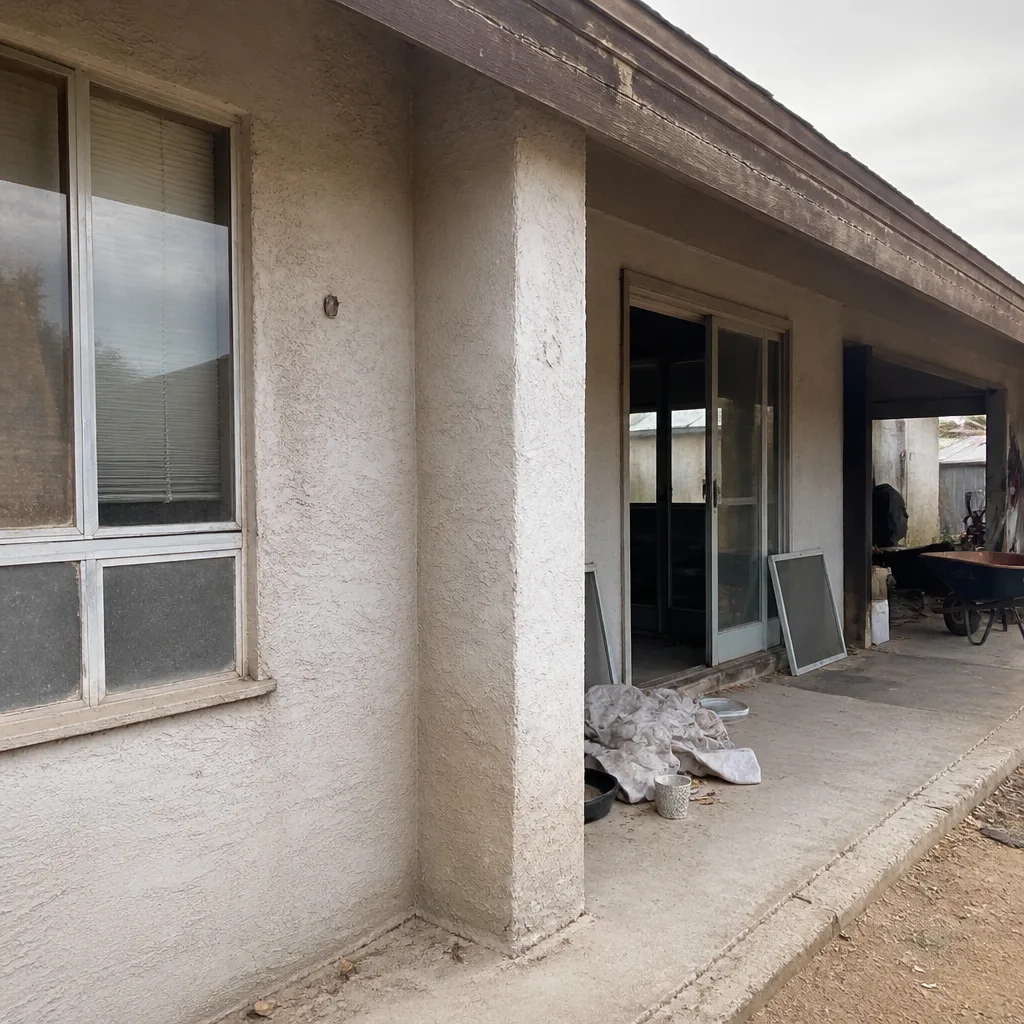 Before
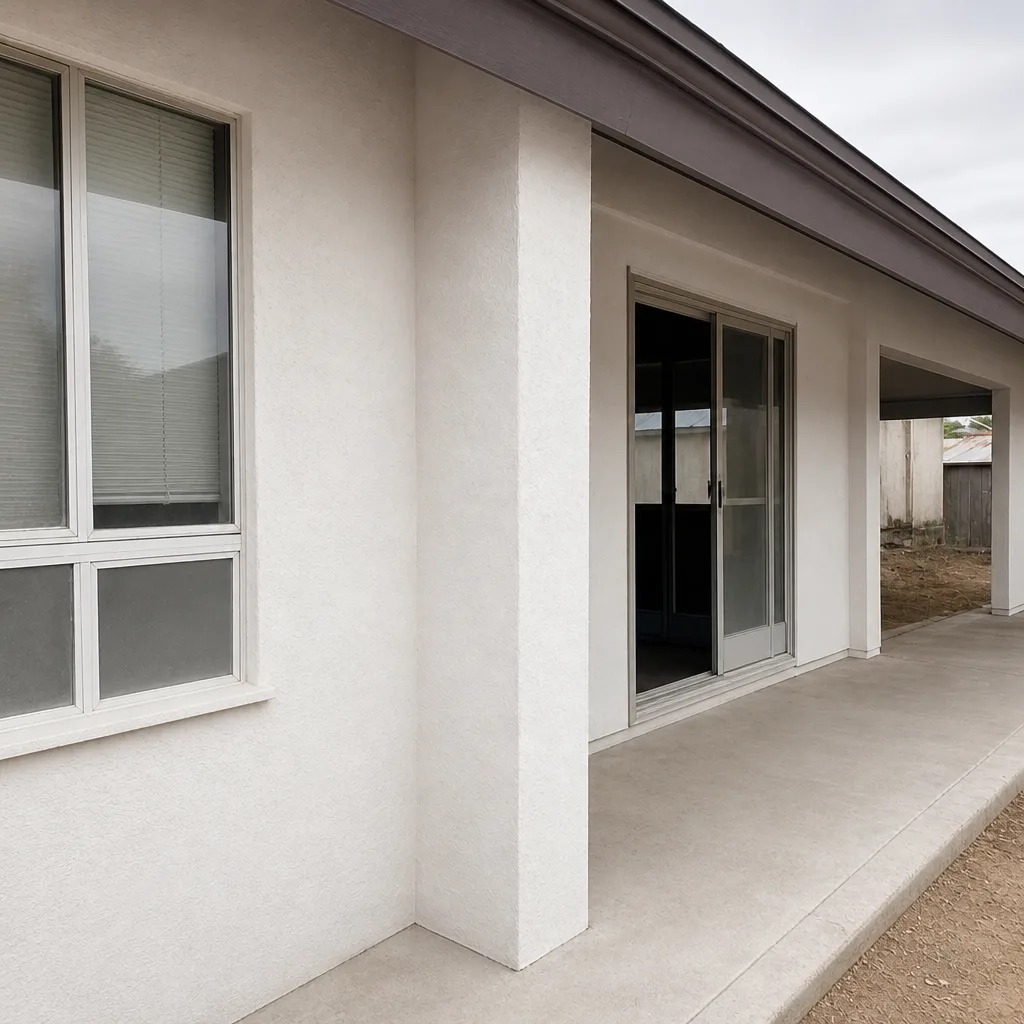 After
Table of Contents
- What a Complete Scope Document Must Contain
- Quote-Phase Warning Signs We See Most Often
- Installation-Day Warning Signs
- Post-Installation Checks That Reveal Hidden Failures
- What Legitimate Photo Documentation Looks Like
- Nevada Contractor Credential Checks
- Boulder City Climate and Building Context
- Common Mistakes to Avoid
What a Complete Scope Document Must Contain
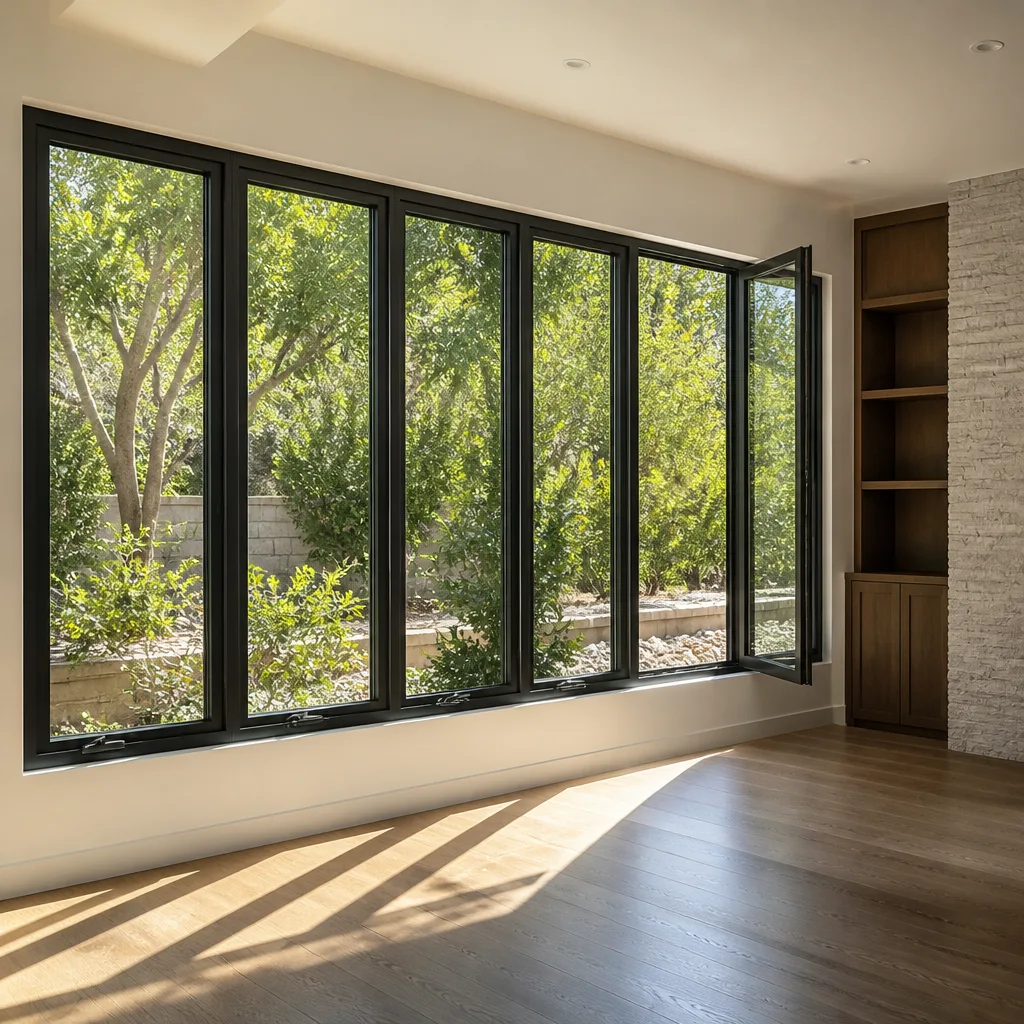
A scope document is the written description of what will actually be installed, where, and how. It is different from the price. The price answers “how much.” The scope answers “what, exactly.” At Sightline Windows & Doors Boulder City, the measured survey a customer keeps and the final quote are the same document, which is Haven Clause 1: Have it in writing. That principle exists because a price without a scope is not a commitment, it’s a starting bid. Here are the four items every scope should contain, at minimum.
- Opening dimensions by rough opening and unit size. These are two different measurements. The rough opening is the framed structural opening in the wall. The unit size is the actual window or door ordered. If the scope lists only one number, you can’t tell whether the ordered unit fits the framed opening, and neither can anyone else later if a problem comes up.
- Flashing method, specified by name. “Flashed at sill and head” is not a specification. In Boulder City, where wind-driven rain during monsoon season is a real load, the specific product matters: a self-adhered bituminous membrane, a liquid-applied flashing, or a taped-seam system are three different approaches with different durability. The scope should name the method and the product family.
- Air sealing material specified. Low-expansion polyurethane foam, backer rod plus sealant, or a gasketed system should be written into the scope. “Sealed at installation” without a material named is a warning sign. ESPECIALLY on a second-story unit where you can’t inspect the seal after the trim goes back on.
- Disposal of old units confirmed in writing. Many quotes gloss over this. If disposal of the old windows and glass isn’t in the scope, it becomes an add-on at the end. In Boulder City, where hauling and disposal of construction debris requires routing to designated facilities outside the historic district, this isn’t a throwaway line item.
If your quote is missing three or four of these items, ask for a revised document. If the contractor can’t produce one, Window Replacement in Boulder City starts with a measured survey that nothing else can override. That’s the baseline.
Quote-Phase Warning Signs We See Most Often
In our experience reviewing competitor estimates for homeowners, roughly two out of three quotes we see are missing the basic scope items listed above. The pattern is consistent enough that we treat it as a system failure, not an oversight. Here are the quote-phase warning signs that should make you pause before signing.
- One line item for all labor and materials. No unit-by-unit breakdown, no opening list, no itemized flashing or sealing. You are buying a price, not a documented scope.
- No manufacturer or product line named. “Energy-efficient vinyl windows” tells you nothing. A legitimate quote names the manufacturer and the specific product line. We spec from eight lines including CGI, CWS, and ES Windows, and choose by the performance the opening requires, not by what happens to be on a truck.
- No U-factor or SHGC values on the quote. U-factor measures how much heat passes through the glass assembly. SHGC, solar heat gain coefficient, measures how much solar heat enters. In Boulder City, where summer afternoons routinely top 105°F, an SHGC number on the quote is the difference between a comfortable room and a furnace with a nice view. If the quote doesn’t state them, ask. If it can’t state them, that’s the warning.
- Verbal-only scope additions. “We’ll also fix the trim while we’re there” delivered face-to-face is not a commitment. Haven Clause 5 is No surprises: the written document is the scope, and verbal additions get written in or dropped.
- No expiration date, but also no fixed price. A quote that “may be adjusted based on conditions found during installation” is not a fixed price. It is a price range with an escape clause. Ask for the entire condition list, in writing, before signing.
- No mention of permit responsibility. Who pulls the permit is a written line in the scope, not a phone-call clarification. See our Window Installation in Boulder City page for how that line item typically reads.
We’ll say more on the Nevada-specific credential checks below. For now, the pattern is clear: the quote tells you what kind of operation you’re dealing with before anyone shows up.
Installation-Day Warning Signs
You don’t need to supervise a crew to notice when something is off. The installation-day warning signs are visible from the driveway, and they show up in the first 15 minutes. Here is what to watch for when the crew arrives.
- The crew arrives without a copy of the signed scope. Ask politely to see it. A professional crew carries the same document you signed, printed or on a tablet, because the scope is what they’re installing against. If they can’t produce it, they are working from memory or from the sales rep’s notes, and neither is a binding scope.
- Shimming material is not in the staging area. Windows are set plumb, level, and square using shims at specific points around the frame. If you don’t see a selection of shim material staged with the units, either the crew forgot them or they intend to force the unit into place. Either way, that’s a warning sign before anything gets installed.
- No exterior flashing tape visible in the material staging. Before any unit goes in, the flashing tape should be on site. If you see the window stacked against the wall and no flashing tape anywhere on the ground, ask how the flashing will be integrated. The answer should refer to the method named in your scope.
- No drop cloths or floor protection. This sounds minor. It is a leading indicator of how the rest of the job will be handled. If the crew doesn’t protect your floor on the way in, they likely won’t protect the flashing detail either.
- Verbal-only answers to scoped questions. If your scope specifies “self-adhered flashing at sill and head” and the crew member says “we always use the good stuff,” the scope and the installation have already diverged. Document the exchange and call the office.
The verification principle here is Haven Clause 3: Verified Crews. Every technician at your door is background-checked, uniformed, and identified by license number before arrival. The person on the record is the person at the door. Any credible operation can do this in Boulder City, and you should expect it.
Post-Installation Checks That Reveal Hidden Failures
Some of the most consequential failures don’t show up immediately. They show up in the first 30 days, or on the first windy afternoon, or on the first cold morning of the year. Here are three checks any homeowner can perform without a professional present.
- The dollar-bill weatherstrip test. Close the window, then try to slide a dollar bill between the sash and the frame at three points: along the sill, up one side, along the head. If the bill slides easily anywhere along the perimeter, the weatherstrip seal is not making contact. It should grip with slight resistance at every point. Repeat on every operable unit three or four times over the first month.
- The 30-day condensation pattern watch. During the first 30 days, watch the glass. Condensation on the room-side of the glass is normal in cool weather and depends on interior humidity. Condensation between the panes, or fogging inside the sealed glass assembly, is a failed seal and never acceptable. Photograph it and call the installer. Condensation on the frame or sill in a specific pattern may indicate an air-sealing gap, which is a different and correctable issue.
- Operational force measurement. Open and close every operable unit slowly and consistently. Note any that require abnormal force, that catch partway through the travel, or that don’t latch cleanly. Force requirements that exceed manufacturer spec usually point to a unit installed out of plumb, which is a shimming problem. It surfaces within the first 60 days of regular use, not on installation day.
For sliding doors and patio doors, add one more check: watch the track for water pooling after the first monsoon rain. Pooling in the track that doesn’t drain within a few minutes indicates a weep path issue. The fix is often simple, but only if documented and called in early. Our Door Installation in Boulder City guide covers the specific checks for door units.
What Legitimate Photo Documentation Looks Like
Here is a rule worth engraving: absence of photo documentation is a warning sign regardless of how good the work looks afterward. Why? Because a window that looks fine from the living room can be missing flashing integration behind the exterior trim, and a homeowner will never know until the wall leaks. The photo record is what closes that gap. A legitimate photo record at job close contains four specific images per opening, at minimum.
- Rough opening condition before install. The framed opening with the old unit out, showing the sheathing condition, any rot found, and the sill angle.
- Flashing integration. The self-adhered or liquid-applied flashing in place, integrated at sill, jambs, and head, with the weather barrier lapped correctly. This is the single most important photo because it’s the one detail you cannot verify after installation.
- Final exterior. Unit set, trim complete, sealant applied at exterior perimeter, sill detail signed off.
- Final interior. Trim, reveal, and sightline confirmed from inside, taken from a consistent standing height so sightlines are comparable to the survey.
The photo record is Haven Clause 4: Evidence on every job. We document every visit, not as an upsell but as a standard deliverable. If a contractor can’t produce these images at job close, the question isn’t whether the install was fine, but whether anyone can show it was.
Nevada Contractor Credential Checks
Nevada has specific credential requirements, and they matter more than homeowners typically realize. Here is what to verify before signing, in order of importance.
- State license number and status. The Nevada State Contractors Board maintains a public lookup by license number. Verify the license is active, matches the company name on the quote, and covers the classification for the work. A license number that isn’t on the quote is a warning sign; every legitimate operator prints it. Haven Clause 3 means the license number on the quote matches the person at your door.
- Bond amount relative to project size. The bond is a financial backstop if the contractor fails to perform. Ask for the bond amount and compare it to your project value. A bond that’s a fraction of the project cost is a warning sign, because the recovery in the event of a default is limited.
- Certificate of insurance that names you as certificate holder. A certificate of insurance listing only the contractor as insured is not sufficient. It should name you, the homeowner, as an additional insured or certificate holder for general liability, so that if damage occurs on your property, your interests are covered by the policy. Ask for the certificate to be sent directly from the insurance carrier, not forwarded by the contractor. That last detail matters.
- Written warranty terms. Every legitimate installer publishes a warranty in writing, and it should be the same document whether you ask before or after signing. Our 365-Day Done Right Promise is written into the Haven Standard, not offered verbally. If a competitor won’t put their warranty in writing, treat that as a scope gap.
Bring us a competitor’s estimate and we’ll read it with you at no charge as a free second opinion. We don’t need to be the one to fix it; we do need the homeowner to know what’s in the document before they sign.
Boulder City Climate and Building Context
Boulder City is not a generic window market. The desert climate, the historic district building stock, and the local permitting authority all shape what a proper scope looks like here. Three considerations stand out.
First, thermal load. Summer afternoon temperatures in Boulder City commonly exceed 105°F, and the heat gain through south-facing and west-facing glass is the single largest envelope load in most homes built before 2010. The U-factor and SHGC values on the quote are not marketing line items here. They determine whether the room you replaced windows in stays usable in August. A window specified by price alone tends to miss this, and the homeowner discovers it the first summer after installation.
Second, wind-driven dust and monsoon rain. Boulder City gets occasional intense rain events, and the flashing detail on the sill and head is the difference between a dry wall and a stained one. The specific flashing method in the scope should account for wind-driven rain load, not just rain falling straight down. In our experience, most of the water intrusion calls we see in older Boulder City homes trace back to a flashing integration gap that was never photographed and never verified.
Third, the historic district. Many homes near downtown Boulder City were built between the 1930s and the 1960s with original wood single-pane windows. Replacement in the historic district may require specific exterior profile approvals or may exempt certain replacements; the scope should confirm this and the permit should be pulled by the contractor. If the quote is silent on historic district review, that’s a red flag specific to Boulder City. Our Sightline Windows & Doors Boulder City home page and the install team can walk through the process for a specific address.
Common Mistakes to Avoid
- Comparing prices without comparing scopes. Two quotes that differ by $4,000 can look far apart until you line up the item lists. Specifying CGI or ECO Window Systems units with named flashing and air-sealing materials can account for the difference. Compare line items, not totals.
- Accepting verbal additions to the scope. Every verbal addition, whether trim repair, a screen replacement, or a jamb extension, becomes a disputed line at close. Get it in writing before work starts or don’t expect it.
- Signing a quote with no U-factor or SHGC values. This looks benign until the first Boulder City summer. The performance numbers should be on the document, and if they aren’t, the product wasn’t specified; it was just picked.
- Skipping the credential verification because the price felt good. A low price on a window replacement in Boulder City with no verified license number, no certificate of insurance naming you, and no written warranty is a low price on an unenforceable agreement.
- Letting the first installation crew on site without checking the signed scope is in their possession. The 10-minute check on arrival day prevents most of the mid-project change orders we are asked to review.
- Not photographing the flashing integration before exterior trim goes back on. This is the single detail that cannot be verified after close. If the crew doesn’t photograph it, ask them to before the trim goes in.
- Ignoring the 30-day condensation watch after installation. Seal failures surface early. Catching them in the first month means getting the replacement covered under the warranty process rather than paying out of pocket later.
When to Call a Professional
Some aspects of window replacement can be reviewed by a homeowner. Others require a trained glazier or installer to properly evaluate. The scenarios where we recommend calling a professional rather than diagnosing yourself: any evidence of water staining on the interior sill or wall below the window, condensation between the panes appearing at any time after installation, a window that requires abnormal force to operate or won’t latch cleanly during the first 60 days, exterior trim gaps at the flashing line visible from outside, or any pattern of window fogging in a group of units installed at the same time. These are all signs of a documented installation failure, and each is worth a professional inspection. If your installation was done by another contractor and you can’t reach them, ask for a free second opinion on the original quote; it takes 20 minutes and often reveals what happened. Sightline Windows & Doors Boulder City offers free estimates in Boulder City, call (833) 847-4018 to schedule yours.
Frequently Asked Questions
The biggest warning sign is a single line item for “windows installed” with no unit-by-unit breakdown, no opening dimensions, no specified flashing method, and no named air-sealing material. That document is a price, not a scope, and any condition found during installation becomes a change order because there is no written baseline. Call (833) 847-4018 for an exact quote; estimates are free and written.
Residential window replacement in Boulder City typically runs from roughly $650 to $1,200 per standard opening for a mid-tier vinyl double-pane unit with installation, depending on the opening size, product line, and whether impact-rated or high-performance glass is specified. Custom, impact-rated, or historic-district-required profile work runs higher. Call (833) 847-4018 for a written line-item quote specific to your address; the price is fixed before work starts.
It should not. A properly written scope names the full condition list up front, so the only reason a price changes is a scope change you approve in writing. If a contractor’s quote includes language about “adjustment based on conditions found,” ask them to write the entire condition list into the scope before signing. Haven Clause 5 (No surprises) exists because a written price before work starts is the whole point.
Yes. Permit responsibility is named as a line item in every scope we produce, and the permitees-of-record and inspection are handled by us as part of the job. In Boulder City, this includes confirming any historic district review that applies to the address. A quote that is silent on permits is a warning sign regardless of the price.
Verify the license number on the quote in the Nevada State Contractors Board public lookup, confirm the bond amount is proportional to your project size, and ask for a certificate of insurance that names you as certificate holder, sent directly from the insurance carrier. Written warranty terms should be standard and the same document whether you ask before or after signing. Call (833) 847-4018 to compare our written quote against a competitor’s at no charge.
A typical single-family window replacement in Boulder City runs two to four days depending on the number of openings, story height, and any framing or trim work discovered at the rough opening. A single-door replacement is usually one day. The written scope states the expected schedule, and we commit to it in writing because of Haven Clause 2 (Arrive on schedule). Call (833) 847-4018 to schedule your free estimate and get a written schedule for your job.
The Bottom Line
The most expensive window replacement mistakes are made before installation begins, in the quote document. Scope with opening dimensions, named flashing method, specified air-sealing material, and written disposal is the baseline. The installation-day checks (signed scope on-site, shim material staged, flashing tape visible) take 15 minutes. The post-installation checks (dollar-bill weatherstrip, 30-day condensation watch, operational force) catch failures before they become structural. And a photo record at job close, with rough opening condition, flashing integration, and final interior and exterior, is the only way to verify the detail you can’t see. Nevada credential checks, license, bond, and certificate of insurance naming you are non-negotiable here in Boulder City.
Written by the team at Sightline Windows & Doors Boulder City.
Ready for a written price before any work starts? Call (833) 847-4018 to schedule your free estimate. Our technicians have up to 14 years of experience, every technician is background-checked and uniformed with license numbers on the record, and every job is covered by the 365-Day Done Right Promise and leaves a documented photo record. Haven Clause 1 means the price you sign is the price you pay, and the measured survey you keep is the same document the job is installed against.
Six Reasons Homeowners Choose Sightline Windows & Doors Boulder City
Laminated glass and reinforced frames hold up to wind-driven rain, hail and flying debris, so your openings stay sealed when the weather turns.
Low-E insulated impact glass from our manufacturer lines commonly cuts monthly cooling bills 20-30%.
Laminated impact glass shuts out up to 40% of outside noise - traffic, neighbors, weather.
Monitoring services run $30-90 a month. Laminated impact glass resists forced entry around the clock, with no subscription.
Tighter seals and insulated glass even out hot and cold rooms and stop the drafts at the frame.
A full impact package upgrades curb appeal, buyer confidence and appraised value in one project.
Other Sightline Windows & Doors Boulder City Services