Last updated November 17, 2026
New windows and doors improve comfort, cut energy bills and add long-term value to your home. Sightline Windows & Doors Boulder City pairs proven product lines with a local vetted installing partner for lasting performance - and a price put in writing.
Choose your installer
The unit is half the job - the install is the other half. Background-checked local installers measure, set, seal and insulate every opening, and they know the lines we quote inside and out.
Select the right products
Compare styles, materials and glass packages side by side until the fit is right for your rooms, your budget and your goals. The product-line comparison below is the place to start.
Prepare your home for install
Before install day we walk you through a short checklist - furniture pulled back, treatments down, a clear path to each opening - so install day is watch-it-happen, not scramble.
Compare the Lines We Quote
Every project is priced on the same lines, side by side - the price indicators below are relative, and your consultant shows exact numbers on your actual openings.
PGTThe line homeowners arrive naming - the most impact certifications in the industry$$$
- More impact certifications than any other line we quote
- WinGuard, EnergyVue and ClassicVue Max systems built for every wind zone
- 99% on-time delivery keeps your install date on the calendar
CGIThe heavyweight impact line$$$$$
- Large-missile impact ratings for the strictest wind zones
- Architectural-grade aluminum with commercial-depth frames
- The line we quote when protection is the whole point
CWSThe value pick$$
- Vinyl systems built to strict wind codes
- Strong energy packages at the friendliest price point
- The smart start for whole-home replacements on a budget
ESWSlim lines, big glass$$$$
- Narrow-sightline aluminum for modern elevations
- Oversized openings and floor-to-ceiling glass
- Impact-rated without the bunker look
ECOThe aluminum impact workhorse$$$
- Factory-built aluminum impact systems
- A strong price-to-protection ratio for coastal homes
- Proven lines with short lead times
Impact Windows & Doors Maintenance Schedule: What to Do and When
The most expensive impact window failure most installers see isn’t storm damage. It’s a $12 weep hole clogged with Mojave dust that backed water into a frame corner for two summers running. By the time the homeowner noticed a soft spot in the drywall, the repair bill had three digits before the decimal and a second set of materials behind it. Impact-rated glazing is tested to survive flying debris, but the aluminum, vinyl, and stainless hardware around that glass are not immune to Boulder City’s dust, sun, and 40-degree day-to-night swings. This guide lays out a calendar you can actually follow: what to inspect each season, which hardware gets which lubricant, and how to catch a failing seal before you can see it. We’ll also show you how to document each cycle so wear becomes measurable instead of a guess.
Quick Answer

Impact windows and doors need a light inspection every six months, with two heavier touchpoints tied to Boulder City’s seasons: a pre-summer deep clean in April or May before the dust builds, and a post-monsoon check in September or October after the rain window closes. The recurring work is simple – clear weep holes, lubricate locking hardware, inspect seals and spacer bars, and photograph frame corners each cycle. A full professional assessment every three to five years catches what visual inspection cannot.
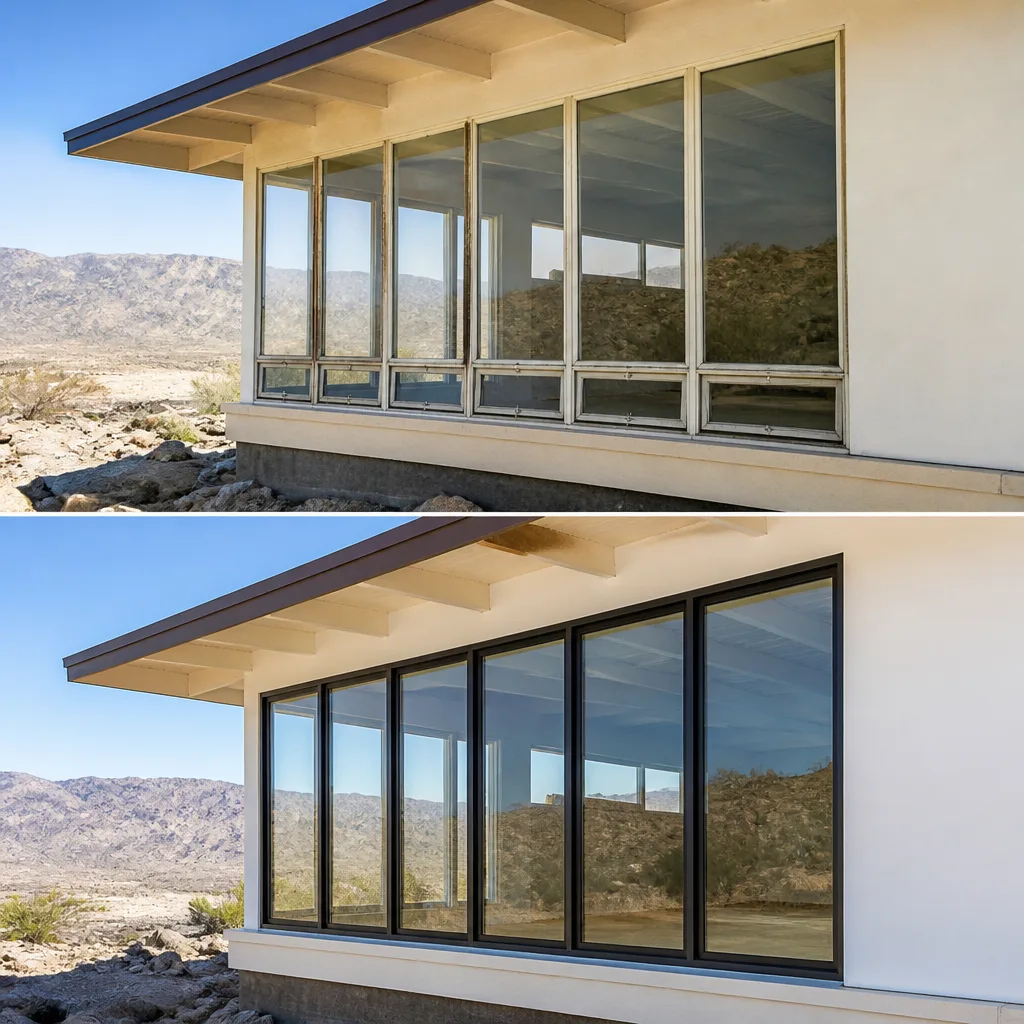
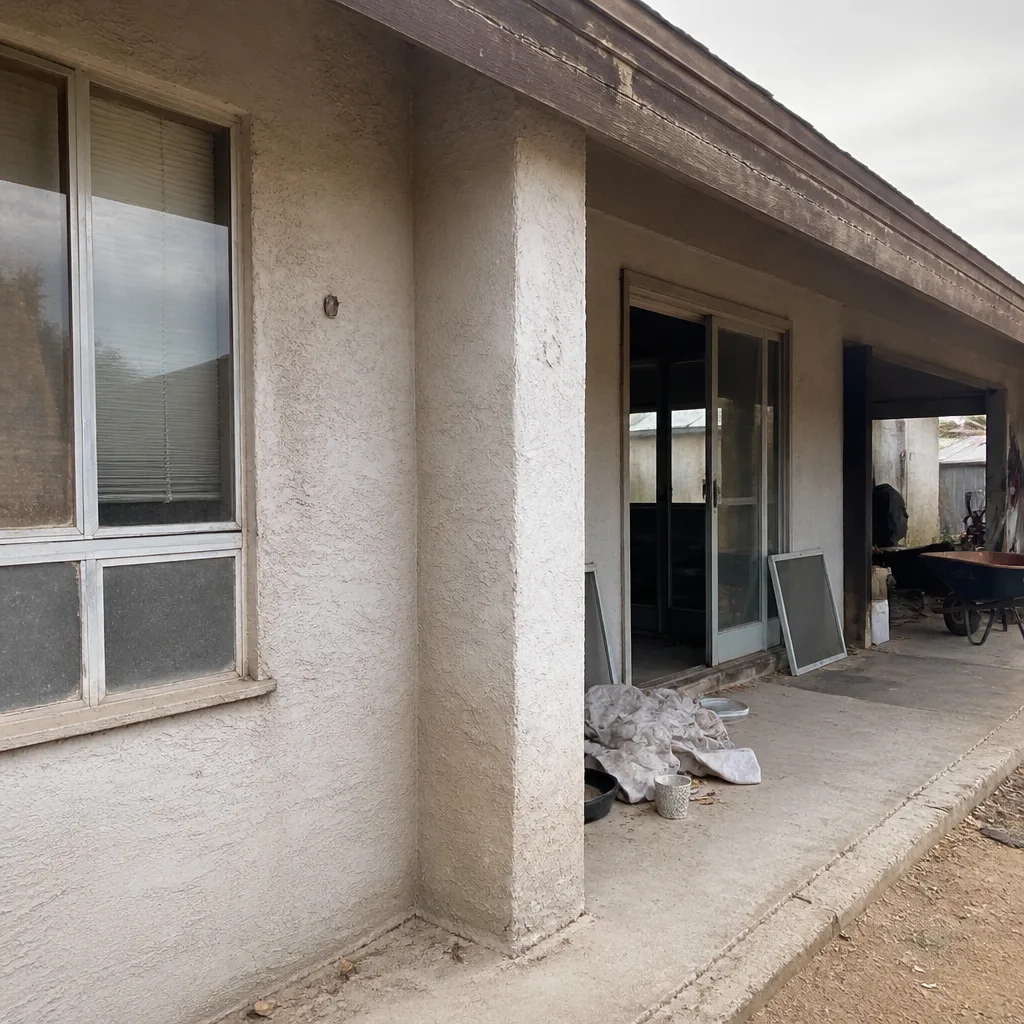 Before
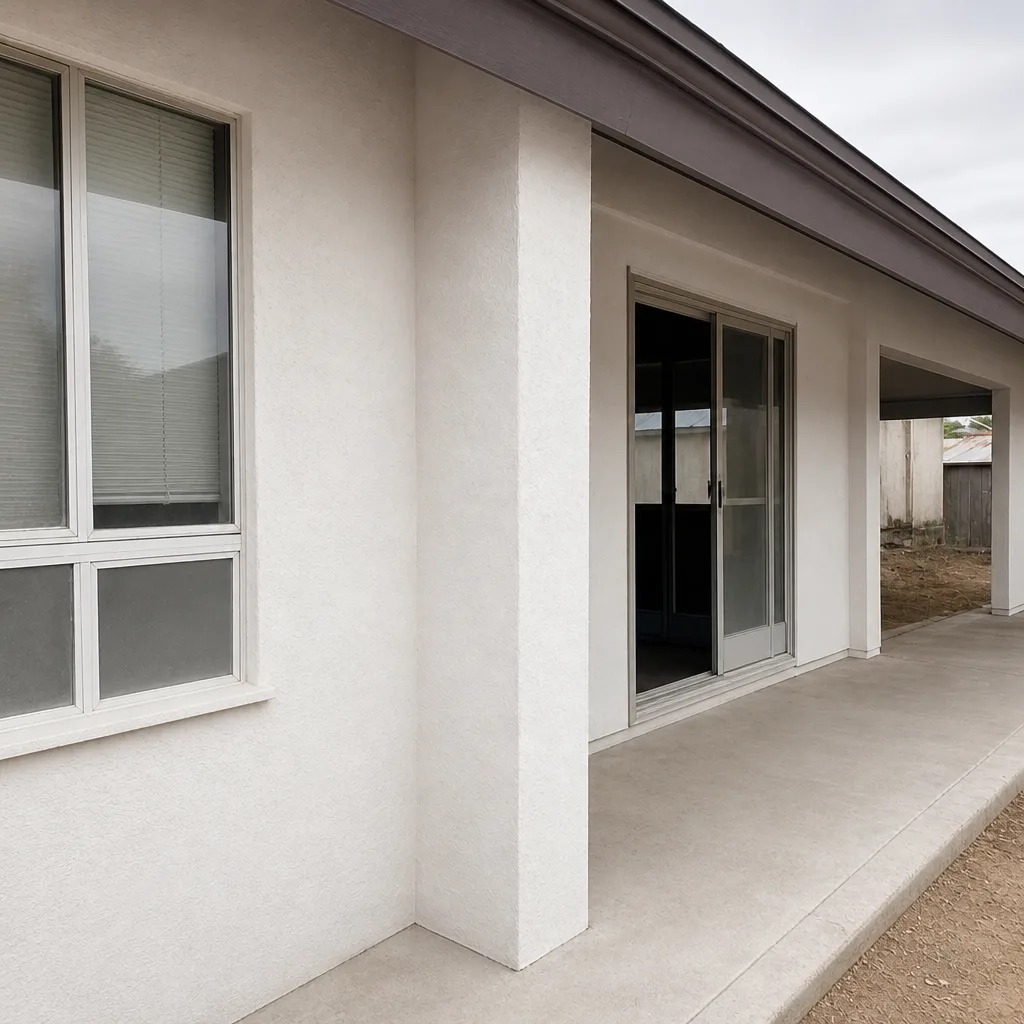 After
Table of Contents
- Why a Calendar Beats a To-Do List
- The Pre-Summer Cycle: April and May
- The Post-Monsoon Cycle: September and October
- Weep Holes: The Cheapest Repair You’ll Ever Do
- Locking Hardware: Multi-Point vs. Single-Point
- Reading the Spacer Bar for Seal Failure
- Photographing Each Cycle So Wear Is Measurable
- The One-Page Annual Checklist
Why a Calendar Beats a To-Do List
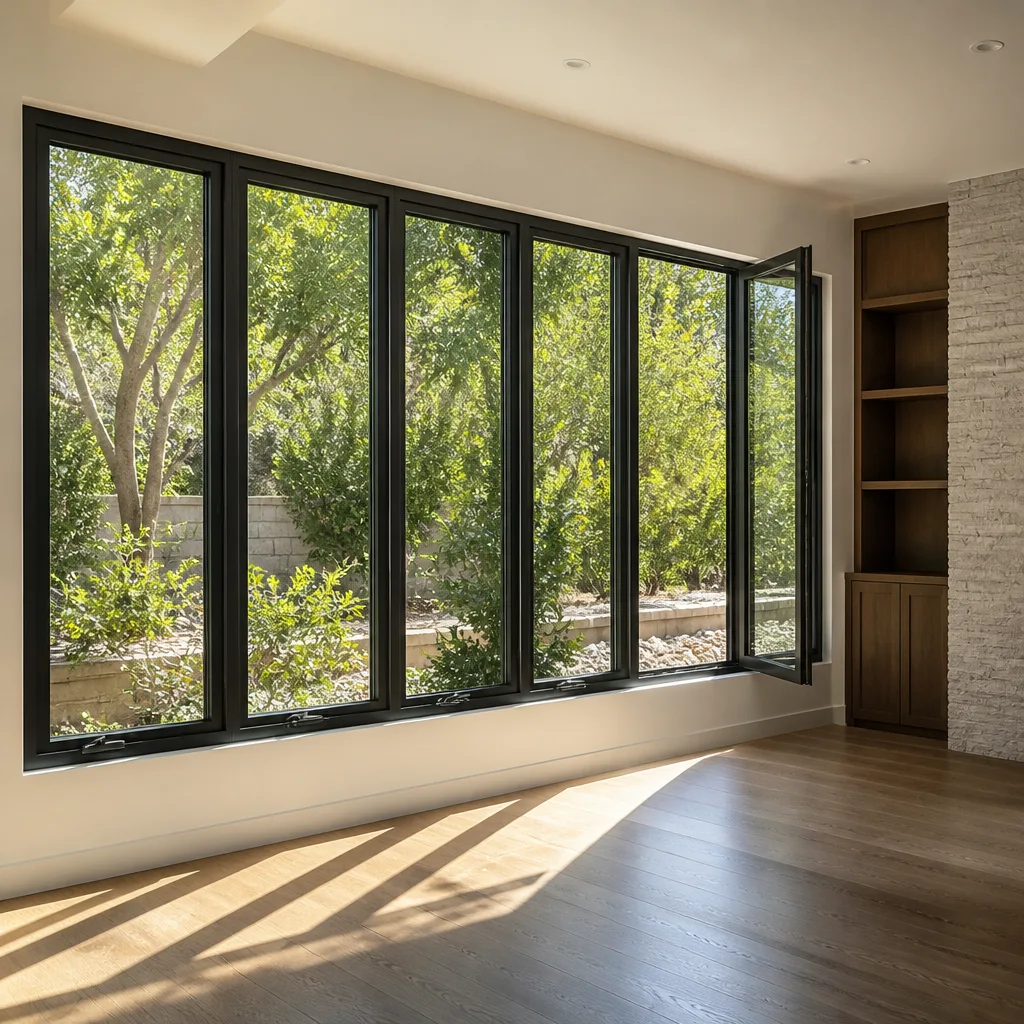
Impact windows don’t fail loudly. They degrade through the hardware first – a hinge that stiffens a quarter-turn each season, a lock that stops throwing fully, a weep channel that fills a little more each wind event – until the glazing unit gets blamed for a problem that started eighteen months earlier at the frame. In our experience across thousands of Boulder City openings, the failure pattern is almost always the same: hardware and drainage get ignored, water and heat find the gap, and the seal goes.
A calendar-based schedule works because it catches the small stuff before it compounds. The intervals here aren’t arbitrary. They’re tied to Boulder City’s actual weather rhythm: a spring dust season that pushes fine particulate into every horizontal surface, a summer that bakes frames in direct desert sun, and a late-summer monsoon window that delivers sudden, heavy water loads. Each of those three forces attacks a different part of the assembly. Matching the inspection to the season means you’re looking at the right component at the right time.
Two things make this manageable. First, most of the work is visual – a walk-around with a flashlight and a phone camera, not a toolbox. Second, it’s cumulative. Once you’ve done a cycle or two and photographed frame corners, you have a baseline. When the spacer bar in a PGT unit starts looking different from six months ago, you’ll know it, because the earlier photo is on your phone. That’s the whole discipline: look on schedule, record what you see, compare against last time.
What a homeowner can safely do
- Clear weep holes with a soft tool
- Wipe down frames and tracks
- Lubricate exposed hinges and lock cylinders with the correct product
- Inspect seals, gaskets, and spacer bars
- Photograph frame corners and hardware positions
- Operate every window and door through a full open-close cycle
What you should not do is adjust the glazing, remove a sash from an impact-rated unit, or attempt to reseal the perimeter without knowing the assembly. Those steps put the water performance warranty at risk and, on upper floors, create a fall hazard. For anything structural, call a trained professional. If you’re weighing whether a unit is worth repairing versus replacing, our guide to Window Replacement in Boulder City walks through that decision honestly.
The Pre-Summer Cycle: April and May
The April-May window is the single most important maintenance touchpoint of the Boulder City year. This is the stretch before sustained heat sets in and after the last meaningful rain event, which means it’s the ideal moment to clear out everything the winter winds pushed into your frames. Skip it, and all that fine desert dust turns into a baked-in crust by July that’s far harder to clear without damaging the finish.
Here’s the sequence we recommend working through on every opening in the house:
- Wash the frames and glass. Use a mild soap and water, not a solvent or abrasive. Desert dust is gritty – rinse first, then wipe, so you’re not grinding particles into the finish.
- Clear every weep hole. We’ll cover the procedure in detail below, but this is the priority task. Check every sill on the sunny exposures first; those dry out fastest and collect the most dust.
- Lubricate moving hardware. Hinges, rollers on sliding units, and lock mechanisms all get attention here. Use the lubricant matched to the hardware type, which we break out in the hardware section.
- Test full operation. Open and close each window and door through its complete range. A slider should glide through the track without catching. A casement should crank without binding. A door should latch with one firm push.
- Inspect seals and gaskets. Weatherstripping that looks compressed or cracked gets flagged. Perimeter sealant that has pulled away from the frame gets a photo and a note.
- Photograph each frame corner and every lock. Same angle, same distance, every cycle. This is your record.
Do the south- and west-facing openings first. Those take the most direct afternoon sun in Boulder City, and the UV load accelerates seal and finish degradation faster than north-facing exposures. When you finish, you should have a photo set that you can compare against in the fall.
The Post-Monsoon Cycle: September and October
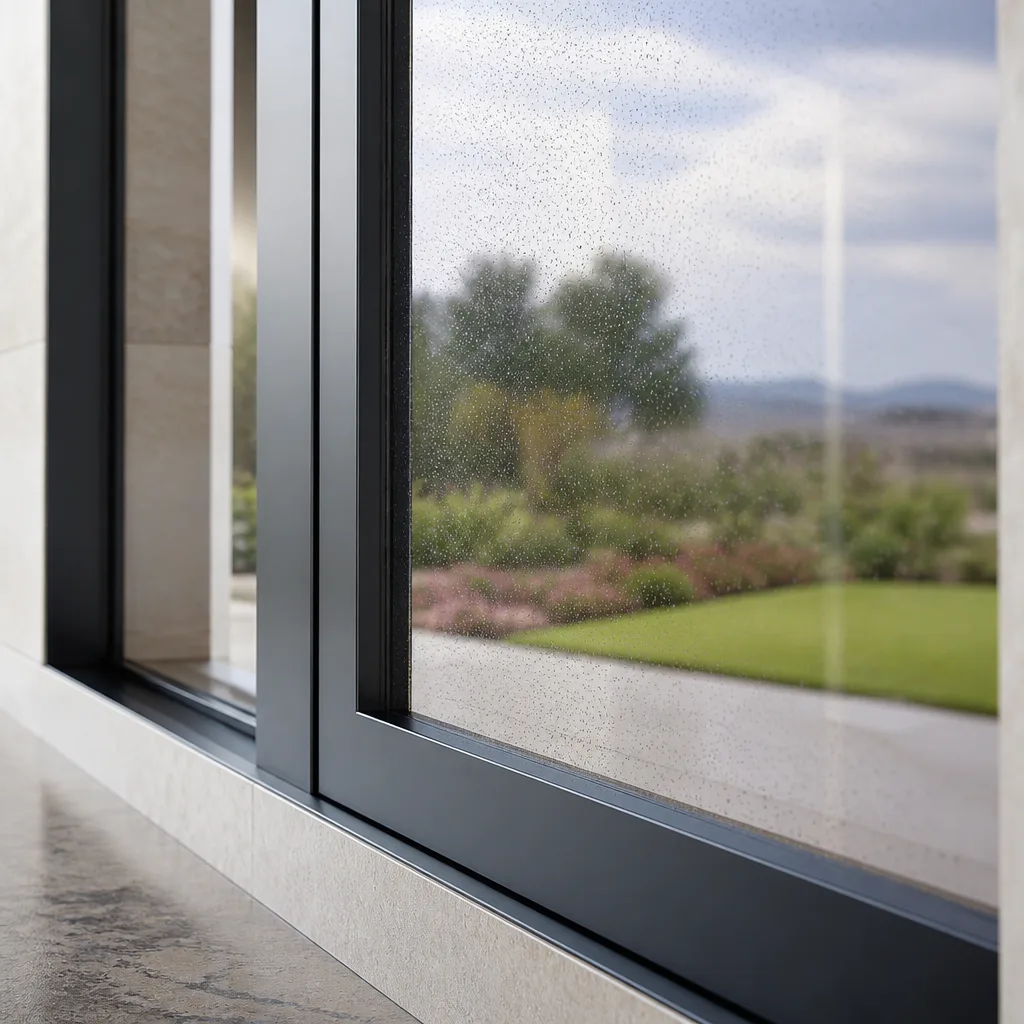
The fall cycle is the water-focused one. Boulder City’s monsoon window delivers sudden, heavy rain, and that’s exactly when a marginal weep hole or a slightly compromised perimeter seal will show itself. This inspection is about finding what the water found.
Work through these in order:
- Look for water staining or mineral deposits. White chalky marks on the sill or frame corner indicate water sat there and dried. That’s your tell for a drainage problem.
- Re-clear all weep holes. The summer dust load and rain residue both settle here. Even if they looked clear in spring, clean them again.
- Inspect interior frame corners. Look for soft drywall, bubbling paint, or a musty smell near the openings. Any of those means water is getting past the frame, not just sitting on it.
- Re-check hardware. A lock that operated smoothly in spring but feels loose or stiff now is a flag. Heat cycling and use both take a toll over the summer.
- Examine the spacer bar between panes. This is where early seal failure telegraphs itself before condensation shows up. The method is in the spacer bar section below.
- Photograph again. Compare against your spring set. Frame corners and lock positions are the two angles that matter most.
If you find interior moisture or softness, stop and call a professional. That’s past the DIY line. For a broader sense of how Boulder City’s climate affects the whole envelope, our Sightline Windows & Doors Boulder City home page covers what we look for across every opening type.
Weep Holes: The Cheapest Repair You’ll Ever Do
Weep holes are the small openings at the bottom of a window or door frame that let trapped water drain out. They’re also the first thing to clog and the cheapest thing to maintain. A cleared weep hole costs nothing but a minute; a blocked one that backs water into the frame corner for two summers costs hundreds. In our experience installing and servicing Boulder City openings, this single habit prevents more damage than any other maintenance task.
How to clear one
Use a soft tool – a pipe cleaner, a plastic zip tie, or a cotton swab. Never use a screwdriver, a drill bit, or anything metal. The weep channel is a thin slot, and a metal tool will gouge the finish and can deform the slot so water drains worse afterward. Work the soft tool through the slot with a gentle in-and-out motion, and flush with a little water from a spray bottle to confirm it drains.
What debris looks like and what it means
- Loose debris: fine gray-tan dust, dry leaves, insect parts. This is normal and clears easily. You caught it in time.
- Compacted debris: a dark, dense plug that resists the soft tool and comes out in chunks. This is what has been sitting through a wet season and baking. Expect to spend more time on it, and check the frame corner for staining.
- Mineral crust: white or chalky deposits around the hole. This means water has been sitting and evaporating repeatedly. Clear the hole, then look closely at the seal behind it.
If the slot is packed solid and won’t clear with a soft tool, don’t force it. That’s a sign of a deeper drainage problem, and a technician with the right tools can clear it without damaging the frame. When we do a study on an opening, the weep hole condition is one of the first things we look at.
Locking Hardware: Multi-Point vs. Single-Point

Not all locking hardware is built the same, and the maintenance intervals differ. This is where a lot of generic maintenance advice goes wrong – it treats a multi-point lock and a single-point latch as if they need the same treatment. They don’t.
Single-point hardware
A single-point lock uses one latch or bolt. It’s the simpler assembly, and it needs a lighter touch. A few drops of a light machine oil or a dry PTFE (Teflon) lubricant on the latch mechanism twice a year is enough. Avoid heavy grease on single-point locks – in Boulder City’s dust, heavy grease becomes a magnet for grit, and grit accelerates wear. Dry PTFE is the better choice here because it doesn’t hold dust.
Multi-point hardware
A multi-point lock throws two or three bolts or rollers along a single handle turn. That’s more surface area in motion, more moving parts, and a higher need for proper lubrication. Multi-point systems on patio and entry doors benefit from a light grease on the throw mechanism – a white lithium or silicon grease – applied at the same time as the pre-summer and post-monsoon cycles. The rollers and the corner gear do best with a dry lubricant; the main gearbox and the bolt tracks do better with a light grease. If a multi-point lock starts requiring a harder pull to throw fully, don’t force it. That’s a flag to have it looked at.
What to check either way
- Does the lock throw fully with normal effort?
- Is there play at the handle or cylinder when you wiggle it?
- Does the door or window latch flush without a push?
- Is there visible grit or corrosion in the mechanism?
Any of those flags are worth a technician’s eye. A sticking multi-point lock on a Therma-Tru entry door, for instance, is a common sign of a misaligned strike plate – not a bad lock. For a full discussion of entry hardware and what to expect, see our Door Installation in Boulder City guide.
Reading the Spacer Bar for Seal Failure
The spacer bar is the metal or plastic strip that separates the panes of an insulated glass unit. It’s the most under-read diagnostic feature on an impact window, and it can tell you a seal is failing long before you see fogging between the panes. That lead time matters: a unit replaced before failure is a planned expense, while a unit left to delaminate can affect framing and interior finishes.
Here’s how to read it:
- Check the color and consistency. A healthy spacer bar has an even color and a uniform edge. A failing one may show discoloration, rust flecks (on metal spacers), or a dark line along its length.
- Look for a wavy or disturbed seal edge. If the sealant line where the spacer meets the glass looks uneven or has started to pull away, that’s an early flag.
- Watch for haze or a faint film inside the pane. Condensation is the late-stage tell. A haze or film inside the glass is the earlier one – it means moisture is already inside the unit.
- Compare against last cycle’s photo. If you’ve been photographing the spacer bar, a change over six months is easy to see. That’s the value of the documentation habit.
When a seal fails, the fix is a new insulated glass unit, not a new window. On an impact-rated unit from a line like PGT or ViewLux, the glass can often be replaced while the frame and hardware stay. We do that assessment on-site. For the full picture on unit-level replacement, our Window Installation in Boulder City page explains how a glass-only swap differs from a full opening replacement.
Photographing Each Cycle So Wear Is Measurable

Every maintenance habit is only as good as its record. If you look at a frame corner in April and then in September, your memory will not reliably tell you whether that small crack got bigger. A photo will. This is the difference between a maintenance schedule that works and one that gives you false comfort.
The habit is simple: same opening, same angle, same distance, every cycle. Take four to six photos per opening:
- Each bottom corner of the frame
- Each lock or handle
- The spacer bar, at a consistent spot
- The weeping holes, close-up
Name the files by opening and date. A folder on your phone is fine. When something does fail, you’ll have a timeline – this seal was clean in April, degraded by October, failed by next spring. That record also matters when you make a warranty claim: it shows the unit was inspected and maintained as required. The documented photo record is a standard we hold ourselves to on every job, and it’s a habit worth keeping as a homeowner. It’s also the kind of evidence that makes a free second opinion on a competitor’s quote meaningful – bring us your photos and the quote, and we’ll review both at no charge.
The One-Page Annual Checklist
Print this, tape it to the inside of a closet door, and work through it twice a year. It’s designed to take an afternoon on a whole house, less if you have fewer openings.
Spring (April-May)
- Wash frames and glass with mild soap and water
- Clear every weep hole with a soft tool
- Lubricate single-point locks with dry PTFE
- Lubricate multi-point locks and rollers with correct product
- Test full open-close operation on every opening
- Inspect seals and gaskets
- Photograph frame corners, locks, spacer bars, weep holes
Fall (September-October)
- Re-clear every weep hole
- Inspect interior frame corners for staining or softness
- Re-check hardware for looseness or stiffness
- Read the spacer bar for early seal failure
- Photograph again and compare against spring
- Flag anything that changed and file a call if needed
That’s the whole system. Two afternoons a year, a soft tool, the right lubricants, and a phone camera. In Boulder City’s climate, that effort is what separates a unit that lasts its full service life from one that gets replaced early because a weep hole went ignored.
Common Mistakes to Avoid
- Using a metal tool on a weep hole. A screwdriver or drill bit gouges the finish and can deform the slot so it drains worse. Use a pipe cleaner or plastic zip tie.
- Using heavy grease on single-point locks. In Boulder City’s dust, heavy grease becomes a grit magnet. Save grease for multi-point mechanisms and use dry PTFE elsewhere.
- Skipping the pre-summer cycle. The April-May window is the one that prevents the most damage. Miss it, and summer bakes dust into places you’ll struggle to clean.
- Treating condensation as normal. Moisture inside an insulated unit means the seal has already failed. Early haze on the spacer bar is your warning shot – don’t wait for the fog.
- Not photographing anything. A visual inspection without a record is a guess. Same angle, same distance, every cycle, or you won’t notice slow change.
- Power-washing frames. High pressure drives water past seals and can damage finish. Use a hose and a rag.
- Forcing a stiff lock. A multi-point lock that needs a hard pull is telling you something is misaligned. Forcing it wears the mechanism faster.
When to Call a Professional
Most of what’s on this schedule is a homeowner’s work. A few situations are not. Call a technician if you find interior moisture, soft drywall, or staining at a frame corner – that’s water past the frame, and it needs a proper diagnosis. Call if a weep hole won’t clear with a soft tool, if a multi-point lock needs forcing, if a spacer bar shows a disturbed seal edge or interior haze, or if upper-floor glazing needs any adjustment at all. Those are also fall-hazard situations, and they’re not worth a DIY attempt. Sightline Windows & Doors Boulder City offers free estimates in Boulder City – call (833) 847-4018 to schedule a visit. Our technicians have up to 14 years of experience, and every visit leaves a documented photo record.
Frequently Asked Questions
Twice a year is the right cadence – once in April or May before the summer dust and heat set in, and once in September or October after the monsoon window. A full professional assessment every three to five years catches what visual inspection can’t. Boulder City’s dust and temperature swings make the semi-annual rhythm more important here than in milder climates.
Fine Mojave dust, dry leaves, and insect activity are the main culprits, and they compact faster than most homeowners expect. Once dust gets wet and dries, it forms a dense plug that resists a soft tool. That’s why we recommend clearing them twice a year, not once.
Look at the spacer bar between the panes for discoloration, a disturbed seal edge, or a faint interior haze. That’s your early warning. Visible condensation between the panes is the late stage. Photographing the spacer bar each cycle makes the change easy to spot.
Clearing weep holes, wiping frames, and lubricating exposed hardware are safe homeowner tasks. Adjusting glazing, removing a sash, or resealing a perimeter is not – those risk the water performance warranty and, on upper floors, a fall hazard. Call a trained professional for anything structural.
Yes, specifically because of the dust and the day-to-night temperature swings. The dust loads weep holes faster than in greener climates, and the daily expansion and contraction works sealant and gaskets harder. That’s why we tie the schedule to Boulder City’s seasons rather than generic spring and fall.
A maintenance visit or a glass-only replacement is a fraction of the cost of a full unit replacement, and catching a seal failure early is what makes that possible. Sightline writes the price before any work starts – call (833) 847-4018 for a free estimate and a written quote on what your openings actually need.
The Bottom Line
Impact windows and doors fail from neglect, not from storms. A calendar-based schedule – a pre-summer deep clean and a post-monsoon check – protects the frame and hardware that hold the glazing in place. The recurring work is small: clear weep holes with a soft tool, use the right lubricant for the right lock, read the spacer bar for early seal failure, and photograph each cycle so wear is measurable. Do that twice a year in Boulder City, and you’ll get the full service life out of your openings. Call (833) 847-4018 for a free estimate on anything that needs a professional eye – the price is written before any work starts.
Written by the team at Sightline Windows & Doors Boulder City.
Six Reasons Homeowners Choose Sightline Windows & Doors Boulder City
Laminated glass and reinforced frames hold up to wind-driven rain, hail and flying debris, so your openings stay sealed when the weather turns.
Low-E insulated impact glass from our manufacturer lines commonly cuts monthly cooling bills 20-30%.
Laminated impact glass shuts out up to 40% of outside noise - traffic, neighbors, weather.
Monitoring services run $30-90 a month. Laminated impact glass resists forced entry around the clock, with no subscription.
Tighter seals and insulated glass even out hot and cold rooms and stop the drafts at the frame.
A full impact package upgrades curb appeal, buyer confidence and appraised value in one project.
Other Sightline Windows & Doors Boulder City Services
What Neighbors Say About Sightline Windows & Doors Boulder City